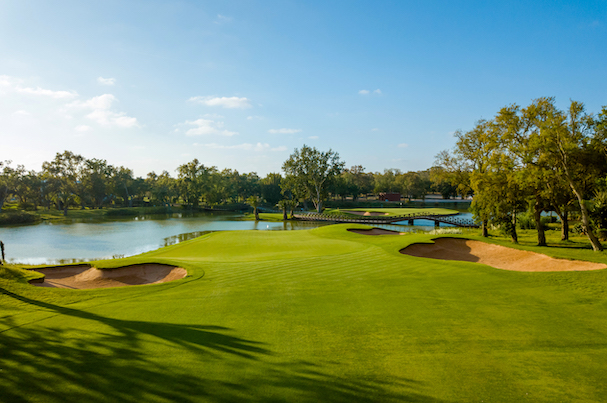
Royal Golf Dar Es Salam Blue
King Hassan II commissioned Robert Trent Jones Sr to carve a golf complex from a vast cork oak forest outside Rabat, and the result, opened in 1971, became the home of Moroccan golf. The Blue Course is the more forgiving of its two great 18 hole layouts, a par 72 of 6,467 metres that lets you enjoy the forest without the full ferocity of the championship Red.
Photo: World Amateur Tour via Google.
The verdict
Royal Golf Dar Es Salam is one of the landmark golf projects of the second half of the twentieth century. King Hassan II, a keen golfer, commissioned the American master Robert Trent Jones Sr to build a course worthy of the kingdom, and Jones laid out his holes through a 440 hectare cork oak forest a quarter of an hour from the centre of Rabat. The complex opened in 1971 and grew into 45 holes, with the Red Course becoming famous as the home of the Hassan II Trophy, one of the most prestigious invitational events in golf.
The Blue Course is the Red's gentler companion, and for many visitors it is the more enjoyable round. It plays to a full par 72 of about 6,467 metres through the same magnificent forest, but with a touch less length and menace than its celebrated neighbour, so the trees, the calm and the birdsong come to the fore rather than the fight. It is a course to savour, a Trent Jones design in a setting unlike anywhere else in the golfing world, and the ideal second round on a trip built around the Red.
The Blue Course at a glance
- Opened
- 1971
- Designer
- Robert Trent Jones Sr
- Type
- Forest parkland
- Par
- 72
- Length
- 6,467 m
- Green fee
- Mid range, indicative
Designer, opening year, par and length verified June 2026 from Royal Golf Dar Es Salam and leading course databases. The complex was designed by Robert Trent Jones Sr, commissioned by King Hassan II and opened in 1971 through a cork oak forest near Rabat; the Blue Course plays to par 72 of about 6,467 metres. The championship Red Course hosts the Hassan II Trophy. Green fees are mid range for a marquee Moroccan course, indicative for 2026 and subject to seasonal change; always confirm directly before booking.
The holes worth the trip
The defining feature of every round at Dar Es Salam is the cork oak forest. Robert Trent Jones routed the Blue Course down avenues of tall, mature trees, so the holes feel private and enclosed, each fairway a corridor of green with the canopy overhead and the soft forest floor beneath. The trees are the hazard and the beauty at once, demanding a degree of accuracy off the tee while wrapping the whole course in a stillness that the busier resort layouts of North Africa cannot match.
Without the brute length of the Red, the Blue puts the interest into shaping the ball and finding the right side of the fairway to open up the green. The greens are classic Trent Jones, generally large and receptive but defended by his trademark bunkering, so the player who controls distance and trajectory is rewarded. There is water in play on several holes to add a flash of nerve, but the Blue never overwhelms, and a mid handicapper can have a thoroughly enjoyable round here.
What stays with you is the atmosphere. To play golf among storks and cork oaks, on a course built for a king by the most prolific architect of his era, is a genuinely different experience, and the Blue Course delivers it in a more relaxed, more playable form than the famous Red. For a travelling golfer it is the heart of any trip to the Moroccan capital.
How to get on
| What to know | Detail |
|---|---|
| Access | Welcomes visitors and societies across its Red, Blue and nine hole Green courses; tee times bookable through the club |
| Green fee | Mid range for a marquee Moroccan course, with the Red the premium round and the Blue a friendlier, often better value option; indicative for 2026, confirm directly |
| Booking | Reserve through the club or have your trip planner secure tee times, particularly in the busy spring and autumn windows |
| On the day | Walkable forest layout with caddies and buggies available; recognised golf attire; accuracy off the tee matters among the cork oaks |
| Getting there | About 15 minutes from the centre of Rabat, Morocco's capital, and roughly an hour and a half from Casablanca |
| Best months | The Atlantic coast plays year round; spring and autumn are the kindest, while winter offers a warm escape from northern Europe |
Access and fee guidance verified June 2026; visitor rates change by season, so always confirm the current green fee and tee sheet directly before booking.
Where to stay nearby
Rabat offers everything from grand five star hotels to characterful riads in the old medina, all within a short drive of the course, and the capital's relaxed pace, ocean front and UNESCO listed historic centre make it a rewarding base beyond the golf. The coastal road also puts the beaches and the bustle of Casablanca within easy reach.
For a fuller trip, Royal Golf Dar Es Salam anchors the golf around Rabat and Casablanca, and pairs well with the resort courses of Marrakech a few hours south for a varied Moroccan week that combines forest, coast and the red city's desert light.
Looking for a base? See our recommended hotels and resorts near Rabat.
Build a Morocco golf trip
We book the Dar Es Salam tee times, pair the Blue and the Red with the best of Rabat, Casablanca and Marrakech, and arrange the stay around them. Tell us roughly when and who is travelling and one concierge costs it to the head, with no obligation.
Royal Golf Dar Es Salam questions
Who designed the Blue Course at Royal Golf Dar Es Salam?
The Blue Course, like the rest of Royal Golf Dar Es Salam, was designed by the American architect Robert Trent Jones Sr and opened in 1971. The 45 hole complex near Rabat was commissioned by King Hassan II and laid out through a mature cork oak forest.
How is the Blue Course different from the Red Course?
The Red Course is the championship layout that hosts the Hassan II Trophy, long and demanding. The Blue Course is the more relaxed of the two, still a full par 72 of about 6,467 metres through the same forest, but a friendlier, more playable round that many visitors enjoy more.
Can visitors play Royal Golf Dar Es Salam?
Yes. Royal Golf Dar Es Salam welcomes visitors across its three courses, the Red, Blue and the nine hole Green, with tee times bookable through the club. Green fees are mid range for a marquee Moroccan course and indicative for 2026, so always confirm directly before booking.
Where is Royal Golf Dar Es Salam and what else is nearby?
The club sits about 15 minutes from the centre of Rabat, Morocco's capital, on the Atlantic coast. It pairs naturally with the courses around Rabat and Casablanca, and with the resort golf of Marrakech for a wider Moroccan trip.
Related
The Tee Sheet
Tee time windows, course access changes and the trips worth taking. Every other week.
Researched and written by the GolfForKings editorial desk. Designer, opening year, par and length verified June 2026; indicative green fees verified June 2026. Last reviewed June 2026.