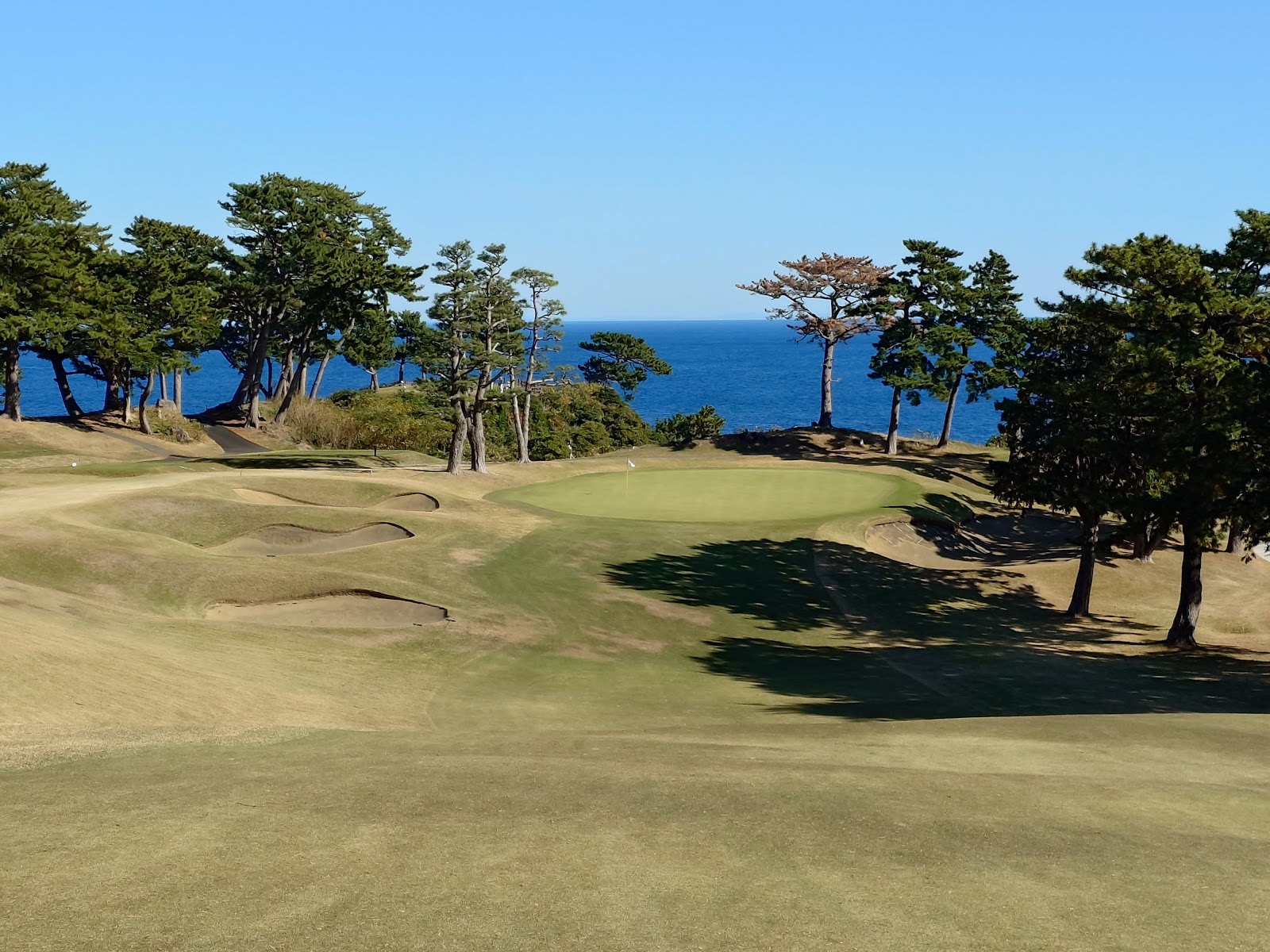
 No. 1
No. 1
Izu, Japan
¥47,800/round
Kawana Fuji Course
Charles Alison, 1936The Pebble Beach of Japan, an Alison classic on the cliffs of Izu, open to Kawana hotel guests.
A nation of two thousand courses, faultless conditioning and a golf culture all its own: caddies on every bag, a long lunch after nine, and a hot bath before the drive home. Add Charles Alison bunkers and Mount Fuji on the skyline and you have one of the world's great golf trips. Here is how we build it.
Japan is the connoisseur's golf trip. The courses are immaculate, the classic designs by Charles Alison and his Japanese successors are genuinely world class, and the whole day is treated as an event rather than a quick eighteen. It suits the traveler who wants golf woven into a deeper holiday: temples and gardens, the bullet train, the food, and an onsen at the end of the day. Tokyo is the natural hub, with marquee courses within an hour or two and the resort coast of Izu a short ride south.
Access is the one thing to plan around. The resort courses, led by the Fuji Course at Kawana, welcome hotel guests. Many of the best members clubs accept visitor play on weekdays through an agent, and the most exclusive, such as the Olympic host Kasumigaseki, open up with a member introduction. That is exactly the kind of door a planned trip exists to open, which is why Japan rewards a concierge approach more than almost anywhere on earth.
No. 1
The Pebble Beach of Japan, an Alison classic on the cliffs of Izu, open to Kawana hotel guests.
No. 2
Host of the Taiheiyo Masters, with Mount Fuji framed behind a flawless hillside course.
No. 3
Host of the 2020 Olympic golf, a storied Tokyo members club rebuilt by Tom Fazio II.
Days one and two, land in Tokyo, shake off the flight and see the city. Day three, a members club round west of Tokyo, with the option of Kasumigaseki by arrangement. Day four, drive to the Fuji area for Taiheiyo Gotemba beneath the mountain. Day five, continue to the Izu coast and the Kawana resort. Day six, the Fuji Course at Kawana on the cliffs, then an onsen and a final night before the journey home.
Spring, from April to early June, and autumn, in October and November, are the prime seasons, mild and dry with the courses immaculate and the colours at their best. Avoid the June rains and the August heat. Many mountain and inland courses play cold or close in deep winter, so plan around the shoulder seasons for the fullest choice.
These are third party green fees for the 2026 season, gathered at the time of writing and offered as a guide, not a quote. Weekday rates are lower than weekends and holidays, and most include a caddie. Access at the top members clubs comes with arrangement rather than a published fee. Always confirm directly before booking.
| Course | Designer | Par | Indicative 2026 green fee |
|---|---|---|---|
| Kawana Fuji Course | Charles Alison, 1936 | 72 | ¥47,800 weekday, hotel guests |
| Taiheiyo Club Gotemba | Taiheiyo Club, 1977 | 72 | ¥32,590 weekday by arrangement |
| Kasumigaseki East | Kinya Fujita, 1929 | 71 | member introduction |
As a package, a six night, four round Japan trip on a four or five star base typically lands from about $4,500 per head, excluding long haul flights, depending on group size, hotel and the access arranged. We cost tee times, member introductions where needed, the right hotels and transfers as one all in number per person, with no obligation. Tee times can also be booked individually through our partners: [TEE_TIME_AFFILIATE_LINK]. For where to stay, [HOTEL_AFFILIATE_LINK].
A concierge replies within one working day with a costed Japan itinerary, including the course access most trips cannot arrange alone. No fee, no obligation. Eight fields or fewer.
Spring, from April to early June, and autumn, in October and November, are the prime seasons, mild and dry with the courses immaculate. The June rains and the August heat are best avoided, and many inland courses play cold in winter.
Yes. Resort courses such as Kawana welcome hotel guests, and many members clubs accept visitor play on weekdays through an agent. The most exclusive clubs, including Kasumigaseki, open up with a member introduction, which a planned trip arranges.
Indicative 2026 green fees at the marquee courses run from about thirty thousand to sixty five thousand yen, roughly two hundred to four hundred and thirty US dollars, usually including a caddie. Always confirm directly before booking.
It is a full day ritual: caddies on most bags, a sit down lunch after nine holes, and exceptional clubhouses and baths. Walking is common at the classic courses, and the etiquette and conditioning are among the best anywhere.
More to plan with: our ranking method, the full course index, who we are on the about page, a warm weather Asian option in Hua Hin, Thailand, and a European classic in Italy.
Course openings, ranking moves and the occasional quiet deal. One email, no noise.