Kawana Fuji
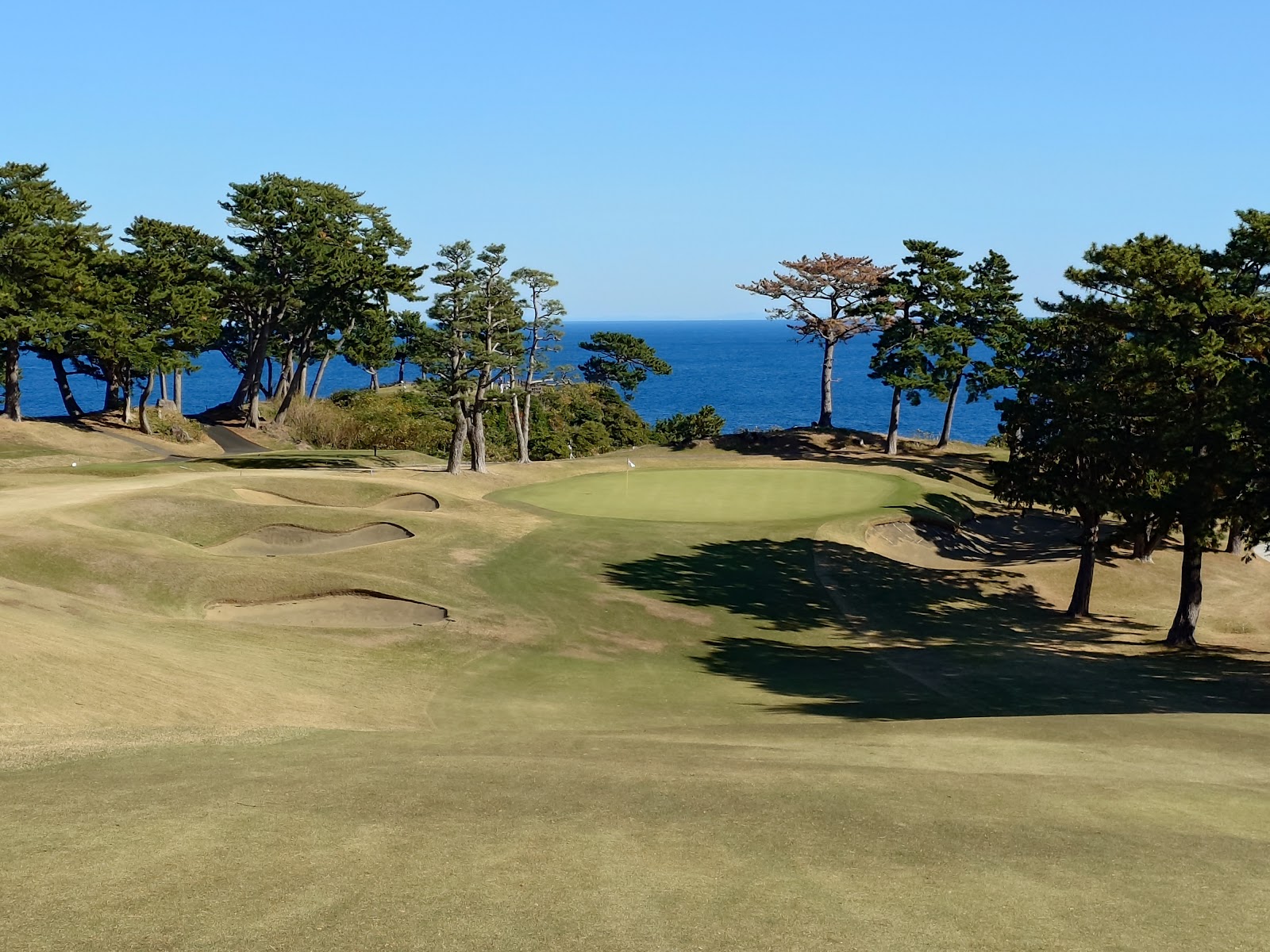
Charles Hugh Alison routed the Fuji Course at Kawana in 1936 along the cliffs of the Izu Peninsula, and it has been the most admired resort course in Japan ever since. A par 72 of about 6,701 yards with views of Sagami Bay and, on a clear day, Mount Fuji, it is reserved for guests of the Kawana Hotel.
Photo: Kawana Hotel Golf Course via Google.
The verdict
The Fuji Course at Kawana is Japan's most famous resort eighteen and one of the great clifftop courses anywhere. Charles Hugh Alison, the English architect whose deep, dramatic bunkers gave the Japanese language the term Alison bunker, laid it out in 1936 on the rugged coast of the Izu Peninsula, a few hours south of Tokyo. The course tumbles over headlands and through pine and cherry, with the sea on one side and, on the clear days that golfers pray for, the cone of Mount Fuji floating in the distance.
It is not the longest course at a par 72 of about 6,701 yards, but it does not need to be. The wind off Sagami Bay, the elevation changes and Alison's bunkering ask the questions, and the closing run along the cliffs delivers one of the most photographed finishes in the game. Pair it with a stay at the grand old Kawana Hotel and a round here is a bucket list experience for any travelling golfer in Japan.
Kawana Fuji Course at a glance
- Opened
- 1936
- Designer
- Charles Hugh Alison
- Type
- Clifftop coastal
- Par
- 72
- Yardage
- About 6,701 yds
- Green fee
- Hotel guests, from 47,800 yen
Designer, opening year, par and yardage verified June 2026 from the Kawana Hotel and leading course databases. C H Alison laid out the Fuji Course in 1936, a par 72 of about 6,701 yards. Play is reserved for guests of the Kawana Hotel; the indicative 2026 guest green fee is about 47,800 yen on weekdays and 63,700 yen on weekends and holidays, varying by plan and season. The neighbouring Oshima Course is open to outside visitors. Always confirm current rates, eligibility and availability directly before booking.
The holes worth the trip
The Fuji Course is a study in how to use a coastline. Alison routed it so the round builds toward the sea, the opening holes climbing and falling through woodland before the course breaks out onto the headlands. Firm turf, sloping lies and a wind that swirls off Sagami Bay make club selection a constant puzzle, and his signature deep bunkers swallow the loose shot.
The stretch from the fifteenth is the heart of the experience, the holes running hard along the clifftops with the bay below and Mount Fuji on the horizon when the weather cooperates. The par 4 fifteenth in particular, known to generations of visitors for its sweeping coastal view, is one of the most memorable holes in Asian golf.
What lingers is the marriage of grand scenery and genuine strategic design. The greens are subtle, the bunkering bold, and the closing holes demand a clear head amid the distractions of the view. Few resort rounds in the world combine theatre and substance the way the Fuji Course does.
How to get on
| What to know | Detail |
|---|---|
| Access | Reserved for guests of the Kawana Hotel; the separate Oshima Course is open to outside visitors |
| Green fee | Indicative 2026 guest fee about 47,800 yen weekday and 63,700 yen weekend and holiday, varying by plan and season; confirm directly before booking |
| Booking | Book the course as part of a stay at the Kawana Hotel; reserve well ahead, particularly in spring and autumn |
| On the day | Carts and caddies are available in the Japanese resort style; a valid handicap and neat golf attire are expected |
| Getting there | Ito on the Izu Peninsula, about two to two and a half hours from Tokyo by train and car |
| Best months | Spring and autumn for the clearest air and the best chance of a Mount Fuji view; summers are warm and humid |
Access rules and the indicative guest green fee verified June 2026; the Fuji Course is a hotel guests' course and rates change by plan and season, so always confirm eligibility, current pricing and availability directly with the Kawana Hotel or your trip planner before booking.
Where to stay nearby
The natural and only base for the Fuji Course is the Kawana Hotel itself, a grand seaside resort opened in 1936 that remains one of Japan's most storied golf hotels. Staying there is what unlocks the course, and the hotel, gardens and clifftop setting are a destination in their own right on the Izu Peninsula coast.
The wider Izu region rewards a longer stay, with hot spring towns, coastal drives and seafood that make it a fine pairing with golf. Many travelling golfers combine a couple of nights at Kawana with rounds elsewhere around Tokyo to build a complete Japanese golf trip.
Looking for a base? See our recommended hotels and resorts near Kawana Fuji Course.
Build a Japan golf trip
We arrange the stay at Kawana that unlocks the Fuji Course, pair it with the best of the courses around Tokyo and handle the trains, transfers and lodging. Tell us roughly when and who is travelling and one concierge costs it to the head, with no obligation.
Kawana Fuji Course questions
Who designed the Kawana Fuji Course and when did it open?
The Fuji Course at Kawana was designed by the English architect Charles Hugh Alison and opened in 1936 on the cliffs of the Izu Peninsula. Alison's deep, dramatic bunkering is so distinctive that the term Alison bunker entered the Japanese golf vocabulary.
What is the par and length of the Fuji Course?
The Fuji Course is a par 72 of about 6,701 yards, played over clifftop and woodland ground above Sagami Bay with frequent elevation changes and a coastal wind.
Can visitors play the Kawana Fuji Course?
Play on the Fuji Course is reserved for guests of the Kawana Hotel. Golfers who are not staying at the hotel can play the neighbouring Oshima Course, which is open to outside visitors.
How much does it cost to play the Fuji Course?
The indicative 2026 guest green fee is about 47,800 yen on weekdays and 63,700 yen on weekends and holidays, varying by plan and season. Always confirm current rates directly before booking, as they change.
Related
The Tee Sheet
Tee time windows, course access changes and the trips worth taking. Every other week.
Researched and written by the GolfForKings editorial desk. Designer, opening year, par and yardage verified June 2026; indicative guest green fees verified June 2026. Last reviewed June 2026.