Naruo Golf Club
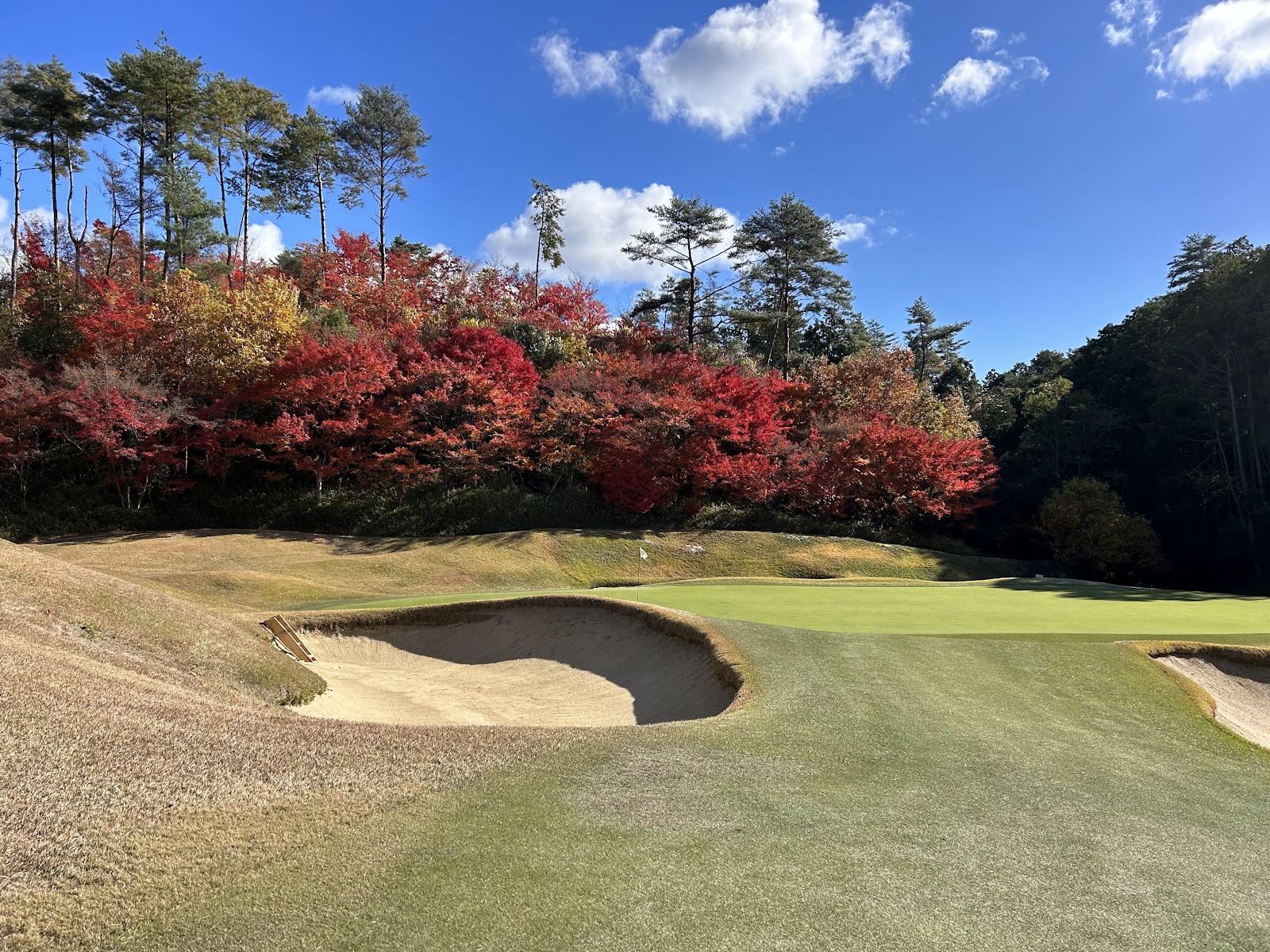
Founded in 1920 and moved to its hill country home outside Kobe, Naruo was laid out by the British born Crane brothers around 1930 and refined by Charles Hugh Alison in 1931. A par 70 of about 6,616 yards across steep, wooded valleys, it is one of the most admired and most private classical courses in Japan.
Photo: Naruo Golf Club via Google.
The verdict
Naruo Golf Club traces its origins to 1920, when a group of mostly British members founded a club near the seaside town of Naruo. Seeking room for a true championship layout, three of those members, the Crane brothers, drove the move to the present site in the hills near Kawanishi, where the course took shape around 1930. The English architect Charles Hugh Alison, on his celebrated tour of Japan, was invited to make modifications in 1931 that gave Naruo its deep, dramatic bunkering.
What survives is a compact, hilly masterpiece, a par 70 of about 6,616 yards that asks for placement and nerve rather than length. The valleys fall away from tilted fairways, the greens sit cleverly in the folds of the land, and the Alison bunkers menace every loose shot. Naruo is consistently rated among the finest courses in Japan and Asia, and it remains intensely private, so a round here takes patience and the right introduction.
Naruo Golf Club at a glance
- Opened
- 1920, present course about 1930
- Designer
- Crane brothers; C. H. Alison 1931
- Type
- Hill country classic
- Par
- 70
- Yardage
- About 6,616 yds
- Green fee
- Members
Designer, history, par and yardage verified June 2026 against Naruo Golf Club records and leading course databases. The club was founded in 1920 and built its present hill country course around 1930 under the Crane brothers, with Charles Hugh Alison adding bunkering and modifications in 1931, a par 70 of about 6,616 yards. Naruo is a private members club with very limited visitor access. There is no published public green fee, so always confirm access and any guest rate directly before planning.
The holes worth the trip
Naruo is routed through tight, plunging valleys, and the golf is all about the tee shot and the angle of approach rather than brute strength. The fairways tilt and roll across the hillsides, so the player who finds the correct side is rewarded with a clear look while the one who bails out faces a blind or awkward shot into greens that sit naturally in the land.
Alison's bunkering is the signature, deep and steep walled, cut hard against the corners of doglegs and into the faces of the greens so that a single careless yard can cost a stroke. The par 3s are superb and varied, played across valleys to greens that reject anything short, and the short par 4s reward the brave line off the tee with a simpler pitch.
The closing holes climb and fall back toward the clubhouse with the bunkers tightening every decision, a finish that has tested Japan's best amateurs and professionals for the better part of a century. Naruo gives back the purest classical golf, a course where thought, ball control and a steady nerve matter far more than the driver.
How to get on
| What to know | Detail |
|---|---|
| Access | Private members club; overseas visitors play only with a member or a properly arranged introduction |
| Green fee | No published public fee; any guest rate is arranged privately through the club (indicative, 2026) |
| Booking | Plan months ahead through a member or a Japan golf specialist; spontaneous visits are not possible |
| On the day | Walking with a caddie is the tradition over the steep terrain; etiquette and a recognised handicap are expected |
| Getting there | Kawanishi in the hills of Hyogo, roughly 40 minutes from central Kobe and about an hour from Osaka |
| Best months | April to May and October to November for mild, dry weather and firm turf |
Access arrangements verified June 2026; Naruo is private and protective of its access, so always confirm directly through a member or your trip planner before planning a visit.
Where to stay nearby
Most visiting golfers base themselves in Kobe or Osaka, both an easy transfer from the course and full of excellent hotels, dining and the wider attractions of the Kansai region. A city base puts Naruo and the other classic courses of the Kobe hills within comfortable reach.
For a golf focused stay, the Kobe side keeps transfers shortest and pairs naturally with the region's other historic clubs. It is an ideal anchor for a Kansai golf tour, combining the hill country classics around Kobe with the cultural draws of Kyoto and Osaka.
Looking for a base? See our recommended hotels and resorts near Naruo Golf Club.
Build a Kansai golf trip
We work the introductions that open courses like Naruo where access allows, pair them with the best of the Kobe and Osaka region and book the lodging around them. Tell us roughly when and who is travelling and one concierge costs it to the head, with no obligation.
Naruo Golf Club questions
Who designed Naruo Golf Club?
Naruo was laid out by the Crane brothers around 1930 after the club moved to its hill country site, and the English architect Charles Hugh Alison made modifications in 1931, including the deep bunkering for which the course is known.
What is the par and length of Naruo?
Naruo is a par 70 of about 6,616 yards, a compact and hilly classic that rewards placement and ball control over length.
Where does Naruo rank?
Naruo is consistently rated among the finest courses in Japan and across Asia, widely regarded as one of the great classical layouts in the region.
Can visitors play Naruo?
Naruo is a very private members club. Overseas visitors play only as the guest of a member or through a properly arranged introduction, so plan months ahead through a member or a Japan golf specialist.
Related
The Tee Sheet
Tee time windows, course access changes and the trips worth taking. Every other week.
Researched and written by the GolfForKings editorial desk. Designer, history, par and yardage verified June 2026; access arrangements verified June 2026. Last reviewed June 2026.