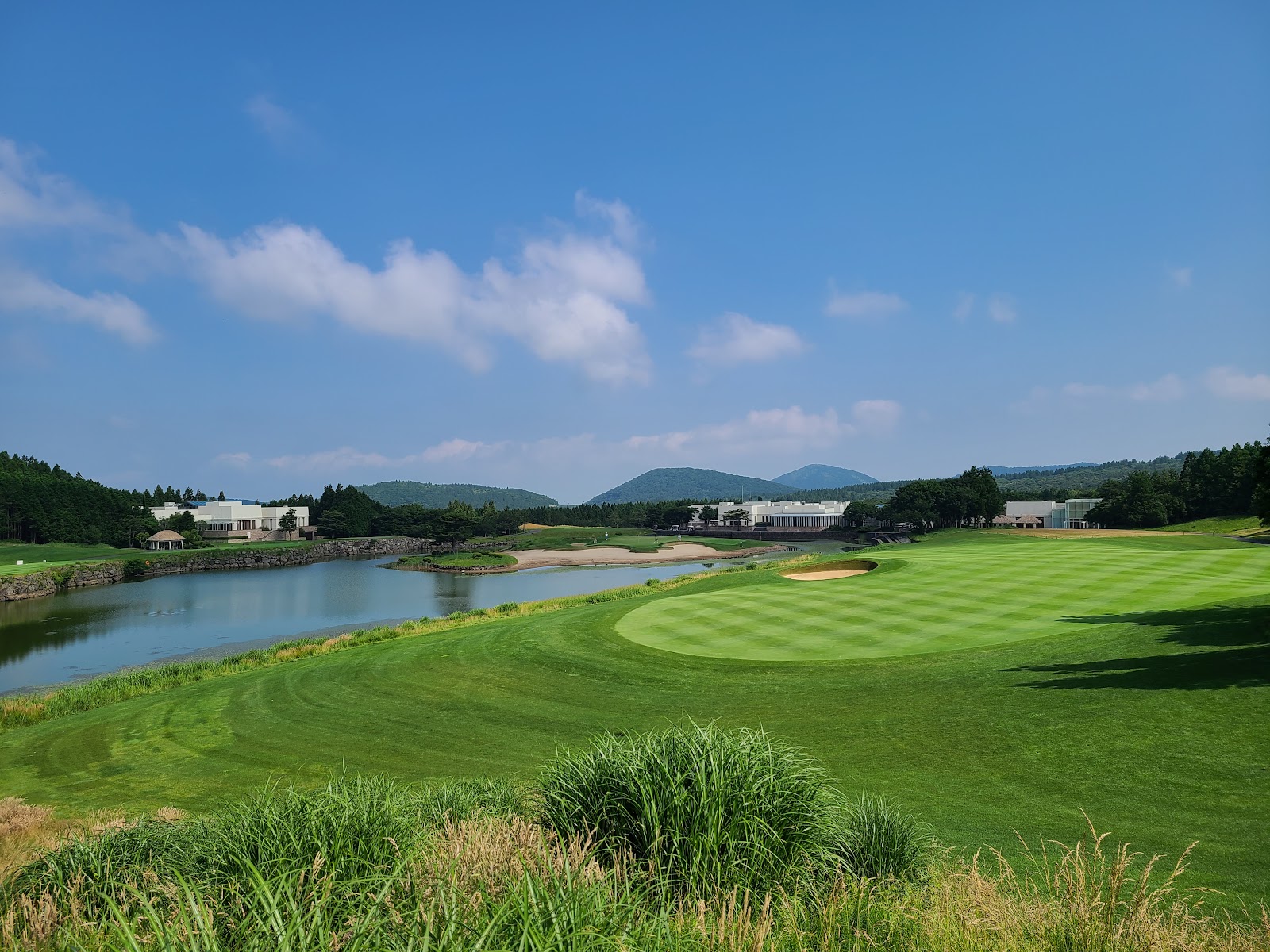
How to Play the Best Golf in Jeju Island
Korea's volcanic holiday island has more than two dozen courses, a world top 100 private club and a seaside layout that gives international tourists booking priority. The catch: tee parts, team caddies, foreigner registration and customs that surprise first timers. Here is the step by step playbook, from picking your window to the post round sauna.
Photo via Google, by 김우현.
Step 1: pick your window
Jeju is an hour's flight from Seoul on the busiest air corridor in the world, so getting there is the easy part. April to June and September to November are the prime golf months: mild, mostly clear, with the cherry blossom and autumn silvergrass as scenery bonuses. July and August are hot, humid and exposed to typhoon weather, and while winter on Jeju is far milder than mainland Korea and the courses stay open, the wind off the East China Sea can be two clubs strong. Book morning times in the first tee part, which starts before 8.30am, and the day is yours by two o'clock.
Step 2: choose your courses honestly
The trophy is Nine Bridges, the CJ Group's private club 600 meters up Hallasan's southern slopes, a regular in the world top 100 and former host of the PGA Tour's CJ Cup. Access is the catch: non members generally need member hosting, a club affiliation or a specialist planner, at indicative 2026 guest rates of roughly 350,000 to 550,000 won. Treat it as the maybe that justifies the trip, not the booking you build it on.
The bookable core is strong. Lotte Skyhill Jeju gives you 36 polished Robert Trent Jones Jr. holes from 2005 beside the Lotte resort strip. Elysian Jeju plays through volcanic country inland. Pinx Golf Club drapes 27 holes above the Jungmun coast, and Jungmun Golf Club itself, opened 1981, is Korea's only true seaside course, with international tourists given reservation priority. Teddy Valley near Seogwipo rounds out a week with on site lodging. Our Jeju green fees guide prices every one of them, and our best courses in South Korea ranking shows where they sit nationally.
Step 3: book the Korean way
Most Jeju tee sheets live on Korean language platforms, so the practical routes for visitors are your hotel concierge, the course's own English page where one exists, or an English language booking service. Two house rules matter. First, foreign players must usually be registered at booking, name and nationality per player, and some clubs apply a different rate settled on site. Second, the default booking unit is a team of four; twos and threes are accepted at many courses, sometimes with a small surcharge, but confirm rather than assume. Arrive 30 minutes before your time, and treat the tee time as a contract: Korean courses run to the minute.
Step 4: budget the real cost, not the green fee
Jeju quotes green fees per player but services per team. A caddie, effectively standard at the leading courses, runs about 100,000 to 150,000 won per team of four, and the cart another 80,000 to 100,000 won per team; at Jungmun specifically, indicative 2026 rates are about 100,000 to 120,000 won for the caddie and 80,000 won for the cart. Split four ways, the add ons put roughly 50,000 won on each player's day. Tipping is not expected; 10,000 to 20,000 won is a generous gesture, never an obligation. With resort course fees at roughly 200,000 to 350,000 won in 2026, a comfortable Jeju golf day budgets around 300,000 won per player, always confirmed directly before booking.
Step 5: enjoy the customs
The round itself comes with Korean rhythm. Many courses pause at the halfway house between nines, and the caddie, often working one to a team, reads every green, rakes every bunker and keeps the pace brisk. Dress codes are conservative, collared shirts and tailored shorts, and a change of clothes matters because the post round shower and sauna is half the institution. Plan lunch at the clubhouse, the food is routinely excellent, and build your evenings around Seogwipo's black pork restaurants. For the full week's shape, our 4 day Jeju golf itinerary does the routing for you.
The Jeju access cheat sheet
| Item | What to expect |
|---|---|
| Resort green fees | Roughly 200,000 to 350,000 won at Lotte Skyhill, Elysian and peers; weekends higher than weekdays |
| Nine Bridges | Private; member hosting or specialist planner; indicative guest rates 350,000 to 550,000 won |
| Caddie | About 100,000 to 150,000 won per team, paid on the day; standard at leading courses |
| Cart | About 80,000 to 100,000 won per team |
| Booking unit | Teams of four by default; smaller groups by arrangement; foreign players registered by name and nationality |
| Best months | April to June and September to November; avoid typhoon season in late summer |
| Getting there | About an hour's flight from Seoul; rent a car, courses are 40 to 70 minutes from Jeju City |
Build a Jeju golf trip
Tee times in the right tee part, the Nine Bridges question answered honestly, and a base between Jungmun and Seogwipo. Tell us roughly when and who is travelling and one concierge costs it to the head, with no obligation.
Prefer to book tee times only? Check live tee time availability on Jeju.
Jeju golf questions
Can tourists play golf on Jeju Island?
Yes, easily. Jeju is South Korea's holiday golf island and several courses actively prioritize international visitors, Jungmun Golf Club among them. Book through your hotel concierge or an English language booking platform, give each foreign player's name and nationality at booking, and arrive 30 minutes before your tee time.
Can visitors play Nine Bridges on Jeju?
Nine Bridges is a private CJ Group club and Korea's only regular world top 100 entry, and non member access is limited. Rounds generally happen through member hosting, club affiliations or high end trip planners, with indicative 2026 guest rates around 350,000 to 550,000 won. Treat it as a maybe, not a booking.
How much does a round of golf cost on Jeju?
Indicative 2026 visitor fees run roughly 200,000 to 350,000 won at the leading resort courses such as Lotte Skyhill and Elysian Jeju, more at Nine Bridges. On top, budget a caddie fee of about 100,000 to 150,000 won per team and a cart fee of about 80,000 to 100,000 won per team. Always confirm directly before booking.
When is the best time to play golf on Jeju Island?
April to June and September to November are the prime windows: mild, clear and outside the summer humidity and typhoon season. Winter golf is playable, Jeju is far milder than the mainland, but wind off the East China Sea is a real factor. July and August are hot, humid and stormy.
Related
The Tee Sheet
Tee time windows, course access changes and the trips worth taking. Every other week.
Researched and written by the GolfForKings editorial desk. Fees, caddie and cart rates and booking practice verified June 2026 from course listings and Korean booking platforms; all figures indicative. Last reviewed June 2026.