Green Fees in Jeju Island: What Golf Costs in 2026
Jeju is Korea's golf island: a volcanic dot in the Korea Strait with around 30 courses, a world top 100 in Nine Bridges, and the mildest winters in the country. It is also where foreign golfers first meet the Korean way of pricing a round, where the green fee is only the opening number and the caddie and cart are part of the deal at almost every club. Here is what golf on Jeju actually costs in 2026, course by course, with the extras counted in and the value windows that bring the bill down.
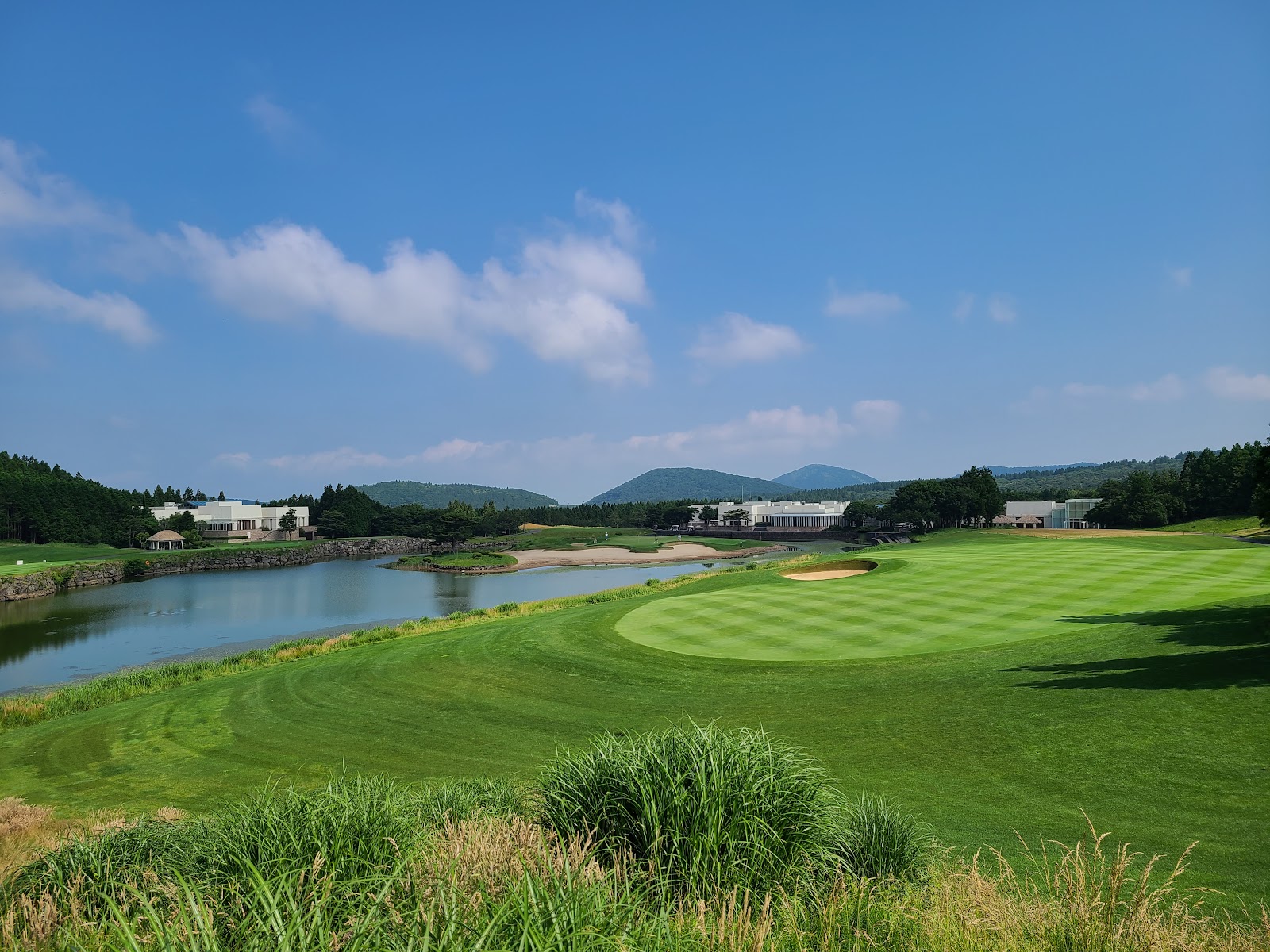
Photograph: The Club at Nine Bridges, Jeju, by 김우현 via Google
The short answer
Plan on roughly 200,000 to 350,000 won for a visitor green fee at Jeju's leading resort courses in 2026, about 145 to 250 US dollars, with weekends typically 60,000 to 100,000 won dearer than weekdays. Lotte Skyhill Jeju opens around 200,000 to 280,000 won midweek and Elysian Jeju runs about 220,000 to 300,000, with both rising at weekends. Nine Bridges sits above the whole market: where access is arranged at all, reported fees run roughly 350,000 to 450,000 won on weekdays and up to 550,000 at weekends.
Then come the Korean extras. A caddie is mandatory at most clubs and charged per group, around 120,000 to 150,000 won for the four ball, and the cart adds about 80,000 to 100,000 won more. Split four ways that is roughly 50,000 to 60,000 won per player on top of every green fee, before lunch at the turn, which on Jeju is practically a course feature. The table below gives the indicative picture by course; the sections beneath explain the extras, the mainland comparison and how to actually get a tee time as a visitor.
Jeju Island green fees by course, 2026
| Course | Indicative 2026 green fee | Notes |
|---|---|---|
| Nine Bridges | Roughly 350,000 to 450,000 won weekdays; 450,000 to 550,000 weekends ($250 to $395) | World top 100; private CJ Group club, hosted the PGA Tour's CJ Cup; limited non member access, arrange well in advance |
| Lotte Skyhill Jeju | Around 200,000 to 280,000 won weekdays; 280,000 to 350,000 weekends ($145 to $250) | 36 holes by Robert Trent Jones Jr., opened 2005; polished resort golf near the Lotte resort cluster |
| Elysian Jeju | Around 220,000 to 300,000 won weekdays; 300,000 to 380,000 weekends ($155 to $270) | Resort course set in volcanic country inland; bookable for visitors |
| Pinx Golf Club | Priced by season and day; confirm directly | 27 holes above the Jungmun coast; the celebrated championship loops are member led, the public loop takes visitor play |
| Jungmun Golf Club | Confirm directly; caddie 120,000 won and cart 80,000 won per team | Opened 1981, Korea's only true seaside course; open to non member tourists, international visitors can reserve about 3 months ahead |
| Teddy Valley Golf & Resort | Confirm directly | Public resort course near Seogwipo, par 72; on site accommodation makes it an easy package base |
Green fees verified indicatively in June 2026 from club listings and Korean golf cost guides; Korean courses price dynamically by season, day and tee time, so always confirm current rates directly with the course or your trip planner before booking. Check tee time availability.
What the green fee includes, and what it never does
Korean golf has a pricing grammar of its own, and Jeju follows it faithfully. The green fee buys the round and not much else. The caddie is the first addition, and at most clubs not an optional one: a single caddie runs the entire four ball, drives the cart, pulls clubs, reads greens and keeps the group on the clock, and the fee is charged per group, on Jeju roughly 120,000 to 150,000 won, with Jungmun at a posted 120,000 won per team. Tipping is not part of the culture; 10,000 to 20,000 won is appreciated, never expected.
The cart is the second addition. Riding is standard at Korean courses and the cart fee is again per group, about 80,000 to 100,000 won on Jeju, with Jungmun posting 80,000 won per team. Locker fees of 10,000 to 20,000 won appear on some bills, club rental runs around 50,000 won and up, and the famous mid round meal stop is pay as you eat. Counted up, a 250,000 won green fee becomes a round nearer 310,000 per player once the shared caddie and cart are split. Budget that way from the start and nothing at the front desk will surprise you.
How Jeju compares with mainland Korea
Broadly, Jeju's resort courses sit in the same band as the better public courses around Seoul, with the island's marquee names carrying a premium. Around the capital, well regarded public layouts run roughly 150,000 to 250,000 won midweek and 200,000 to 320,000 at weekends, while the premium tier such as Jack Nicklaus Golf Club Korea reaches 280,000 to 350,000 won midweek. Jeju's advantage is not the sticker price but the calendar: mainland golf shrinks to a crawl in winter while Jeju, the warmest corner of the country, plays year round, and the flight from Seoul's Gimpo airport takes about an hour on one of the busiest air routes in the world. For the wider Korean picture, start with our guide to golf in South Korea.
Against the region, Korea is the expensive neighbor. The mandatory caddie and cart push a Jeju round well past an equivalent day in Thailand, where green fees run about 1,500 to 5,500 baht, and past most of Japan outside the trophy clubs; our Japan green fees guide and the Phoenix Country Club profile make a useful comparison set. What you get back is conditioning, pace kept by the caddie, and on Jeju a volcanic seaside setting no mainland course can match.
Booking as a foreign visitor
Jeju is one of the easier places in Korea for an overseas golfer to get a game, because the island courts tourist play. Jungmun Golf Club takes non member tourists directly and lets international visitors reserve around three months out, against one month for the domestic window. The resort courses are the other reliable door: staying at the attached hotel, as at Teddy Valley or in the Lotte cluster near Skyhill, typically unlocks tee times and package rates, and any good Jeju hotel concierge books golf as routinely as dinner. Nine Bridges is the exception, private and introduction led, so treat it as a bonus rather than a plan. Most course websites and booking engines run in Korean only, which is the strongest argument for a planner or concierge handling the sheet; our 4 day Jeju itinerary shows how the bookable courses stack into a trip, and Jeju pairs naturally with a Japan leg if you are crossing the strait.
Best value windows
Korean high season runs April to June and again September to October, when rates climb 20 to 30 percent and weekend sheets fill weeks out. The savings live in winter: from November to March discounts of 20 to 40 percent are common, and Jeju is the one Korean destination where a January round is a pleasure rather than an endurance test. Weekday play matters even more here than elsewhere, since the weekend premium routinely adds 60,000 to 100,000 won to the green fee. The formula for the sharpest price on the island is simple: midweek, morning, November to March or the edges of the shoulder months, booked as a stay and play package. Compare Jeju resort stays.
Plan your Jeju golf trip
We build the tee times, caddie and cart costs, transfers and the right resort base into one clear per head price, in English, with the Korean only booking systems handled for you. Tell us roughly when and who is travelling, and one concierge costs it with no obligation.
Jeju green fee questions
How much are green fees on Jeju Island in 2026?
Indicative 2026 visitor green fees at Jeju's leading resort courses run roughly 200,000 to 350,000 won, about 145 to 250 US dollars, with weekends 60,000 to 100,000 won dearer than weekdays. Nine Bridges sits above the market at a reported 350,000 to 550,000 won where access is arranged at all. On top of the green fee, budget around 120,000 to 150,000 won for the mandatory caddie and 80,000 to 100,000 won for the cart, both shared by the group. Always confirm current fees directly before booking.
Is a caddie mandatory on Jeju Island?
At most courses, yes. Korean golf is built around one caddie who runs the whole four ball, drives the cart, reads the greens and keeps the group moving, and the fee is charged per group rather than per player. On Jeju budget roughly 120,000 to 150,000 won per group for the caddie and about 80,000 to 100,000 won for the cart. Tipping is not expected; 10,000 to 20,000 won is a kind gesture, never an obligation.
Can visitors play Nine Bridges on Jeju?
Only with difficulty. The Club at Nine Bridges, the CJ Group club that hosted the PGA Tour's CJ Cup and ranks in the world top 100, is private and offers limited access to non members. Where an introduction, member host or concierge arrangement comes through, reported fees run roughly 350,000 to 450,000 won on weekdays and up to 550,000 won at weekends. Build the trip around the bookable courses such as Lotte Skyhill, Pinx and Jungmun, and treat Nine Bridges as the bonus if a door opens.
When is golf cheapest on Jeju Island?
Winter. Korean high season runs April to June and September to October, when rates climb 20 to 30 percent and weekend sheets fill fast. From November to March discounts of 20 to 40 percent are common, and Jeju is the one part of Korea where winter golf is genuinely pleasant, since the island stays milder than the mainland and courses play year round. Midweek mornings in the shoulder months are the sweet spot. Always confirm current rates directly before booking.
Related
The Tee Sheet
Course openings, ranking shake ups and the booking windows that matter. Every other week.
Researched and written by the GolfForKings editorial desk. Course facts and indicative fees verified June 2026. Last reviewed: June 2026.