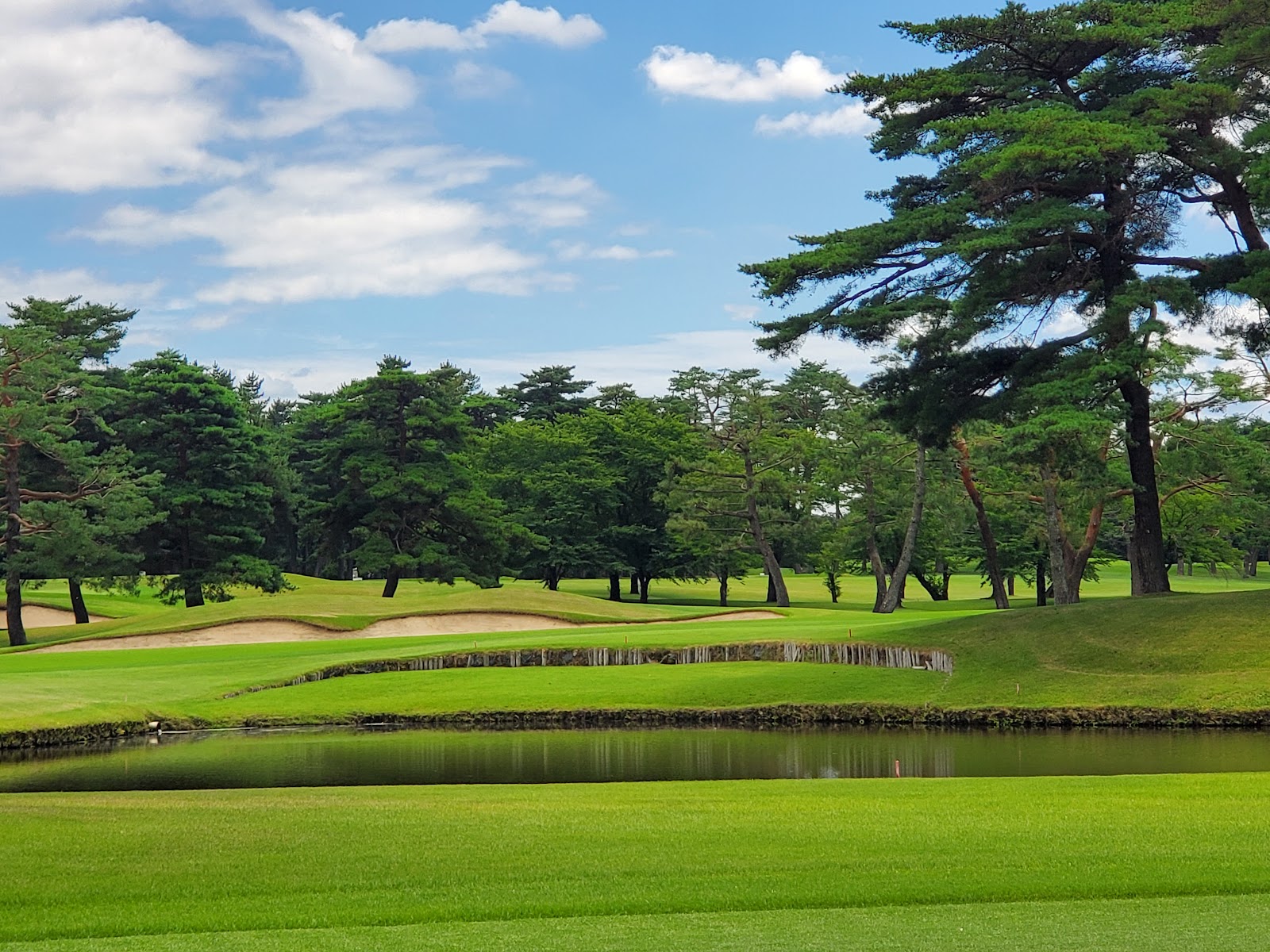
Kasumigaseki West
Seiichi Inoue laid out the West Course at Kasumigaseki in 1929, his first design and the quieter sibling to the East that hosted Olympic golf in 2021. A par 73 of 7,117 yards through pine and creek, at a club whose deep Alison bunkering helped define the Japanese game.
Photo: Kasumigaseki Country Club via Google.
The verdict
Kasumigaseki is the most storied club in Japanese golf, and while the East Course took the Olympic spotlight in 2021, the West is the elder of the two, laid out by Seiichi Inoue in 1929 as his very first design. It winds a par 73 of 7,117 yards through avenues of pine, with ponds and creeks shaping the inward half and a calm, classical feel throughout.
The club is famous for the deep, sculpted bunkers that the British architect C.H. Alison introduced here in 1930, hazards so influential that Japanese golfers still call a steep faced bunker an Arison. The West is a private members club of the highest order, so access for visitors is limited and best arranged through a member or a specialist. For the traveller who gets on, it is a window into the roots of golf in Japan.
Kasumigaseki West at a glance
- Opened
- 1929
- Designer
- Seiichi Inoue
- Type
- Forest parkland
- Par
- 73
- Yardage
- 7,117 yds
- Green fee
- Members and guests
Designer, opening year, par and yardage verified June 2026 from Kasumigaseki Country Club and leading course databases. The West Course was designed by Seiichi Inoue and opened in 1929, a par 73 of 7,117 yards, at a club whose East Course carries C.H. Alison's celebrated bunkering and hosted the 2021 Olympic golf. Kasumigaseki is a private members club with limited visitor access and no published public green fee, so always confirm access and any guest rate directly before planning.
The holes worth the trip
The West opens through classic Japanese parkland, broad corridors of pine that ask for a positioned drive rather than brute force. The club's celebrated two green system, a legacy of managing turf through Japan's seasons, gives many holes a summer and a winter green and subtly changes the angles and yardages from one visit to the next.
It is the back nine where the West shows its teeth, the scenery shifting as ponds and creeks come into play and the deep Alison bunkers guard the lines. The greens are subtle and well defended, and the premium is on shaping the ball and controlling distance into firm targets.
At 7,117 yards off the back the West is a full test, but it is strategy and ball control, not length, that decide the round. It closes in the same quiet, tree framed style it begins, a course that rewards the patient golfer and carries a century of Japanese championship history in its bunkers.
How to get on
| What to know | Detail |
|---|---|
| Access | Private members club; visitors generally play as the guest of a member, with limited introduced access for overseas golfers |
| Green fee | No published public fee; any guest or visitor rate is arranged through the club (indicative, 2026) |
| Booking | Arrange well in advance through a member or a Japan golf specialist; weekend access is very limited |
| On the day | Caddies are standard; a long established clubhouse dress code and etiquette apply |
| Getting there | Kawagoe, Saitama, about an hour northwest of central Tokyo |
| Best months | April to May and October to November for mild, dry playing conditions |
Access arrangements verified June 2026; Kasumigaseki is private with limited visitor access, so always confirm directly well in advance before planning a visit.
Where to stay nearby
Most overseas golfers base themselves in Tokyo, an hour southeast, where the hotels, dining and culture need no introduction. The city makes an effortless base for a Japanese golf trip, with Kasumigaseki and several other historic clubs within reach for the well connected visitor.
For a golf focused stay, the hotels of western Saitama around Kawagoe and Omiya put the club closer to hand. Kasumigaseki pairs naturally with Tokyo Golf Club and the great courses of the Kanto region for a tour of the roots of the Japanese game.
Looking for a base? See our recommended hotels and resorts near Kasumigaseki.
Build a Japan golf trip
We arrange introductions and tee times at Japan's historic clubs where access allows, pair them with the best of the Kanto region and book the lodging around them. Tell us roughly when and who is travelling and one concierge costs it to the head, with no obligation.
Kasumigaseki West questions
Who designed the Kasumigaseki West Course?
The West Course was designed by Seiichi Inoue and opened in 1929, his first design. The club is also famous for the deep bunkers introduced by the British architect C.H. Alison in 1930.
Did Kasumigaseki host the Olympics?
Yes, but on the East Course, which staged the golf at the Tokyo 2020 Olympics, held in 2021. The West Course is the older of the club's two layouts.
What is the par and length of the West Course?
The West Course is a par 73 of 7,117 yards from the back tees, a forest parkland layout with ponds and creeks across the inward nine.
Can visitors play Kasumigaseki?
Access is limited. Kasumigaseki is a private members club where visitors generally play as a member's guest or through a specialist introduction. Always confirm access well in advance.
Related
The Tee Sheet
Tee time windows, course access changes and the trips worth taking. Every other week.
Researched and written by the GolfForKings editorial desk. Designer, opening year, par and yardage verified June 2026; indicative green fees verified June 2026. Last reviewed June 2026.