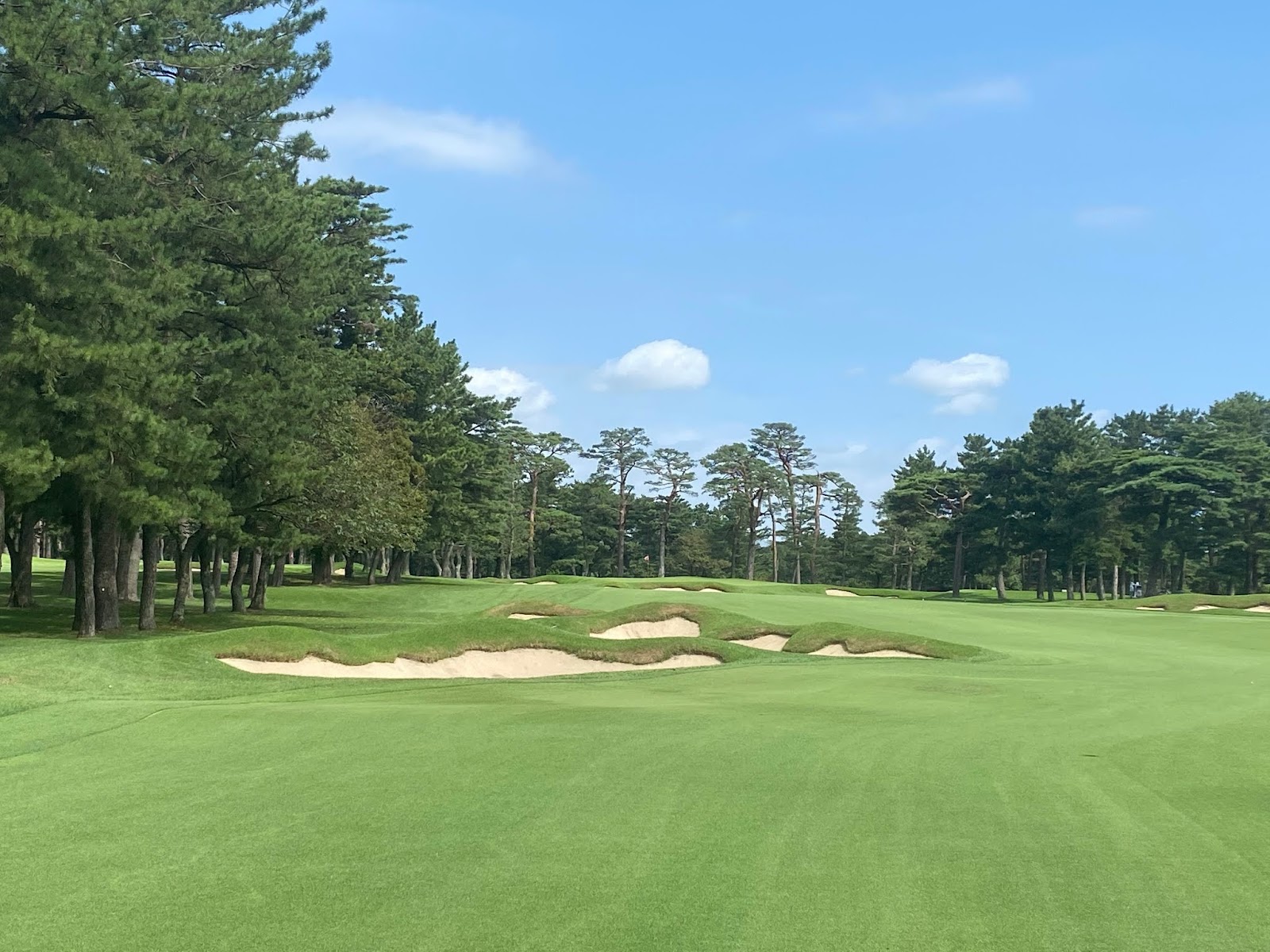
Abiko Golf Club
Rokuro Akaboshi laid out Abiko in 1930, the year Charles Alison toured Japan and changed the country's golf forever. Set on rolling, wooded land between Lake Teganuma and the Tone River in Chiba, it is one of the classic prewar courses of the Tokyo area, restored to firm single greens by Brian Silva in 2012 and a par 72 of about 6,920 yards.
Photo: Abiko Golf Club via Google.
The verdict
Abiko belongs to the golden age of Japanese golf. Rokuro Akaboshi, one of the most influential figures in the country's early game, routed it in 1930 while following Charles Alison around Japan, and the course carries that classical strategic thinking through its tree lined corridors and bold green complexes. For decades it played to the traditional Japanese two green system, but the 2012 restoration by Brian Silva and Kai Goalby converted it to single greens and returned much of the original strategic intent.
It is a members club with deep roots and real prestige rather than a resort, so the experience is about heritage, conditioning and a quiet, beautifully kept property rather than ocean views. For the travelling golfer who wants to understand where Japanese golf came from, an introduction to Abiko is one of the most rewarding rounds in the Tokyo area, and well worth arranging in advance through a member or a specialist.
Abiko Golf Club at a glance
- Opened
- 1930
- Designer
- Rokuro Akaboshi, Silva restoration
- Type
- Wooded parkland
- Par
- 72
- Yardage
- About 6,920 yds
- Green fee
- Members
Designer, opening year, par and yardage verified June 2026 from Abiko Golf Club records and leading course databases. Abiko opened in 1930 to a Rokuro Akaboshi design and was restored from twin greens to single greens by Brian Silva and Kai Goalby in 2012, a par 72 of about 6,920 yards. It is a private members club with no published public green fee, so always confirm access and any guest arrangement directly before planning.
The holes worth the trip
Abiko plays through mature woodland on land that rises and falls between Lake Teganuma and the Tone River, so the routing uses elevation change and dense tree lines to frame and defend each hole. The corridors demand position off the tee, and the angle into the green often matters more than raw length.
The Silva restoration is what makes the modern Abiko so good. Converting the old twin greens to single putting surfaces allowed the green complexes to be rebuilt with the contour and short grass surrounds that Akaboshi's strategy always implied, so recovery shots and the running approach are back in the game. The greens are firm, subtly sloped and the clear highlight of the round.
It is a course that rewards the thinking player and good iron play rather than the bomber, with the trees, the changes in level and the smart green sites all asking for control. For students of design it is a window into how the great prewar Japanese courses were conceived, and how a careful modern restoration can return them to their best.
How to get on
| What to know | Detail |
|---|---|
| Access | Private members club; overseas visitors play by introduction, generally on weekdays |
| Green fee | No published public fee; any guest rate is arranged through a member or specialist (indicative, 2026) |
| Booking | Arrange well in advance through a member, your hotel concierge or a Japan golf specialist |
| On the day | Caddies are traditional; many Japanese clubs include a lunch break between nines |
| Getting there | Abiko in Chiba Prefecture, around an hour by road or rail from central Tokyo |
| Best months | April to June and October to November for the most comfortable playing weather |
Access and fees verified June 2026; rates and policies change, so always confirm directly before booking.
Where to stay nearby
Most overseas golfers visiting Abiko stay in central Tokyo or out toward the Chiba side of the city and travel in for the round, since the club sits about an hour from the centre. Tokyo offers some of the finest hotels and dining anywhere, and makes a natural base for a wider tour of the great classic courses around the capital.
For a golf focused trip we can pair Abiko with the other prewar masterpieces of the Tokyo area and arrange the introductions, transfers and lodging so the days flow smoothly. It is an ideal anchor for a heritage minded Japanese golf itinerary.
Looking for a base? See our recommended hotels and resorts near Abiko Golf Club.
Build a Tokyo golf trip
Abiko is private, so access takes planning. We arrange the introductions where we can, pair it with the best classic courses around Tokyo and book the lodging around them. Tell us roughly when and who is travelling and one concierge costs it to the head, with no obligation.
Abiko Golf Club questions
Who designed Abiko Golf Club and when did it open?
Abiko Golf Club was designed by Rokuro Akaboshi and opened in 1930. It was restored from the traditional twin green layout to single greens by Brian Silva and Kai Goalby in 2012.
What is the par and length of Abiko?
Abiko is a par 72 of about 6,920 yards, set on rolling wooded land between Lake Teganuma and the Tone River in Chiba Prefecture.
Can visitors play Abiko Golf Club?
Abiko is a private members club. Overseas visitors generally play by introduction on weekdays, so arrange access well in advance through a member, a hotel concierge or a Japan golf specialist.
Where is Abiko Golf Club?
Abiko sits in Chiba Prefecture near Lake Teganuma, about an hour by road or rail from central Tokyo, which makes a convenient base for visiting golfers.
Related
The Tee Sheet
Tee time windows, course access changes and the trips worth taking. Every other week.
Researched and written by the GolfForKings editorial desk. Designer, opening year, par and yardage verified June 2026; indicative green fees verified June 2026. Last reviewed June 2026.