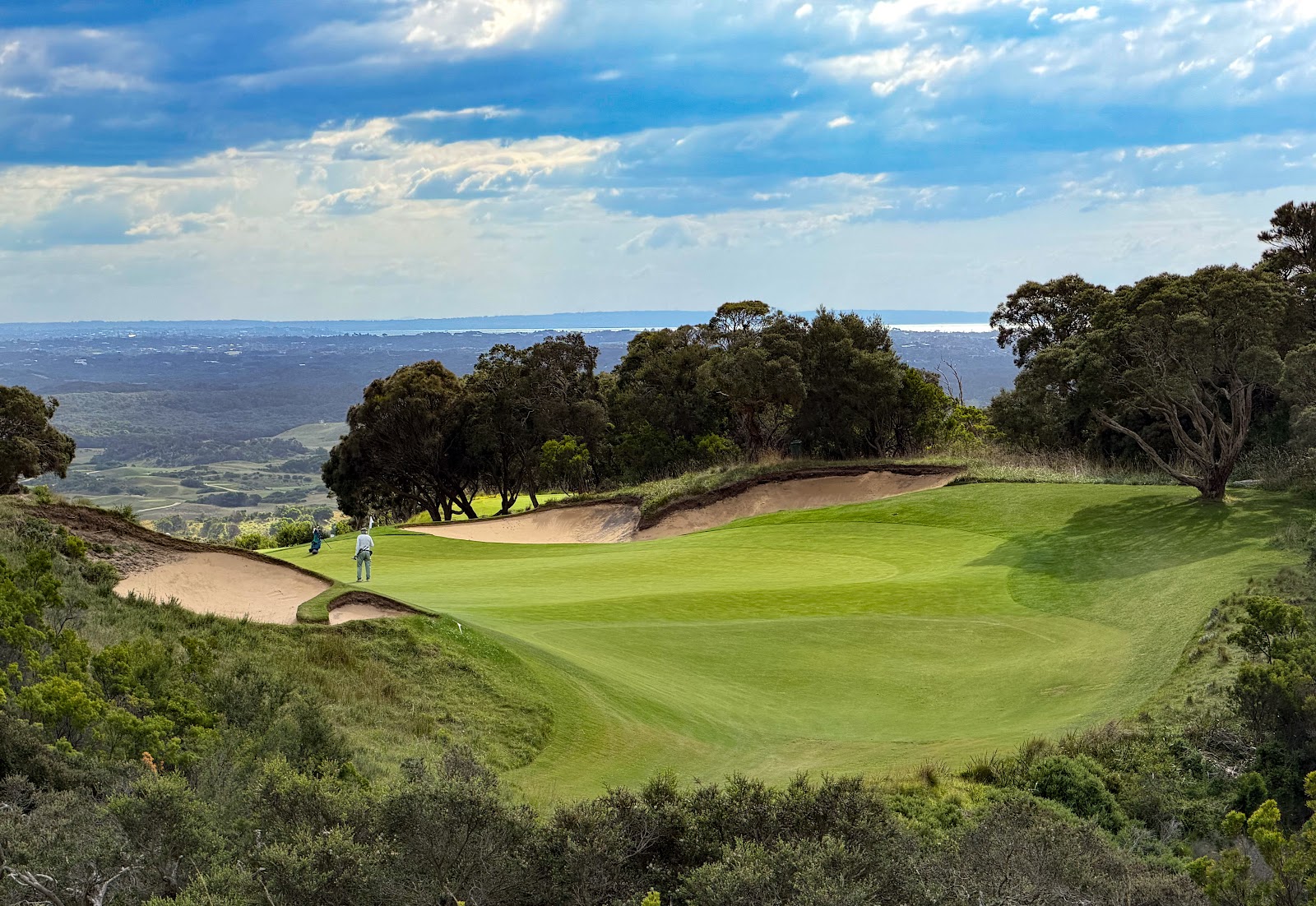
The National Old Course
Robert Trent Jones Jr carved the Old Course out of the cliffs at Cape Schanck in 1988, and it remains one of the most dramatic clifftop rounds in Australia. A bold, hilly par 72 of about 6,300 metres high above Bass Strait, it is the founding course of the country's largest private members club and a coastal spectacle from the first tee to the last.
Photo: The National Golf Club via Google.
The verdict
The Old Course is where The National began, and it set a standard for clifftop drama that the club's later layouts have spent decades answering. Robert Trent Jones Jr routed it across the steep, tumbling land at Cape Schanck and opened it in 1988, embracing the elevation rather than taming it. The result is a par 72 of about 6,300 metres that climbs, plunges and swings back toward the ocean, with Bass Strait filling the horizon and the wind a constant companion on the exposed high ground.
It is golf to be experienced as much as scored. The fairways pitch and roll, the greens sit on natural shelves and saddles, and the views from the upper holes stretch across the peninsula and out to sea. The National has since grown into Australia's largest private members club, with four courses on two sites, but the Old Course retains a special place as the original, the one that proved this wild stretch of coast could hold championship golf. For visitors lucky enough to gain access, it is an unmissable round.
The National Old Course at a glance
- Opened
- 1988
- Designer
- Robert Trent Jones Jr
- Type
- Clifftop coastal
- Par
- 72
- Yardage
- About 6,300 m
- Access
- Private members
Designer, opening year, par and length verified June 2026 from The National Golf Club and leading course databases. The Old Course was designed by Robert Trent Jones Jr and opened in 1988, a par 72 of about 6,300 metres, roughly 6,900 yards. The National is a private members club rather than a daily fee course, so there is no public green fee; access is normally as a guest of a member, through reciprocal club arrangements, or via an accredited golf tour operator. Policies and any visitor packages change, so always confirm the current arrangements directly before planning a visit.
The holes worth the trip
The Old Course makes its character clear from the opening holes, asking you to commit to shots played from sloping lies to greens perched on the natural contours of the land. Robert Trent Jones Jr leaned into the elevation rather than flattening it, so judging the effect of slope and the ever present wind on distance becomes the central skill of the round. Big hitters can take on the hills, but the smart player thinks first about the angle into each green.
The signature is the short par 3 seventh, the most photographed hole on the property and one of the prettiest one shotters on the peninsula. It plays about 150 yards over a deep gully to a green set against the sparkling blue of Bass Strait, with coastal views from tee to green and a swirling breeze that turns a wedge into a genuine decision. It is the hole every visitor wants a photograph of, and it more than earns the attention.
Around it, the routing keeps delivering coastal theater: downhill drives toward the sea, approaches played across folds in the ground, and several greens framed by tea tree and native scrub. The closing holes bring the high ground and the views back into play, so the round finishes the way it started, with the ocean as a backdrop and the wind having the final word.
How to get on
| What to know | Detail |
|---|---|
| Access | Private members club, Australia's largest, with no general public green fee; the Old Course is one of four National courses across two sites |
| How to play | Normally as the guest of a member, through a reciprocal club arrangement, or via an accredited golf tour operator that holds access for visitors |
| Booking | Arrange well in advance through your host member or a Melbourne golf specialist; do not expect to turn up and pay a green fee |
| On the day | A hilly, exposed clifftop walk where carts are commonly used; bring wind protection and expect the breeze to influence every club |
| Getting there | Cape Schanck on the tip of the Mornington Peninsula, about 90 minutes by road from Melbourne |
| Best months | October to April for the warmest, driest golf, with the peninsula's summer the peak season |
Access details verified June 2026 against The National Golf Club; the club is private and arrangements change, so always confirm the current visitor policy directly before planning a trip. See our Australia green fees guide for the wider picture.
Where to stay nearby
The Mornington Peninsula is one of Victoria's most rewarding short break regions, so there is no shortage of comfortable bases near Cape Schanck. The villages of Sorrento and Portsea offer boutique hotels and fine dining at the peninsula's tip, while the hinterland around Red Hill and Main Ridge adds cellar door wineries, hot springs and country lodges within a short drive of the golf.
Most visiting golfers fold The National into a wider Melbourne and Mornington trip, pairing the peninsula's clifftop courses with the famous Sandbelt closer to the city. It makes an ideal anchor for a long weekend built around great golf, good wine and the dramatic coast of southern Victoria.
Looking for a base? See our recommended hotels and resorts on the Mornington Peninsula.
Build an Australia golf trip
We work with the access partners who can open clifftop courses like The National, pair them with the best of the Mornington Peninsula and the Melbourne Sandbelt, and arrange the lodging around them. Tell us roughly when and who is travelling and one concierge costs it to the head, with no obligation.
The National Old Course questions
Who designed the Old Course at The National and when did it open?
The Old Course was designed by the American architect Robert Trent Jones Jr and opened for play in 1988. It was the founding course of the club at Cape Schanck on the Mornington Peninsula.
What is the par and length of The National Old Course?
The Old Course is a par 72 measuring about 6,300 metres, roughly 6,900 yards, played across steep, tumbling clifftop land high above Bass Strait, which makes it feel longer and more demanding than the card suggests.
Can visitors play The National Old Course?
The National is Australia's largest private members club, so the Old Course is not open to general public green fee play. Access is normally as the guest of a member, through a reciprocal club arrangement, or via an accredited golf tour operator that holds access. Always arrange play in advance and confirm the current policy before travelling.
What is the signature hole on the Old Course?
The short par 3 seventh is the most photographed hole, a one shotter of about 150 yards played over a gully to a green set against the sparkling backdrop of Bass Strait, with spectacular coastal views from tee to green.
Related
The Tee Sheet
Tee time windows, course access changes and the trips worth taking. Every other week.
Researched and written by the GolfForKings editorial desk. Designer, opening year, par and length verified June 2026; access policy verified June 2026. Last reviewed June 2026.