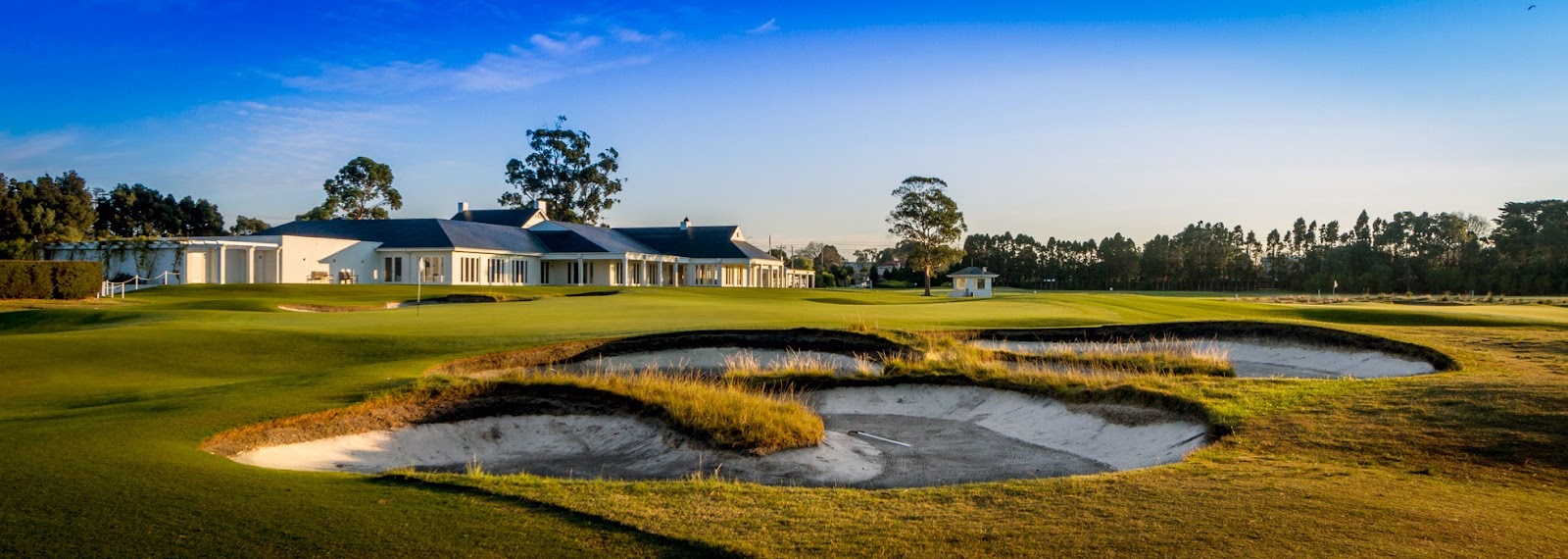
Kingston Heath
Dan Soutar routed Kingston Heath in 1925 on a compact parcel of the Melbourne sandbelt, and a year later Alister MacKenzie added the bunkering and the famous short 15th that made it immortal. A par 72 of about 6,945 yards on firm, fast sandbelt turf, it ranks inside the world top 20 and will host the Presidents Cup in 2028.
Photo: Kingston Heath Golf Club via Google.
The verdict
Dan Soutar laid out Kingston Heath in 1925 on a tight rectangle of sandy heathland southeast of Melbourne, and when Alister MacKenzie passed through Australia in 1926 he supplied the bunkering scheme and redesigned the short 15th. The result is widely regarded as the finest course on the celebrated Melbourne sandbelt and one of the greatest classical courses anywhere, regularly rated inside the world top 20.
It is the bunkering that defines it, sprawling, sand flashed hazards cut into firm fescue and couch turf, framing greens of subtle, devilish contour. There is not a weak hole on the property, the par 3s are among the best collection in the game, and with the Presidents Cup heading there in 2028, a round at Kingston Heath sits near the top of any sandbelt pilgrimage. Access is limited, so plan well ahead.
Kingston Heath at a glance
- Opened
- 1925
- Designer
- Dan Soutar, MacKenzie bunkering
- Type
- Sandbelt heathland
- Par
- 72
- Yardage
- About 6,945 yds
- Green fee
- Members
Designer, opening year, par and yardage verified June 2026 from Kingston Heath Golf Club and leading course databases. The course was laid out by Dan Soutar in 1925, with Alister MacKenzie supplying the bunkering and the short 15th in 1926, a par 72 of about 6,945 yards. Kingston Heath is a private members club with limited visitor access; overseas and interstate visitors should contact the golf shop in advance. There is no published public green fee, so always confirm access and any guest rate directly before planning.
The holes worth the trip
Kingston Heath is a masterclass in classical design on a surprisingly compact site, the firm sandbelt turf running fast and the MacKenzie bunkering framing every shot. The fairways are generous in width but demand the right side for the angle in, and the greens are full of subtle movement that punishes the careless approach.
The set of par 3s is among the very best in golf, led by the short 15th that MacKenzie redesigned, an uphill one shotter ringed by sand that has tormented the world's best players for a century. The variety of half par holes and the strategic bunkering reward the thinking golfer over the long hitter.
The closing holes run firm and fast back toward the clubhouse, the bunkering tightening the line and the greens demanding precise pace. Kingston Heath rewards the player who plots a route and controls the ball on the ground, and it gives back the purest sandbelt golf, soon to be on show again at the 2028 Presidents Cup.
How to get on
| What to know | Detail |
|---|---|
| Access | Private members club; overseas and interstate visitors play on a limited basis, generally Monday, Tuesday, Thursday and Friday |
| Green fee | No published public fee; any guest or visitor rate is arranged through the golf shop (indicative, 2026) |
| Booking | Contact the golf shop well in advance; an introduction or a sandbelt golf specialist helps secure a tee time |
| On the day | Walking is the tradition on firm sandbelt turf; caddies can be arranged; pace and etiquette are expected |
| Getting there | Cheltenham in southeast Melbourne, about 30 minutes from the city and Melbourne Airport |
| Best months | October to April for the warm, dry sandbelt season when the turf runs at its firmest |
Access arrangements verified June 2026; Kingston Heath is private and policies change, so always confirm directly before planning a visit with the golf shop or your trip planner.
Where to stay nearby
Most visiting golfers base themselves in central Melbourne or along the bayside suburbs, both within easy reach of the sandbelt clubs and full of excellent hotels, dining and the wider attractions of one of the world's great sporting cities. A Melbourne base puts Kingston Heath and its sandbelt neighbours within a short drive.
For a golf focused stay, the bayside suburbs around Black Rock and Brighton put several of the sandbelt courses on the doorstep. It is an ideal region to build a multi course pilgrimage around, pairing Kingston Heath with Royal Melbourne, Victoria and the other classics of the Melbourne sandbelt.
Looking for a base? See our recommended hotels and resorts near Kingston Heath.
Build a Melbourne golf trip
We secure the Kingston Heath tee times where access allows, pair them with the best of the region and book the lodging around them. Tell us roughly when and who is travelling and one concierge costs it to the head, with no obligation.
Kingston Heath questions
Who designed Kingston Heath and when did it open?
Kingston Heath was laid out by Dan Soutar and opened in 1925, with Alister MacKenzie supplying the bunkering scheme and redesigning the short 15th hole during his 1926 visit to Australia.
What is the par and length of Kingston Heath?
Kingston Heath is a par 72 of about 6,945 yards from the back tees, played on firm, fast Melbourne sandbelt turf with celebrated bunkering and green complexes.
Where does Kingston Heath rank?
Kingston Heath is consistently rated among the top courses in Australia and inside the world top 20, widely regarded as the finest course on the Melbourne sandbelt.
Can visitors play Kingston Heath?
Kingston Heath is a private members club with limited visitor access, generally on Monday, Tuesday, Thursday and Friday. Overseas and interstate visitors should contact the golf shop well in advance.
Related
The Tee Sheet
Tee time windows, course access changes and the trips worth taking. Every other week.
Researched and written by the GolfForKings editorial desk. Designer, opening year, par and yardage verified June 2026; indicative green fees verified June 2026. Last reviewed June 2026.