Playing Links Golf in Wind: A Survival Guide
The wind is not an interruption to links golf, it is the point of it. On an exposed coast the same hole can change by three clubs from one morning to the next, and the players who score are not the longest but the ones who flight the ball low, swing within themselves and use the firm ground. Here is our practical survival guide: eight techniques that turn a wild day from a card wrecker into the best round of the trip.
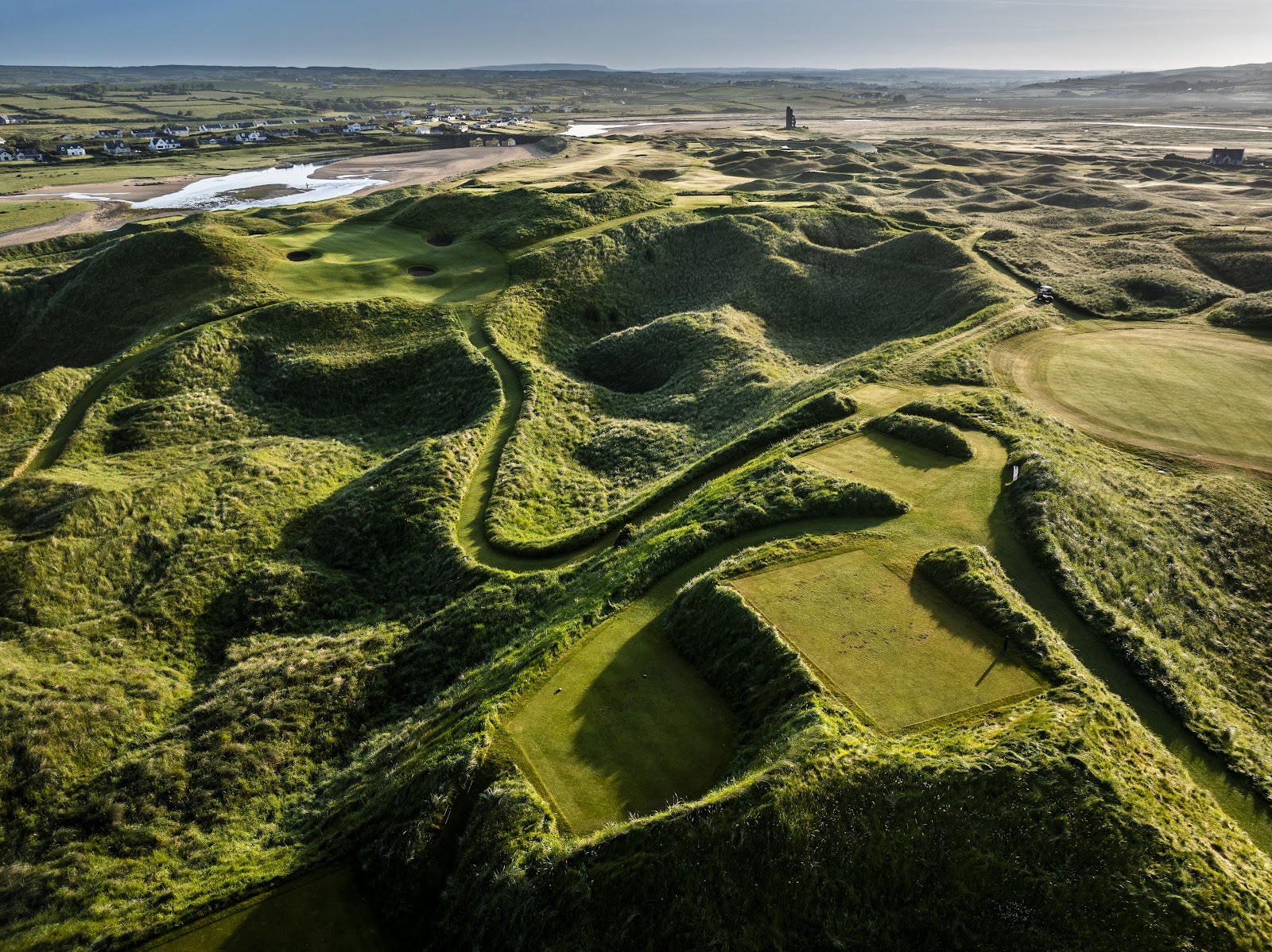
Photo: Lahinch Golf Club via Google.
Why the wind rules a links
Links courses sit on open, treeless ground where the wind comes off the sea with nothing to slow it. There is no shelter, the turf is firm and fast and built for a running game, and the breeze that barely registers on a parkland course becomes the defining feature of the round. Accept that early and the round becomes a puzzle to solve rather than a fight to lose. The golfers who love links golf are the ones who learned to work with the wind, flighting the ball down, taking spin off it and letting the ground do half the work.
None of this requires a tour swing. It requires a lower flight, a calmer tempo and a willingness to take more club and aim sensibly. Below are the eight techniques we coach travelling golfers through before a links trip, gathered into a single table you can run through on the range, then the detail on flight, tempo and course management that ties them together.
Eight ways to survive the wind
| Technique | How | Our verdict |
|---|---|---|
| Tee it lower | Peg the ball down and play it slightly back | Essential. A lower launch off the tee cuts the wind's grip on the ball; the higher you tee it, the more it balloons. |
| Swing easy | Smooth, three quarter effort, shorter finish | Essential. Hard swings add spin and the wind feasts on spin. When it is breezy, swing easy. |
| Club up into the wind | One to three extra clubs, then swing smoothly | Essential. Trust the extra club rather than forcing it; the easier swing flies straighter and lower. |
| Play the knockdown | Grip down, ball back, low punchy finish | Essential. The signature links shot, lower and lower spinning, far less affected by the wind. |
| Club down and ride it | Downwind, less club, higher flight, allow for run | Recommended. Let the wind carry it, but plan for a hot landing and plenty of release. |
| Manage the crosswind | Aim off and let it drift, or hold it against the wind | Recommended. Pick the one you trust under pressure and commit; indecision is the real miss. |
| Use the ground | Land it short and let it run; putt from off the green | Recommended. Firm links turf rewards the running shot; the air is the enemy, the ground a friend. |
| Widen your stance and stay balanced | A touch wider, quieter lower body, smooth tempo | Useful. A stable base in a gale keeps the strike clean and the tempo from quickening. |
General coaching guidance for links conditions; work the shots on the range before the trip and adjust to your own game. Browse links tee time availability.
Flight, tempo and the running game
Everything in a links wind starts with flight. The higher the ball climbs, the longer the wind has to work on it, so the goal into and across the wind is a lower, flatter trajectory with less spin. Tee the ball down, move it a fraction back in the stance, grip down on the club for control and finish lower and shorter than usual. That same knockdown motion, a compact backswing into a punchy, abbreviated finish with the hands ahead of the ball, is the single most valuable shot you can own on a links and the one to grease before you travel.
Tempo is the quiet partner to flight. The instinct in a gale is to swing harder to fight it, which is exactly wrong, because force adds the spin the wind exploits and balloons the ball higher. Take the extra club, sometimes two or three into a stiff breeze, and make a smooth, balanced, three quarter swing. Widen the stance a touch to stay grounded, keep the lower body quiet and let the calmer, fuller motion produce a penetrating ball that holds its line.
Finally, think along the ground. Firm links turf is built for the running shot, so plan to land the ball short of pins and greens and let it chase up, and reach for the putter or a low chip from well off the green where a parkland player would loft it. Aim into the safe side of trouble, accept that some holes simply play as bogeys in a big wind, and play for the fat of the green rather than the flag. Solve the wind hole by hole and a wild links day becomes the round you talk about for years.
Plan your links golf trip
Ready to test it where the wind matters? We arrange the great links of Scotland, Ireland, England and Wales, secure the marquee tee times, keep the driving short and sort the caddies and the hotels. Tell us roughly when and who is travelling and one concierge costs it to the head, with no obligation.
Links wind questions
How do you play golf in strong wind?
Lower your ball flight and swing within yourself. Tee the ball lower, move it back a fraction in the stance, grip down and make a smooth, three quarter swing with a shorter finish to take spin off the ball, since spin is what the wind feasts on. Take more club than the yardage suggests into a headwind and let the easier swing do the work. The old links saying holds: when it is breezy, swing easy.
Should you club up or down in the wind?
Into a headwind, club up, often one to three extra clubs depending on the strength, and swing smoothly rather than harder. Downwind, club down and use a higher flight to let the wind carry the ball, remembering it will also land hot and run, so allow for the extra release. In a crosswind, either aim off and let the wind bring the ball back or hold it against the wind with a controlled shape, whichever you trust more under pressure.
What is a knockdown shot and when should you use it?
A knockdown is a lower, controlled shot played with a longer club and an abbreviated swing. Grip down, play the ball slightly back, make a compact backswing and a low, punchy finish with the hands ahead, and the ball flies lower with less spin so the wind affects it far less. It is the bread and butter shot of links golf, ideal into the wind, in a crosswind and whenever you need to keep the ball under control.
Why is links golf so affected by the wind?
Links courses sit on open, treeless coastal ground where the wind blows unobstructed off the sea, so there is nothing to shelter a shot. The firm, fast turf also encourages a running game, which the wind rewards, and the same hole can change by several clubs from one day to the next depending on the direction. Learning to flight the ball down and use the ground is what separates players who enjoy a links from those who fight it.
Related
The Tee Sheet
Playing tips, course access changes and the trips worth taking. Every other week.
Researched and written by the GolfForKings editorial desk. General links coaching guidance, reviewed June 2026. Last reviewed June 2026.