Links Golf for First Timers
Your first round of true links golf is unlike anything you have played on soft parkland. The ground is firm and fast, the wind never stops, the ball runs as much as it flies, and a pot bunker can cost you a shot just to climb out. It is the original game, and it is a joy once you understand it. Here is what to expect from the wind, the turf, the bounce and the bunkers, with eight tips and the best courses to start on.
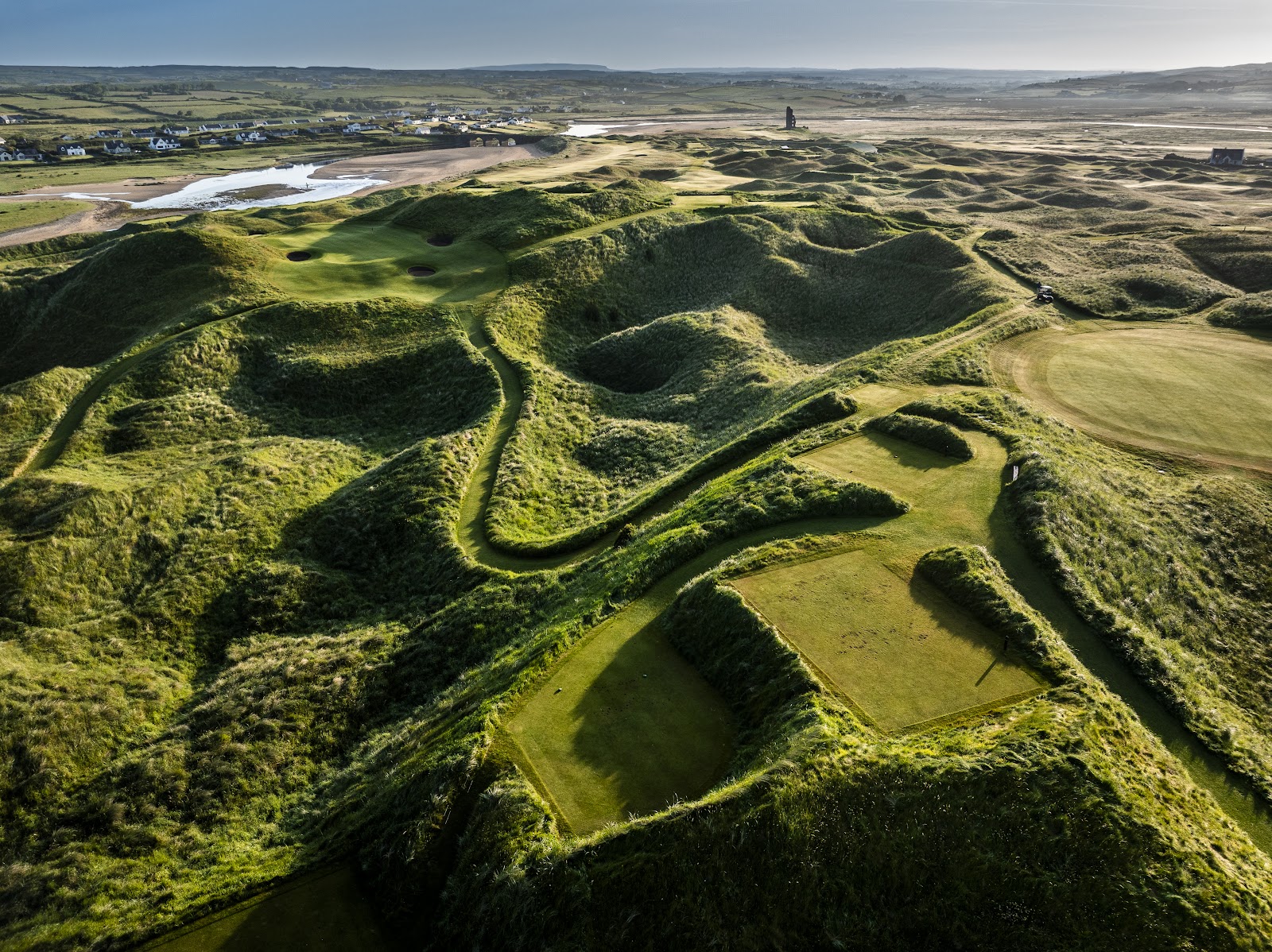
Photo: Lahinch Golf Club via Google.
What links golf actually is
Links is the oldest form of the game, played on the sandy linksland that links the beach to the farmland behind it. The defining features all flow from that sandy ground: firm, fast turf that the ball bounds along, land naturally rumpled into dunes, humps and hollows rather than bulldozed flat, almost no trees, and a constant sea wind. The hazards are not lakes and forced carries but deep, revetted pot bunkers, gnarly marram rough and the contours themselves. The ball spends as much time on the ground as in the air, which is the whole point.
That is why links plays so differently from the soft, green, still parkland most golfers learn on. There, the ball stops where it lands and you fly it at the flag. On links you have to think in two dimensions, the flight and then the roll, and you have to factor the wind into almost every club. It can humble a low handicapper on the first day and delight a higher handicapper who embraces the run of the ball. Either way it asks for imagination over power.
Eight tips for your first links round
Keep the ball low
The single most useful adjustment. A lower flight is less affected by the wind and uses the firm ground. Take more club, grip down, and make a smoother, three quarter swing to flight the ball down. High, soft shots get swallowed by the breeze.
Learn the bump and run
Around the greens, putt or chip and run with a 7 or 8 iron rather than a high lob. The firm fringes are designed to be used. Land the ball short and let it release to the hole, the percentage shot in the wind.
Respect the pot bunkers
Revetted pot bunkers are penal by design. Often the only sensible play is to wedge out sideways or backwards to safety, accept the half shot lost and move on. Trying to be a hero from a deep face usually costs two.
Take a caddie
On a first visit a local caddie is worth every penny. They read the wind, the blind lines and the borrow, club you correctly, and steer you away from the trouble you cannot see. Treat the round as a guided lesson.
Play the right tees
Links courses are usually longer and harder into the wind than the yardage suggests. Move up a set of tees, play for fun, and you will see far more of the course's strategy and a lot less of the rough.
Aim away from trouble, not at flags
Course management beats aggression. Favour the fat side of fairways and greens, allow for the ball to bounce and run, and play to the safe portion. Pars are made by avoiding the big number.
Putt from off the green
With firm, tightly mown surrounds, the putter is often the smartest club from twenty or thirty yards out. It removes the risk of a fluffed chip and uses the ground exactly as the architects intended.
Dress for four seasons
The weather can turn in minutes. Pack proper waterproofs, warm layers, a hat and spare gloves, even in summer. Comfort keeps your swing relaxed, and finishing dry and warm is half the battle on a wild day.
Where to play your first links
Start somewhere fair and welcoming rather than the most penal test on the coast. In Scotland, the Old Course at St Andrews is famously wide and forgiving off the tee, the most generous of great links to a newcomer, while the East Lothian courses, Gullane and North Berwick chief among them, are pure joy and very playable. In Ireland, Lahinch and Tralee deliver spectacular dunes golf that still gives you room to swing. Save the fiercest examiners, the likes of Carnoustie into a gale, for your second trip.
Above all, go in with the right mindset. Your first links round is a lesson in a new kind of golf, not a test of your handicap. Expect bounces you did not plan, wind that changes your club by three, and the occasional pot bunker that ruins a hole. Embrace the run of the ball, take a caddie, laugh at the bad bounces and savour the good ones, and you will understand within a few holes why this is the form of the game golfers travel the world to play.
Plan your first links trip
We match first timers to the right links, the welcoming ones that reward imagination rather than punish a holiday swing, sort the caddies and the tee times and build the week around them. Tell us roughly when and who is travelling, and one concierge costs it to the head, with no obligation.
Links golf questions
What is links golf?
Links golf is the original form of the game, played on the sandy linksland that links the sea to the farmland behind it. The turf is firm and fast, the land naturally rumpled into dunes and hollows, there are few trees, the wind is constant, and the hazards are deep pot bunkers and thick rough rather than water and forced carries. The ball runs along the ground as much as it flies, so the game rewards low, controlled shots and clever use of the bounce.
Why is links golf so hard for first timers?
Most golfers learn on soft parkland where the ball stops where it lands and the air is still. Links golf flips that. The wind changes club selection by several clubs, firm turf sends the ball bounding into trouble, blind shots ask you to trust a line you cannot see, and a pot bunker can cost a stroke just to escape. It is less about power and more about flight control, course management and accepting that the ground is part of the game.
What clubs and shots do you need for links golf?
The key skill is keeping the ball low and using the ground. Learn the bump and run with a 7 or 8 iron around the greens instead of a high lob, the punch shot into the wind, and a comfortable low fade or draw to hold a line in a crosswind. A hybrid that you can run onto a green is invaluable. You do not need new clubs, just a willingness to fly the ball lower and let it release toward the target.
Which links courses are best for a first timer?
Start somewhere fair and welcoming rather than the most penal test. In Scotland the Old Course at St Andrews is wide and forgiving off the tee, and East Lothian courses such as Gullane and North Berwick are joyful introductions. In Ireland, Lahinch and Tralee are spectacular and playable. Take a caddie, play the right tees, and treat the first round as a lesson in a new kind of golf.
Related
The Tee Sheet
Playing guides, course access changes and the trips worth taking. Every other week.
Researched and written by the GolfForKings editorial desk. Last reviewed June 2026.