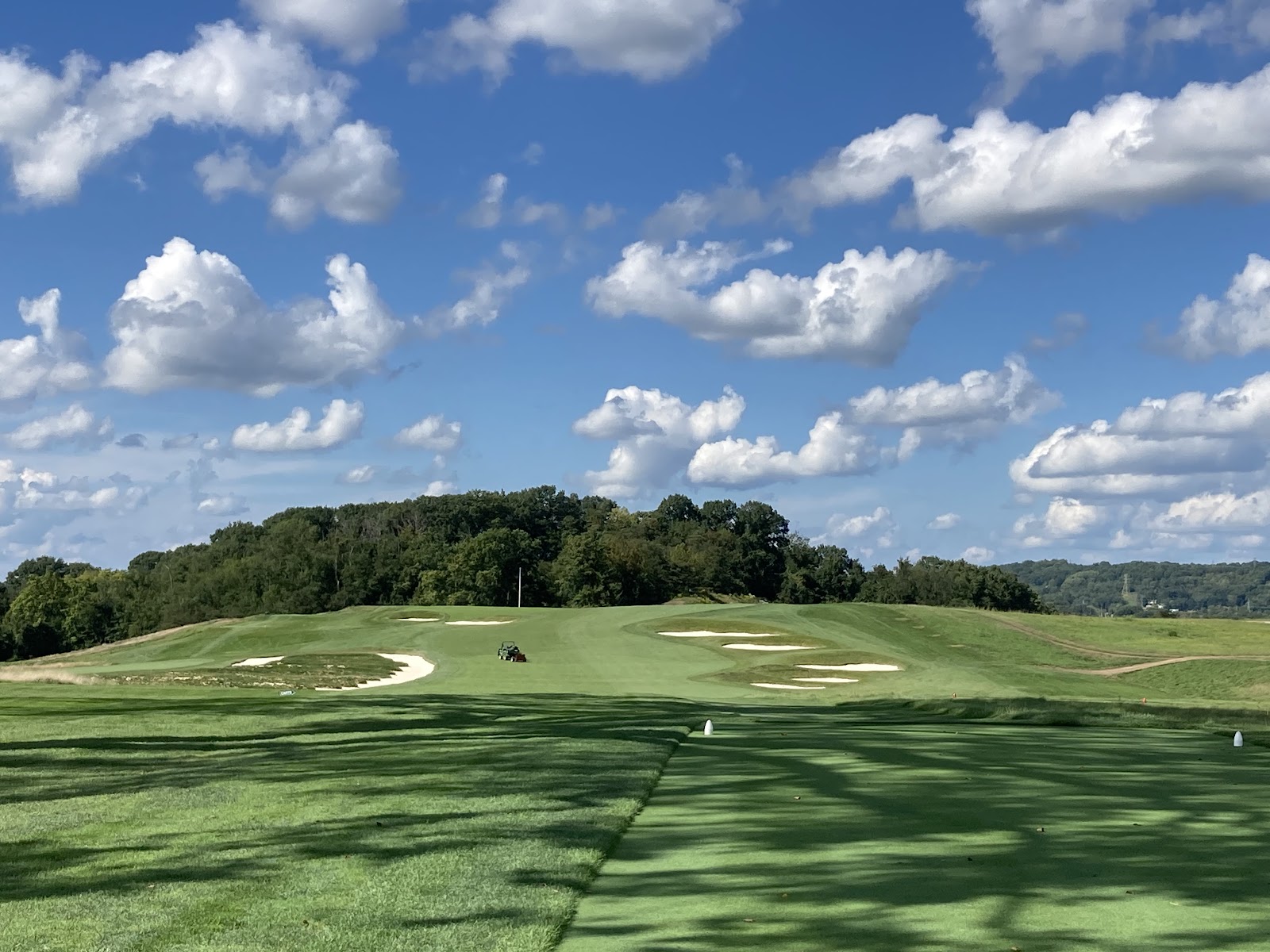
Oakmont Country Club
Widely regarded as the hardest championship course in America, Oakmont has staged the U.S. Open a record ten times, most recently in 2025. Henry Fownes built it in 1903, a par 70 of about 7,400 yards defined by lightning greens and the famous Church Pews.
Photo: Crosby Laughery via Google.
The verdict
Oakmont Country Club is the most fearsome course in American championship golf and one of the most historic in the world. Henry Fownes laid it out in 1903 on rolling land northeast of Pittsburgh, and he and his son William built it on a single ruthless philosophy: a shot poorly played should be a shot irrevocably lost. It has hosted the U.S. Open a record ten times, most recently in 2025, when J.J. Spaun won, and plays as a par 70 of about 7,400 yards.
Oakmont's defenses are legendary: greens so fast and severe they are considered the quickest in championship golf, more than 175 deep bunkers including the famous Church Pews between the third and fourth fairways, and ditches and rough that punish the slightest miss. A series of restorations, including the removal of thousands of trees to return the course to its open, windswept origins, has only sharpened its identity. For a traveling golfer it is the ultimate bucket list test, a private club reached through a member, and the standard against which championship difficulty is measured.
Oakmont Country Club at a glance
- Opened
- 1903
- Designer
- Henry Fownes
- Type
- Parkland
- Par
- 70
- Yardage
- About 7,400 yds
- Green fee
- Members and guests
Designer, opening year, par and length verified June 2026 from the club, the USGA and leading databases. Henry Fownes designed the course, which opened in 1903; it plays as a par 70 of about 7,400 yards in Oakmont, Pennsylvania, and hosted the U.S. Open a record ten times, most recently in 2025. It is a private club; access is generally only through a member, so always confirm directly before booking.
The holes worth the trip
Everything at Oakmont begins with the greens. Vast, sloping and polished to a glassy speed, they make even a mid range putt a genuine test of nerve, and an approach above the hole can leave a putt all but impossible to stop. The opening holes plunge downhill and set the tone, and the long par 3 eighth, stretched near 300 yards for the professionals, is a brutal long iron to a shallow, bunkered target.
The Church Pews, rows of grass ridges set within a single enormous bunker, guard the left of the third and fourth and have wrecked countless rounds, while the closing holes climb back toward the clubhouse over ground that gives nothing away. There are no weak holes and no places to relax; the routing simply asks for one precise, committed shot after another, with the deep rough and the firm, fast turf waiting on every miss.
What stays with players is the relentlessness of it. Oakmont does not trick or surprise; it stands in plain sight and dares a golfer to play well enough, and almost no one does. It is the purest, hardest expression of penal championship architecture in the United States.
How to get on
| What to know | Detail |
|---|---|
| Access | Private members club; not generally open to public play, with access usually through a member |
| Green fee | No published public fee; any guest play is hosted by a member (indicative, 2026) |
| Booking | An introduction through a member, arranged well in advance, is essential |
| On the day | Caddies available and walking is the tradition; a collared shirt and traditional dress code expected |
| Getting there | Oakmont, about 30 minutes northeast of downtown Pittsburgh and its international airport |
| Best months | May through June and September through October, when the greens are at their firmest and fastest |
Access arrangements verified June 2026; Oakmont is a private club and policies change, so always confirm directly before planning a visit with the club or your trip planner.
Where to stay nearby
Downtown Pittsburgh, about thirty minutes away, offers the fullest range of hotels and dining, while the suburbs nearer Oakmont provide quieter, more convenient options close to the first tee. Pittsburgh International Airport sits west of the city.
Oakmont is the centerpiece of any western Pennsylvania golf pilgrimage and a fitting bucket list anchor for a wider tour of America's great championship courses. We can arrange the introductions where possible and handle the lodging and transfers around your round.
Looking for a base? See our recommended hotels and resorts around Pittsburgh.
Build a Pennsylvania golf trip
We help arrange access where we can, plan the visit to Oakmont and book the lodging and transfers around your round. Tell us roughly when and who is travelling and one concierge costs it to the head, with no obligation.
Oakmont Country Club questions
Who designed Oakmont and when did it open?
Oakmont was designed by Henry Fownes and opened in 1903 on rolling land northeast of Pittsburgh. He and his son William shaped it around the idea that a poorly played shot should be irrevocably lost.
What is the par and length of Oakmont?
Oakmont plays as a par 70 of about 7,400 yards, defended by the fastest greens in championship golf, more than 175 bunkers and the famous Church Pews between the third and fourth holes.
How many U.S. Opens has Oakmont hosted?
Oakmont has hosted the U.S. Open a record ten times, in 1927, 1935, 1953, 1962, 1973, 1983, 1994, 2007, 2016 and 2025, when J.J. Spaun won the most recent edition.
Can visitors play Oakmont?
Oakmont is a private members club and is not generally open to public play. Access is usually only through a member, so arranging a visit well in advance is essential.
Related
The Tee Sheet
Tee time windows, course access changes and the trips worth taking. Every other week.
Researched and written by the GolfForKings editorial desk. Designer, opening year, par and yardage verified June 2026; record ten U.S. Opens and 2025 result verified June 2026. Last reviewed June 2026.