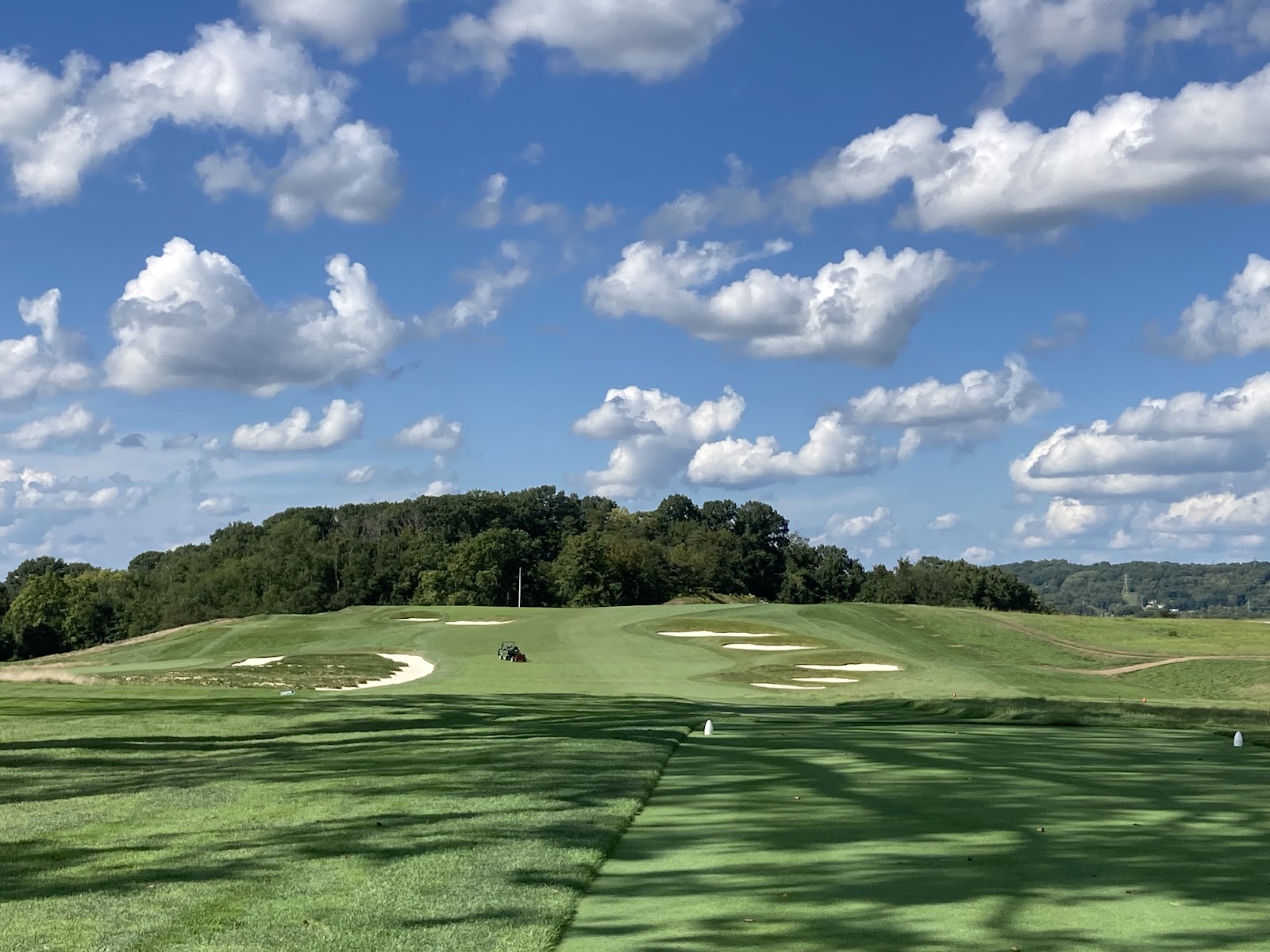
Oakmont Country Club
Henry Fownes carved Oakmont out of farmland above the Allegheny River in 1903 and built it to punish, and more than a century on it is still the hardest examination in American golf. A par 71 stretched to about 7,255 to 7,372 yards, ringed by more than 200 bunkers and glassy greens, it has hosted a record ten US Opens, the latest in June 2025.
Photo: Crosby Laughery via Google.
The verdict
Henry Fownes laid out Oakmont in 1903 on rolling ground northeast of Pittsburgh, and he built it with a single conviction that a shot poorly played should be a shot irrevocably lost. The result is the most relentless championship test in the United States, a par 71 of roughly 7,255 to 7,372 yards that has hosted the US Open ten times, more than any other course, most recently in June 2025.
What sets Oakmont apart is the sustained difficulty. The greens are among the fastest in the world, the rough is thick, and the bunkering is everywhere, led by the famous Church Pews between the third and fourth fairways. There is no soft hole and no place to relax. For the travelling golfer this is a private members club and a bucket list pilgrimage rather than a casual round, so plan access well ahead and arrive ready to grind.
Oakmont Country Club at a glance
- Opened
- 1903
- Designer
- Henry Fownes
- Type
- Parkland
- Par
- 71
- Yardage
- About 7,255 to 7,372 yds
- Green fee
- Members
Designer, opening year, par and yardage verified June 2026 from Oakmont Country Club, the USGA and leading course databases. Oakmont was laid out by Henry Fownes in 1903, a par 71 stretched to about 7,255 to 7,372 yards for championship play, and it staged its record tenth US Open in June 2025. Oakmont is a private members club with no published public green fee, so always confirm access directly before planning.
The holes worth the trip
Oakmont rewards length, nerve and a deft putting touch in equal measure. The fairways are framed by deep, steep walled bunkers and the greens run faster and truer than almost anywhere, so a long approach to the wrong shelf can leave a putt that is impossible to stop near the hole.
The signature is the third hole, where the Church Pews bunker, a long sweep of sand striped with grass ridges, runs the length of the left side and gathers anything pulled off the tee. The par 3s are brutal and the long par 4s, several over 480 yards, demand two flush shots just to find the putting surface.
The closing stretch tumbles back toward the clubhouse with no respite, the greens tilting and the bunkers tightening every line. Oakmont gives nothing away and asks the player to earn every par, which is exactly why it remains the benchmark by which other championship courses are measured.
How to get on
| What to know | Detail |
|---|---|
| Access | Private members club; visitor play is by member introduction only, generally not open to the public |
| Green fee | No published public green fee; any guest rate is arranged privately through the club (indicative, 2026) |
| Booking | Arrange through a member or a specialist trip planner well in advance; tee times are tightly held |
| On the day | Caddies are part of the Oakmont experience; the greens are the fastest you are likely to face, so manage pace |
| Getting there | Oakmont sits about 30 minutes northeast of downtown Pittsburgh and Pittsburgh International Airport |
| Best months | May to October for warm, dry conditions when the course is at full championship speed |
Access arrangements verified June 2026; Oakmont is private and policies change, so always confirm directly before planning a visit through a member or your trip planner.
Where to stay nearby
Most visiting golfers base themselves in Pittsburgh, a compact and walkable city with strong hotels, characterful neighbourhoods and easy access to the airport. From a downtown or East End base, Oakmont is a short drive and the wider region opens up for a longer golf itinerary.
For a golf focused stay, the suburbs along the Allegheny put you close to the club and to several other strong Pennsylvania courses, making it easy to build a multi day trip around an Oakmont round rather than treating it as a one off.
Looking for a base? See our recommended hotels and resorts near Oakmont Country Club.
Build a Pittsburgh golf trip
We help arrange access to courses like Oakmont where introductions allow, pair them with the best of the region and book the lodging around them. Tell us roughly when and who is travelling and one concierge costs it to the head, with no obligation.
Oakmont questions
Who designed Oakmont and when did it open?
Oakmont Country Club was designed by Henry Fownes and opened in 1903, built on farmland northeast of Pittsburgh with a deliberately penal philosophy that survives today.
What is the par and length of Oakmont?
Oakmont plays as a par 71 and is set up at roughly 7,255 to 7,372 yards for championship golf, with more than 200 bunkers and famously fast greens.
How many US Opens has Oakmont hosted?
Oakmont has hosted the US Open ten times, more than any other course, including editions in 1927, 1935, 1953, 1962, 1973, 1983, 1994, 2007, 2016 and June 2025.
Can visitors play Oakmont?
Oakmont is a private members club. Play is generally by member introduction only and there is no public green fee, so overseas visitors should arrange access well in advance.
Related
The Tee Sheet
Tee time windows, course access changes and the trips worth taking. Every other week.
Researched and written by the GolfForKings editorial desk. Designer, opening year, par and yardage verified June 2026; access context verified June 2026. Last reviewed June 2026.