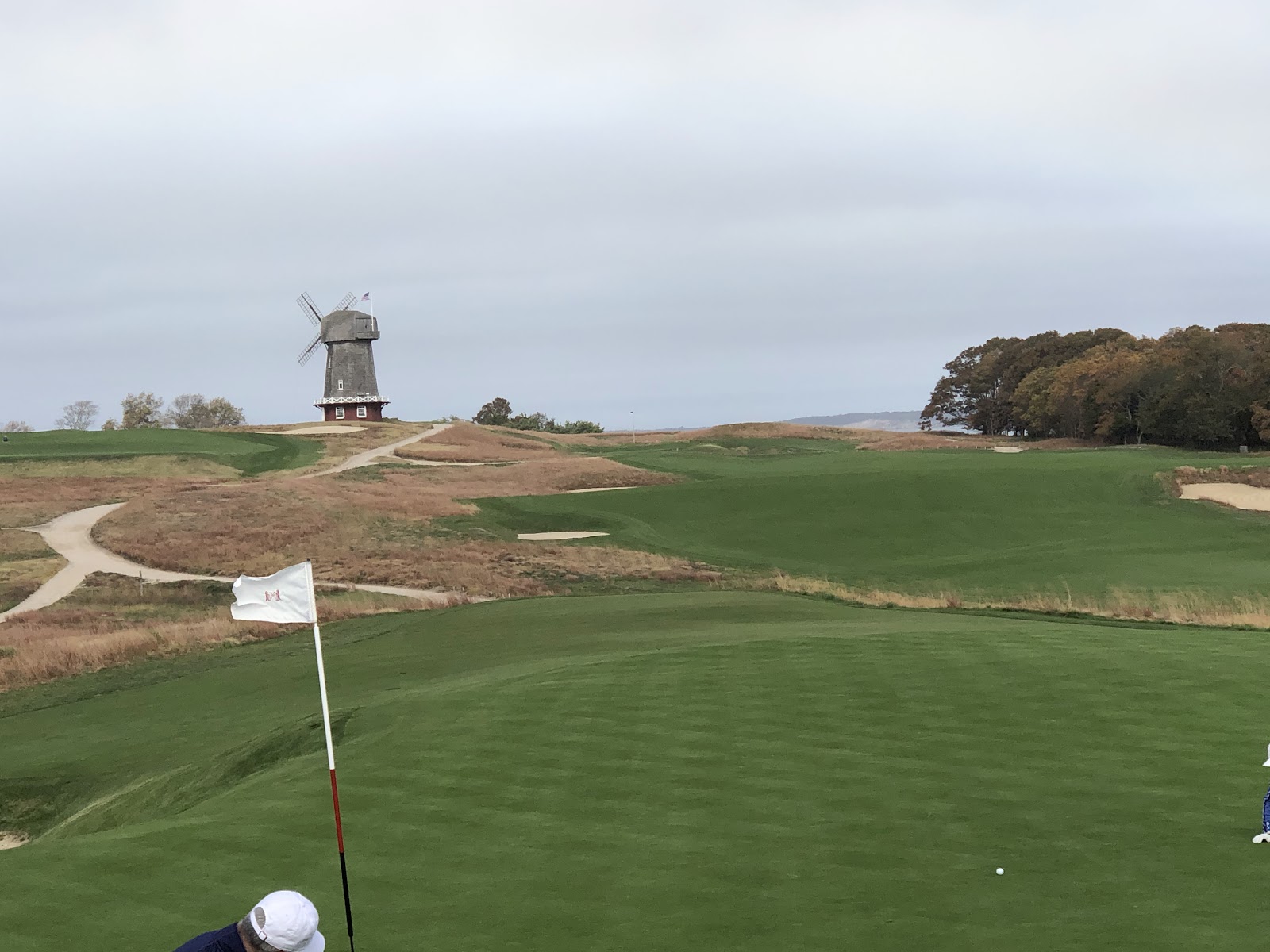
National Golf Links of America
Charles Blair Macdonald spent years studying the great holes of Britain before he broke ground at Southampton in 1909, and the course he and Seth Raynor opened in 1911 changed American golf forever. A par 72 of about 7,000 yards above Peconic Bay, the National is a gallery of template holes and one of the finest, and most private, courses in the United States.
Photo: National Golf Links Of America via Google.
The verdict
Charles Blair Macdonald is the father of American golf architecture, and the National is his masterwork. He crossed the Atlantic repeatedly to map the holes that thrilled him, the Redan at North Berwick, the Alps at Prestwick, the Eden and the Road at St Andrews, then recreated their strategy on a rumpled stretch of Long Island above Peconic Bay. Opened in 1911 with engineer Seth Raynor at his side, it set the template, literally, for the courses that followed.
More than a century on, the National still plays as a thrilling argument for width, angles and the ground game. The greens are big and bold, the wind off the bay is constant, and every hole asks a clear question of where to aim and what to risk. It sits comfortably inside the world top 20 and near the top of any American list. Access is the catch, this is one of the most private clubs in the country, so a round here is earned through a member, not booked.
National Golf Links at a glance
- Opened
- 1911
- Designer
- C.B. Macdonald, Seth Raynor
- Type
- Links
- Par
- 72
- Yardage
- About 7,000 yds
- Green fee
- Members
Designer, opening year, par and yardage verified June 2026 from the club and leading course databases. The National Golf Links of America was designed by Charles Blair Macdonald with Seth Raynor and opened in 1911, a par 72 of roughly 7,000 yards. It is a private members club with no public access and no published green fee, so any visit must come through a member. Always confirm access directly before planning.
The holes worth the trip
The National is a tour of the holes that shaped the game. The third is a long version of the Alps, played blind over a ridge to a hidden green. The fourth is one of the world's great Redans, a long par 3 falling away to the left that has been copied a thousand times since. The thinking never stops, because Macdonald built choices into the turf rather than simply punishing the miss.
Width is the theme throughout, with fairways that look generous until the angle to the flag reveals why one side is so much better than the other. The bunkering is deep and the greens are vast, fast and full of movement, so distance control on the approach matters more than raw length off the tee. The seventh, a heroic Cape hole bending around the water, and the par 3 Eden and Sahara holes are pure strategic theatre.
The finish is among the most photographed in golf, the closing holes climbing back toward the windmill topped clubhouse with Peconic Bay glinting beyond. The National rewards the player who plots a route, controls the trajectory in the wind and putts boldly on those big greens. It is a living museum of golf design that still feels modern, and a round here is a pilgrimage rather than an outing.
How to get on
| What to know | Detail |
|---|---|
| Access | Private members club; no public access and no visitor tee times. Play is as the guest of a member only |
| Green fee | No published public fee; the National is strictly private (indicative status, 2026) |
| Booking | There is no booking route for visitors; an introduction through a member is the only way on |
| On the day | Caddies are part of the experience; walking is expected on firm links turf |
| Getting there | Southampton on the South Fork of Long Island, about two hours from New York City and beside Shinnecock Hills |
| Best months | May to October for the warm, breezy Long Island links season |
Access verified June 2026; the National is one of the most private clubs in the United States, so confirm any arrangement directly with your host before planning a visit.
Where to stay nearby
Most visiting golfers base themselves in the Hamptons, where Southampton and East Hampton offer some of the finest hotels, restaurants and beaches in the United States within minutes of the course. A Hamptons base also puts the wider Long Island links scene, led by Shinnecock Hills next door, within easy reach.
For a golf focused trip, the eastern end of Long Island pairs the National with Shinnecock Hills, Maidstone and Sebonack, one of the densest concentrations of great courses anywhere in the country. New York City is close enough to bookend the trip with a few days in town.
Looking for a base? See our recommended hotels and resorts near Southampton.
Build a Long Island golf trip
We help you build a Hamptons golf trip around the great Long Island links, arrange the lodging and pair your rounds where access allows. Tell us roughly when and who is travelling and one concierge costs it to the head, with no obligation.
National Golf Links questions
Who designed the National Golf Links of America and when did it open?
It was designed by Charles Blair Macdonald with engineer Seth Raynor and opened in 1911 at Southampton on Long Island. Macdonald based the holes on the great template holes of the British Isles.
What is the par and length of the National Golf Links?
The National is a par 72 of roughly 7,000 yards, played on firm links turf above Peconic Bay, where the wind is the defining hazard.
Can visitors play the National Golf Links of America?
No. The National is a strictly private members club with no public access and no visitor tee times. Play is only possible as the guest of a member.
Why is the National so important to golf architecture?
It is the first great course of the American golden age and the source of the template hole, recreations of the Redan, Alps, Eden, Road and Cape that influenced course design across the country.
Related
The Tee Sheet
Tee time windows, course access changes and the trips worth taking. Every other week.
Researched and written by the GolfForKings editorial desk. Designer, opening year, par and yardage verified June 2026. The National is private with no published green fee. Last reviewed June 2026.