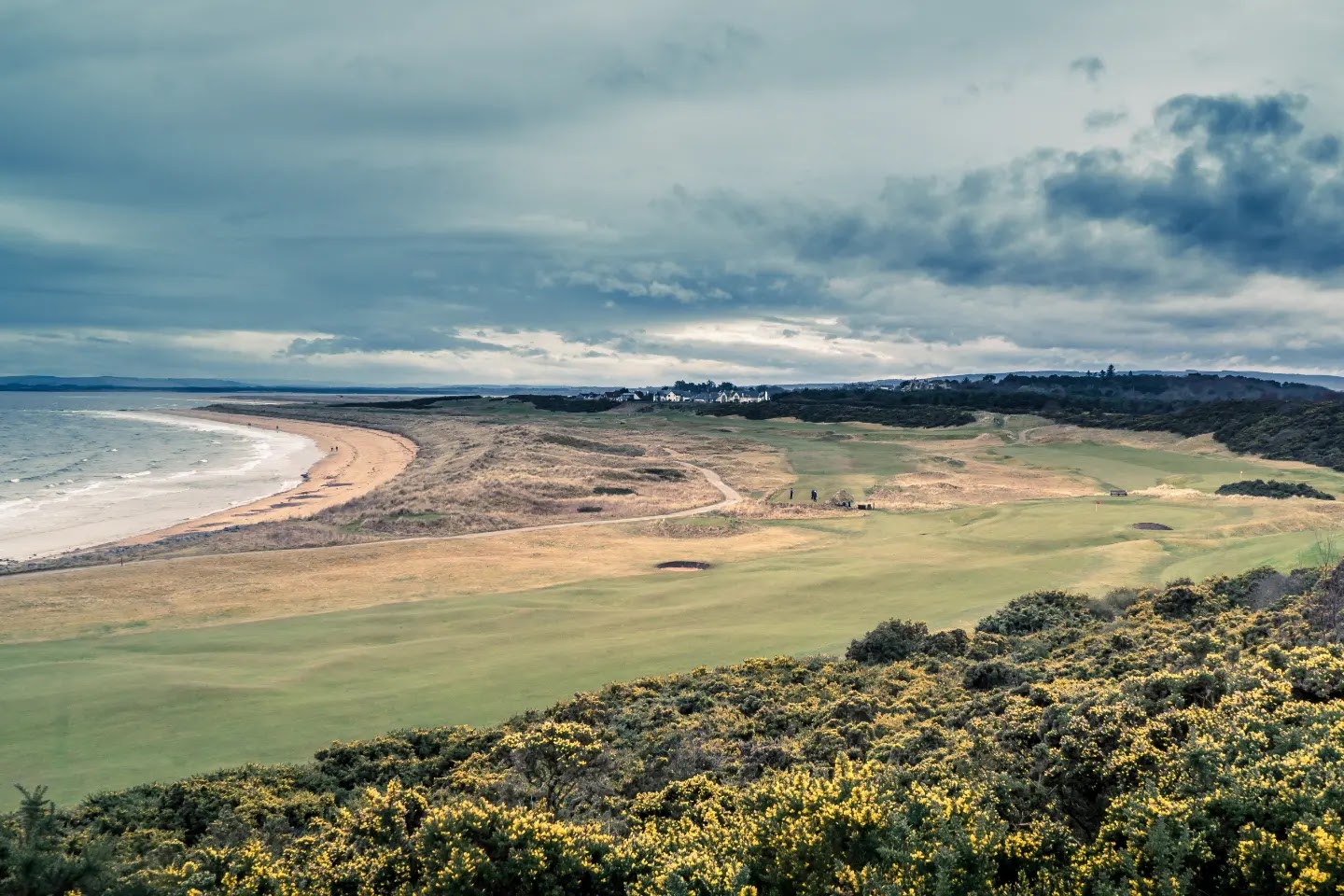
Royal Dornoch Championship
A pilgrimage to the far north worth every mile. Laid out by Old Tom Morris on a remote stretch of the Dornoch Firth, Royal Dornoch is one of the most admired links on earth, a course of raised plateau greens, firm running turf and the great bunkerless 14th, Foxy. It is the birthplace of Donald Ross and, for many who make the journey, the purest links experience in Scotland.
Photo: Royal Dornoch Golf Club via Google, contributor Kevin Heggie.
The verdict
Royal Dornoch is the great outlier of British golf, a world top ten course that sits an hour north of Inverness, far from the Open rota and the crowds, and is loved all the more for it. Golf has been played on this ground since the early seventeenth century, and the modern Championship Course, formalised by Old Tom Morris in 1886 and developed over decades by the secretary John Sutherland, has a naturalness and a serenity that the busier famous links cannot match. The raised, shelf like greens are its signature, shedding anything less than a precise approach and rewarding the ground game that links golf was built on.
It suits the travelling golfer who wants the real thing, a course of subtlety and character rather than brute championship length, in a setting of rare beauty above the firth. Pair it with Nairn, Castle Stuart and Brora for a Highland week, and understand, walking the turf that taught Donald Ross his craft, why so many great judges call Dornoch their favourite course in the world.
Royal Dornoch at a glance
- Club founded
- 1877
- Designer
- Old Tom Morris, 1886
- Type
- Links
- Par
- 70
- Yardage
- 6,799 yds
- Green fee
- Around £280
Designer, par and yardage verified June 2026 from the club and course databases; the Championship Course plays around 6,799 yards, par 70, formalised by Old Tom Morris in 1886 and developed by John Sutherland. The green fee is indicative, around 280 pounds for eighteen holes in the April to October peak in 2026, with lower shoulder season and twilight rates. Always confirm directly before booking.
Plan your round
The holes worth the trip
The defining feature of Dornoch is its greens, and they announce themselves early. From the high ground of the opening holes the course drops to a lower shelf along the firth, and time and again the approach must be flown or fed onto a raised, falling green that punishes the timid and the over ambitious alike. There are no weak holes and no gimmicks; the test is relentlessly fair and relentlessly demanding.
The 14th, Foxy, is the jewel, a long par 4 that doglegs twice across rumpled ground without a single bunker, defending itself purely through shape and a raised green. It is routinely listed among the best holes in the world and is, by itself, worth the journey north. The closing stretch back toward the town and the clubhouse, exposed to the firth wind, completes a round that lingers long after you have left.
Add the constant Highland light, the cry of the sea birds and the sense of playing golf as it was meant to be played, on firm, natural turf far from the modern game, and the Championship Course gives you a day you will measure other links against for years.
How to get on
| What to know | Detail |
|---|---|
| Access | A members club that warmly welcomes visitors through the season, with certain periods reserved for members and competitions |
| Green fee | Around 280 pounds for eighteen holes in the April to October peak in 2026, with lower shoulder and twilight rates (indicative) |
| Booking | Book well ahead, especially for summer; combination tickets with the Struie Course are available |
| On the day | A walking course; caddies can be arranged in advance; a friendly clubhouse above the links |
| Getting there | Dornoch, Sutherland, about an hour north of Inverness by road, the nearest airport |
| Best months | May to September for the firmest turf and longest days, with the wind ever present |
Access and indicative green fees verified June 2026 from the club; they change without notice, so always confirm directly before booking with Royal Dornoch Golf Club or your trip planner. Check tee time availability.
Where to stay nearby
The little town of Dornoch is the ideal base, a handsome cathedral town with hotels and guest houses a short walk from the first tee, so you can play the Championship Course, lunch in town and head back out for an evening round on the Struie in the long Highland light. The famous Royal Golf Hotel sits beside the links, and there are characterful inns and lodges throughout the area.
For a fuller Highland week, Inverness an hour south makes a convenient hub for Castle Stuart and Nairn, while the village of Brora to the north adds another fine James Braid links, so the whole north Highland coast strings together into one of Scotland's great golf journeys.
Looking for a base? See our recommended hotels and resorts near Dornoch.
Plan a Highland golf trip
We arrange Royal Dornoch alongside Nairn, Castle Stuart and Brora, secure the tee times before they fill and sort a Dornoch or Inverness base and the transfers. Tell us roughly when and who is travelling and one concierge costs it to the head, with no obligation.
Royal Dornoch questions
Who designed Royal Dornoch Championship Course?
Golf has been played at Dornoch since the early seventeenth century, but the modern Championship Course was laid out by Old Tom Morris, who was invited north in 1886 and returned in 1889. It was then developed over decades by the long serving secretary John Sutherland. Dornoch is also the birthplace of the great architect Donald Ross, who learned greenkeeping and clubmaking here before emigrating to the United States and shaping much of American golf.
What is the par and length of Royal Dornoch?
The Championship Course plays as a par 70 of around 6,799 yards from the back tees. It is not the longest of the great links, but its defence lies in the firm turf, the raised plateau greens that shed anything short or sideways, and a Dornoch Firth wind that rarely rests.
What is the 14th hole, Foxy, at Royal Dornoch?
Foxy, the 14th, is one of the most admired holes in golf, a long par 4 that doglegs twice with not a single bunker. It defends itself purely through the shaping of the ground and a raised green, asking for two precise, well shaped shots rather than brute force. Many good judges call it the finest natural hole on the course.
How much does it cost to play Royal Dornoch?
The indicative 2026 visitor green fee for the Championship Course is around 280 pounds for eighteen holes in the April to October high season, with lower rates in the shoulder months and combination and twilight tickets available. Fees change by season and year, so always confirm current rates directly before booking.
Can visitors play Royal Dornoch?
Yes. Royal Dornoch is a members club that warmly welcomes visitors through the season, with tee times released for booking and certain periods reserved for members and competitions. It sits about an hour north of Inverness, so plan and book well ahead, especially for the summer, as this far flung links is in high demand.
Related
The Tee Sheet
Tee time windows, course access changes and the trips worth taking. Every other week.
Researched and written by the GolfForKings editorial desk. Designer, par and yardage verified June 2026; indicative green fees verified June 2026. Last reviewed June 2026.