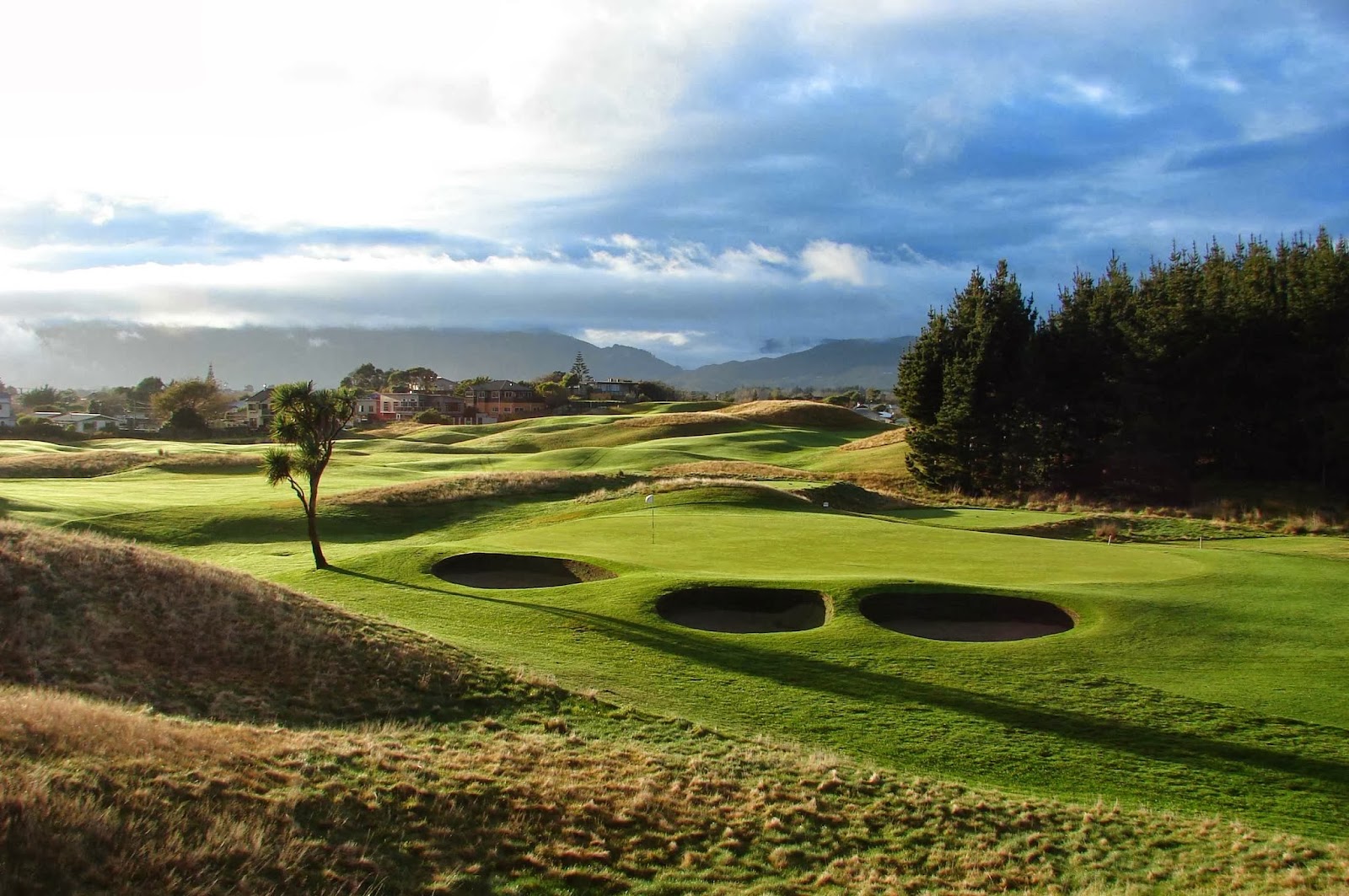
Paraparaumu Beach
Paraparaumu Beach is widely regarded as the finest links in New Zealand, a par 71 of just over 6,500 yards laid out by Alex Russell in 1949. Host to a dozen New Zealand Opens and the course where Tiger Woods won in 2002, it plays over crumpled dunesland on the Kapiti Coast, an hour north of Wellington, with small, firm greens that ask far more than the yardage suggests.
Photo: Paraparaumu Beach Golf Club via Google.
The verdict
New Zealand has a clutch of spectacular modern cliffside courses, but the connoisseur's pick for the country's best links is older, humbler and a great deal more strategic. Paraparaumu Beach was routed in 1949 by Alex Russell, the 1924 Australian Open champion and Alister MacKenzie's design partner, and it remains a masterclass in restraint, only thirty four bunkers and greens averaging a compact 5,400 square feet.
It has hosted twelve New Zealand Opens, the first in 1959, and is best known internationally as the stage for Tiger Woods's victory at the 2002 New Zealand Open. The course makes its argument quietly, firm turf, sharp little plateau greens and clever use of the natural folds in the land, so that par must be earned with the ground game rather than the air. For a links purist travelling to New Zealand, it is the essential round.
Paraparaumu Beach at a glance
- Opened
- 1949
- Designer
- Alex Russell
- Type
- Links
- Par
- 71
- Yardage
- Just over 6,500 yds
- Green fee
- From around NZ$200 (indicative)
Designer, opening year, par and yardage verified June 2026 from Paraparaumu Beach Golf Club and leading course databases. The links was laid out by Alex Russell in 1949, a par 71 of just over 6,500 yards with only thirty four bunkers and small greens averaging about 5,400 square feet. Visitor green fees in recent seasons have run from around NZ$200, varying by day and season (indicative, 2026), with limited visitor times around member play, so always confirm rates and availability directly before booking.
The holes worth the trip
Paraparaumu Beach is a thinking golfer's links. The dunesland is not as tall or dramatic as the modern cliff courses, but the ground moves constantly, and Russell used those folds to set angles rather than reaching for bunkers or length. The greens are the genius of the place, small, raised and quick, often perched so that anything less than a precise approach is repelled into a tricky chip.
The closing stretch is celebrated, a run of holes that demands command of a low, controlled ball into the prevailing wind off the Tasman Sea. Miss on the wrong side and the little plateau greens turn a routine par into a scramble, while the player who flights the ball and uses the slopes is rewarded again and again.
It is the antithesis of target golf and all the better for it, a course where local knowledge and a controlled trajectory beat raw power. Walk it with a caddie or a member if you can, study the green sites, and you will understand why the best judges call it New Zealand's purest links.
How to get on
| What to know | Detail |
|---|---|
| Access | Members club that welcomes visitors at set times around member play, by prior arrangement |
| Green fee | From around NZ$200 for 18 holes, varying by day and season (indicative, 2026) |
| Booking | Book ahead through the golf shop, especially in the November to March peak |
| On the day | Walking links; carts limited; caddies and clubs can be arranged with notice |
| Getting there | Kapiti Coast at Paraparaumu Beach, about one hour north of Wellington by road or rail |
| Best months | November to April for the warmest, driest weather; the wind is part of the test year round |
Access arrangements and fees verified June 2026; visitor times sit around member play and rates change by season, so always confirm directly with the golf shop or your trip planner before booking.
Where to stay nearby
Most visiting golfers stay either on the Kapiti Coast close to the course or in central Wellington, an hour to the south. The coast keeps you minutes from the first tee and within reach of the beaches and Kapiti Island, while a Wellington base trades the drive for the capital's restaurants, galleries and waterfront.
Paraparaumu pairs naturally with a wider North Island golf trip, linking south to Wellington and north toward the volcanic courses of the central plateau. It is an easy region to build a few days around, mixing the country's finest links with the scenery and food of the lower North Island.
Looking for a base? See our recommended hotels and resorts near Paraparaumu Beach.
Build a New Zealand golf trip
We book the Paraparaumu Beach tee times, pair them with the best of New Zealand golf and arrange the lodging and transfers around them. Tell us roughly when and who is travelling and one concierge costs it to the head, with no obligation.
Paraparaumu Beach questions
Who designed Paraparaumu Beach and when did it open?
The links was laid out by Alex Russell, the 1924 Australian Open champion and Alister MacKenzie's design partner, and opened in 1949.
What is the par and length of Paraparaumu Beach?
Paraparaumu Beach is a par 71 of just over 6,500 yards, a compact, strategic links with only thirty four bunkers and small, firm greens averaging about 5,400 square feet.
What tournaments has Paraparaumu Beach hosted?
Paraparaumu Beach has hosted twelve New Zealand Opens, the first in 1959, and is the course where Tiger Woods won the 2002 New Zealand Open.
Can visitors play Paraparaumu Beach?
Yes. Paraparaumu Beach is a members club that welcomes visitors at set times around member play. Book ahead through the golf shop, especially in the November to March peak.
Related
The Tee Sheet
Tee time windows, course access changes and the trips worth taking. Every other week.
Researched and written by the GolfForKings editorial desk. Designer, opening year, par and yardage verified June 2026; indicative green fees verified June 2026. Last reviewed June 2026.