Kawana Fuji Course
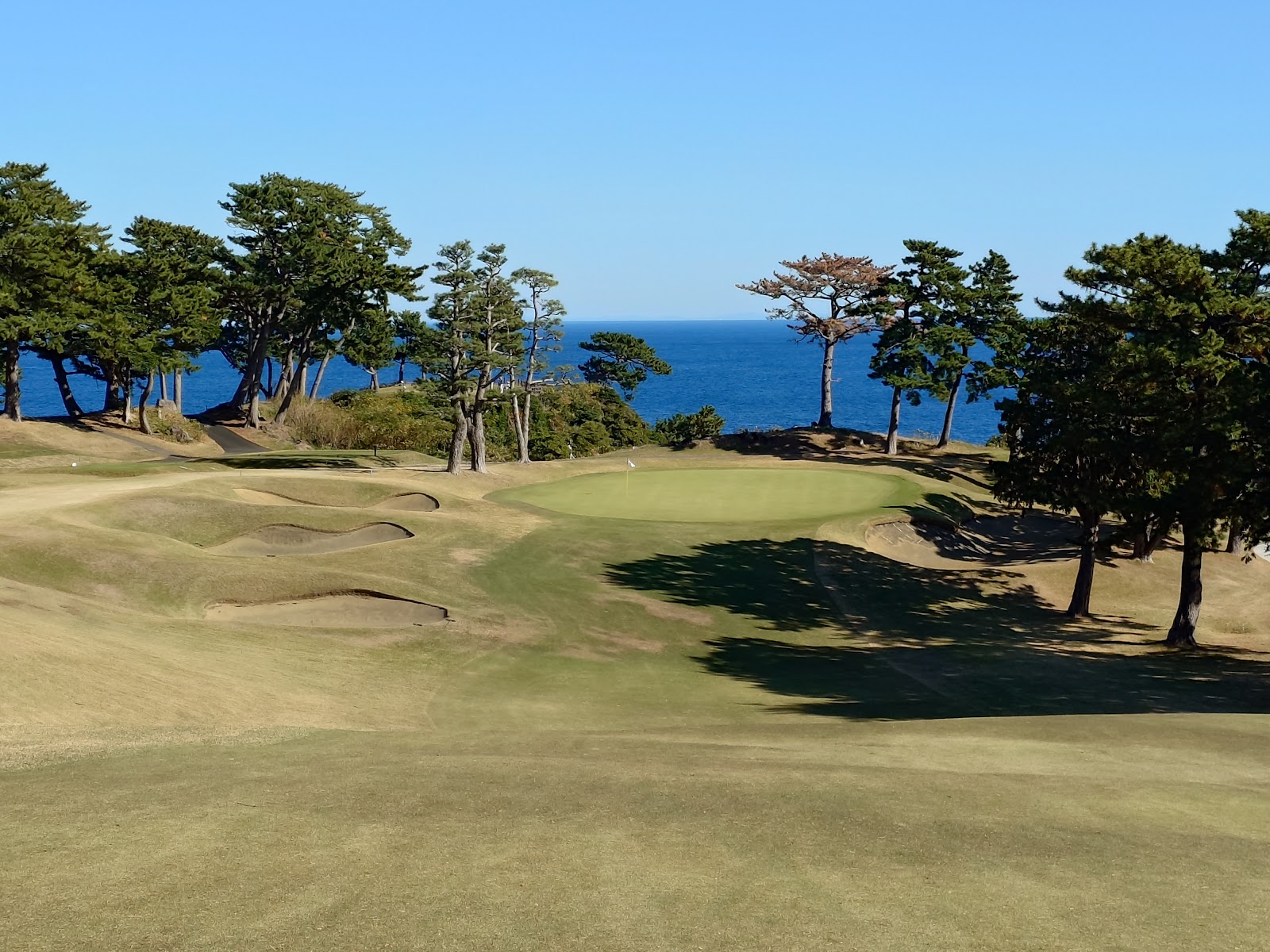
The most beautiful course in Japan, and one of the finest pre war designs anywhere. The English architect Charles Alison routed the Fuji Course in 1936 along the cliffs above Sagami Bay, with Mount Fuji on the horizon and the sea below. Long known as the Pebble Beach of Japan, it remains the jewel of the country's first golf resort.
Photo: Kawana Hotel Golf Course, Fuji Course via Google.
The verdict
Kawana sits on the Izu peninsula south of Tokyo, where the land tumbles down to Sagami Bay, and it was here that Japan built its first true golf resort. The Fuji Course, opened in 1936, was the work of Charles Hugh Alison, the English architect whose bold, deep bunkering left such a mark on Japanese golf that bunkers there are still sometimes called Arisons. On a clear day Mount Fuji rises across the bay, and the holes that run along the cliffs give the course its enduring nickname, the Pebble Beach of Japan.
It is not a long course by modern standards, a par 72 of around 6,701 yards, but length was never the point. Alison used the dramatic, mountainous terrain to ask questions of angle, elevation and nerve, and the scenery does the rest. Consistently ranked among the very best courses in Japan, the Fuji Course is the round to build a Japanese golf trip around, a piece of golfing history in one of the country's loveliest settings.
Kawana Fuji Course at a glance
- Opened
- 1936
- Designer
- Charles H. Alison
- Type
- Clifftop resort
- Par
- 72
- Yardage
- About 6,701 yds
- Access
- Hotel guest priority
Designer, opening year, par and length verified June 2026 from the resort and leading databases. The Fuji Course is a Charles Alison design of around 6,701 yards, par 72, opened in 1936 at the Kawana resort. Green fees are seasonal and access is easiest for guests of the Kawana hotel, with a caddie applied. Rates change by season and year, so always confirm directly before booking.
The holes worth the trip
The Fuji Course is a study in how a great architect uses dramatic land. Alison routed it up and down the folds of the Izu hills, so blind crests, downhill tee shots and approaches played to greens perched on the slope are constant, and the strategy is as much about controlling your ball on the contours as carrying a hazard. His trademark deep bunkers frame the greens and punish the bailout, a style so influential it changed Japanese course design for good.
The stretch along the cliffs above Sagami Bay is the reason people travel here. The par 5 fifteenth, sweeping downhill toward the sea with the bay opening up beyond, is the signature hole and one of the most photographed in Asia, the moment when the Pebble Beach comparison makes complete sense. Throughout the round the views of the water and, on a clear day, of Mount Fuji, are part of the test, pulling the eye and the swing off line.
It is a walking course in the Japanese tradition, played with a caddie, and the elevation makes it a genuine hike, so come prepared to earn the views. Play it for the history and the scenery as much as the card, respect Alison's bunkering, and the Fuji Course delivers one of the most complete experiences in world golf.
How to get on
| What to know | Detail |
|---|---|
| Access | A resort course attached to the Kawana hotel; tee times are far easier to secure as a hotel guest, often as a stay and play package |
| Green fee | Seasonal resort green fee plus caddie; higher at weekends and in peak season, with package rates for hotel guests (indicative, 2026) |
| Booking | Book the hotel and golf together well ahead, especially for spring and autumn and for weekend tee times |
| On the day | Walking course with a caddie in the Japanese style; smart golf dress expected. Come prepared for real climbs |
| Getting there | On the Izu peninsula near Ito, around two to two and a half hours from central Tokyo by car or train and transfer |
| Best months | Spring and autumn for the clearest air and the best chance of a Mount Fuji view |
Access and indicative rates verified June 2026; they change without notice, so always confirm directly before booking with the resort or your trip planner. Check tee time availability.
Where to stay nearby
The Kawana hotel is the heart of the resort and by far the most sensible base, both for the views and because staying there is the surest route onto the Fuji Course. The classic hotel building, the gardens and the second Oshima Course give you more than enough for a multi day stay on the Izu coast.
The wider Izu peninsula is a popular hot spring escape from Tokyo, so the surrounding towns of Ito and Atami add onsen ryokan, seafood and coastline if you want to extend the trip. The resort sits around two to two and a half hours from the capital, which makes the Fuji Course a natural centerpiece for a few days away from the city.
Looking for a base? See our recommended hotels and resorts at Kawana and on the Izu peninsula.
Build a Japan golf trip
We build a trip around a round on the Fuji Course, add the best of Japanese golf and the culture of Tokyo and the Izu coast and sort the stay and play logistics that make Kawana work. Tell us roughly when and who is travelling and one concierge costs it to the head, with no obligation.
Kawana Fuji Course questions
Who designed the Kawana Fuji Course and when did it open?
The Fuji Course at Kawana was designed by the English architect Charles Hugh Alison and opened in 1936. It was part of Japan's first golf resort and remains the most celebrated of Alison's Japanese designs.
What is the par and length of the Kawana Fuji Course?
The Fuji Course is a par 72 that plays to around 6,701 yards, a mountainous clifftop layout above Sagami Bay with views toward Mount Fuji and dramatic changes in elevation rather than great length.
Why is Kawana called the Pebble Beach of Japan?
The Fuji Course earned the nickname Pebble Beach of Japan for its run of holes high above Sagami Bay, where the cliffs, the sea and the sweeping views recall the famous Californian links. It is consistently ranked among the very best courses in Japan.
How do you play the Kawana Fuji Course?
The Fuji Course is a resort course attached to the Kawana hotel. The most reliable way to secure a tee time is to stay at the hotel, and a green fee plus caddie applies. Rates are seasonal, so always confirm directly before booking.
Related
The Tee Sheet
Tee time windows, course access changes and the trips worth taking. Every other week.
Researched and written by the GolfForKings editorial desk. Designer, opening year, par and yardage verified June 2026; access and indicative rates verified June 2026. Last reviewed June 2026.