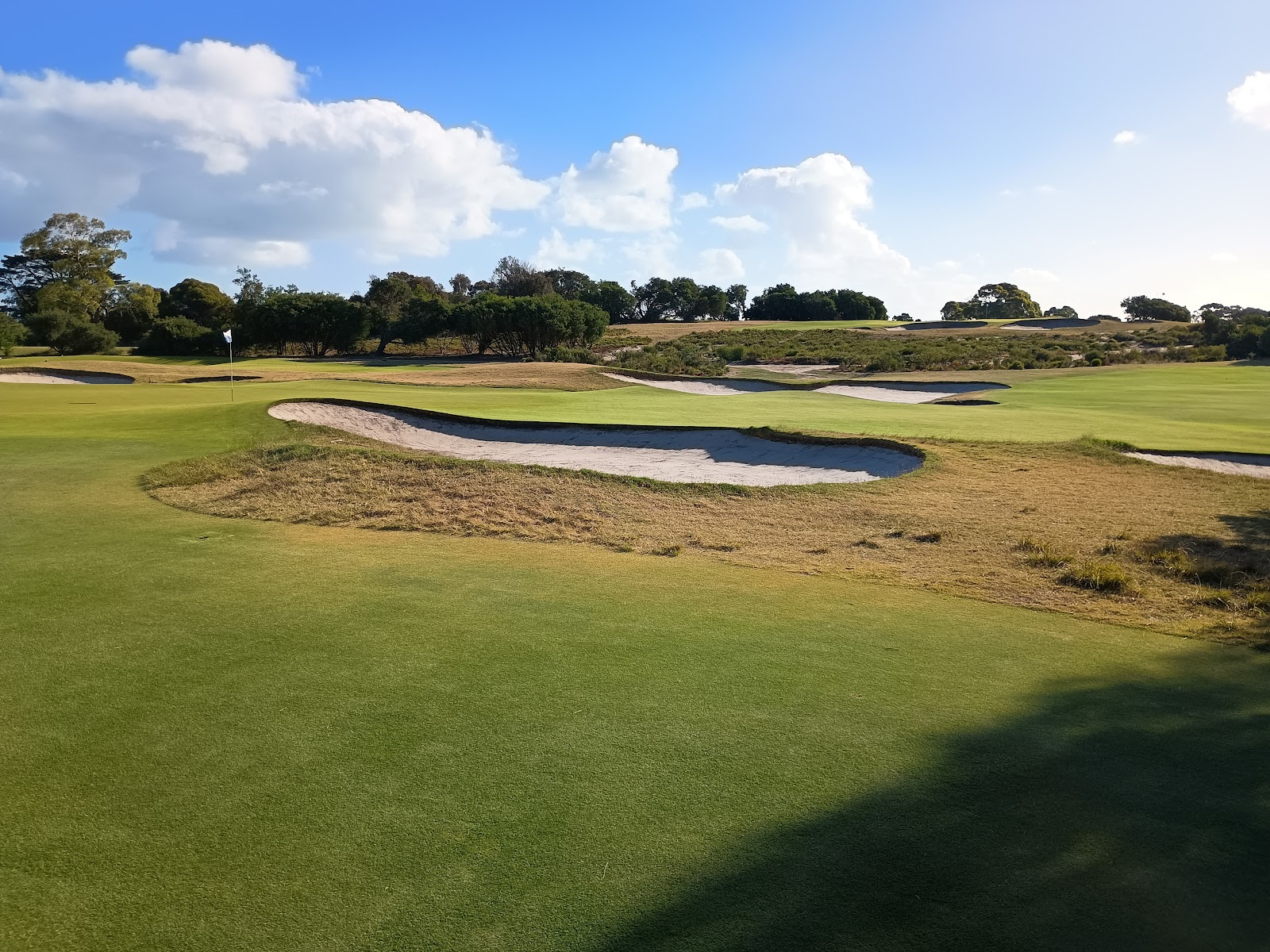
Royal Melbourne East Course
The quieter sibling on the Melbourne sandbelt, routed by 1924 Australian Open champion Alex Russell on the principles he absorbed from Alister MacKenzie, and opened in 1932. A par 72 of around 6,600 yards, the East lends six of its holes to the celebrated Composite course used for Presidents Cups and World Cups, and stands as a great in its own right, all bold bunkering, firm greens and the springy sandy turf that defines the world's finest heathland golf.
Photo: Owen Tully via Google.
The verdict
Royal Melbourne's East Course was built by Alex Russell with greenkeeper Mick Morcom and opened in 1932, a year after MacKenzie's West. Russell had won the 1924 Australian Open and worked alongside MacKenzie during the Doctor's 1926 visit, and he translated those lessons onto the sandy soil at Black Rock with remarkable fidelity. It plays as a par 72 of around 6,600 yards, and like the West it defends itself with strategy and short grass rather than length.
Long treated as the understudy, the East is in truth one of the great heathland courses anywhere, and the only reason it is less famous is that it shares an address with arguably the best course in the Southern Hemisphere. For internationals the club assembles the Composite course, drawing six East holes in with twelve from the West to keep play off the public roads. Play the East on its own and you get the same sandbelt genius with more room to breathe.
Royal Melbourne East at a glance
- Opened
- 1932
- Designer
- Alex Russell
- Type
- Sandbelt heathland
- Par
- 72
- Yardage
- Around 6,600 yds
- Access
- Private members club
Designer, opening year and par verified June 2026 from the Alister MacKenzie Society, the club and leading course databases; the East Course was built by Alex Russell with Mick Morcom and opened in 1932, playing to around 6,600 yards as a par 72. Royal Melbourne is a private members club, so green fees are not published and visitors play by member introduction or through a recognised golf tour operator. Always confirm access directly before planning around a round.
Plan your round
The holes worth the trip
Russell's routing wanders out across the so called home paddock before turning into the more dramatic sandbelt ground, and the bunkering is unmistakably of the same school as the West, ragged sandy hazards flowing into the fairway and gathering the cautious shot. The greens are bold and quick, falling away at the edges, so the line of approach matters far more than the number on the card.
The par 3s are the East's calling card, a set of one shotters that demand a flighted, committed strike to firm targets ringed by sand. Miss on the wrong side and the recovery is all touch and nerve, exactly as MacKenzie intended.
Six East holes are folded into the Composite course for championship play, a sequence so strong it has staged Presidents Cups and World Cups. Whether you meet them in that guise or play the East straight through, they are the holes that prove Russell learned at the feet of a master.
How to get on
| What to know | Detail |
|---|---|
| Access | A private members club; visitors play by member introduction or through a recognised golf tour operator |
| Green fee | Not published; arranged as part of an introduced or operator booked round |
| Booking | Plan well ahead through a member or a specialist tour operator, especially for overseas visitors |
| On the day | Caddies can be arranged; walking is the tradition. Smart golf dress and club etiquette expected |
| Getting there | At Black Rock on the Melbourne sandbelt, around 25 minutes south of central Melbourne |
| Best months | October to April for the warm, dry sandbelt golfing season |
Access arrangements verified June 2026; Royal Melbourne is private and tee times for visitors are limited, so always confirm directly and well in advance. Check tee time availability.
Where to stay nearby
Most visiting golfers base themselves in central Melbourne or along the bayside suburbs, an easy run from the sandbelt and packed with the city's celebrated restaurants, coffee and culture, so the golf becomes one part of a broader trip.
The sandbelt is the real draw, with Kingston Heath, Victoria, Metropolitan and more within a short drive of Royal Melbourne, so a single base lets you play several of the world's great heathland courses in a week. Few corners of the golfing world are so concentrated.
Looking for a base? See our recommended hotels and resorts near Melbourne and the sandbelt.
Build a Melbourne sandbelt golf trip
We arrange access to the sandbelt's great courses through the right channels, pair Royal Melbourne's East and West with Kingston Heath and Victoria, and sort the city stay and transfers. Tell us roughly when and who is travelling and one concierge costs it to the head, with no obligation.
Royal Melbourne East questions
Who designed Royal Melbourne East and when did it open?
The East Course was built by Alex Russell with greenkeeper Mick Morcom and opened in 1932, applying the principles Russell learned from Alister MacKenzie during the Doctor's 1926 visit.
What is the par and length of Royal Melbourne East?
It is a par 72 of around 6,600 yards, defended by bold bunkering, firm fast greens and the springy sandbelt turf rather than by length.
Can visitors play Royal Melbourne East?
Royal Melbourne is a private members club. Visitors generally play by member introduction or through a recognised golf tour operator, and tee times are limited, so arrange a round well in advance and always confirm directly.
What is the Composite course?
For international matches the club builds the Composite course, combining twelve of the best holes from the West with six from the East so that play stays off the public roads. It has hosted Presidents Cups and World Cups.
Related
The Tee Sheet
Tee time windows, course access changes and the trips worth taking. Every other week.
Researched and written by the GolfForKings editorial desk. Designer, opening year and par verified June 2026; access arrangements verified June 2026. Last reviewed June 2026.