St Andrews Old Course vs Carnoustie: Which Should You Play?
An hour of the Angus and Fife coast separates the two, and a world of golfing philosophy. The Old Course is the home of golf, 30 Opens deep, played for what it means as much as how it plays. Carnoustie is golf's greatest test, the sternest links in the rota and the one that breaks champions. Here is the honest head to head, with our verdict up front, and why most golfers should play both.
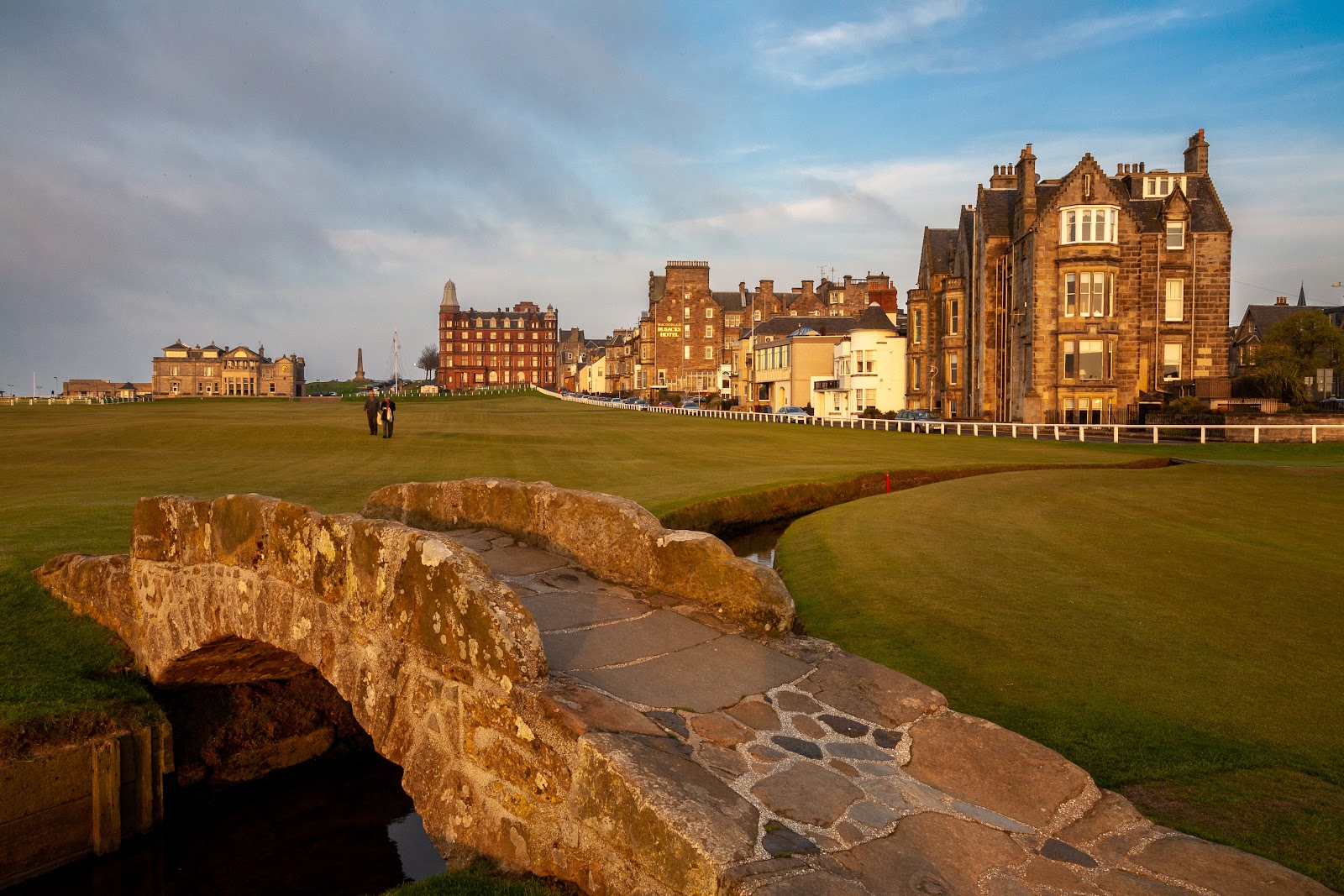
Photograph: Old Course, Richard Grobben, via Google
The verdict
If you can play only one, play the Old Course at St Andrews. No round in golf carries this much history. You walk the same turf as every great player of the last 150 years, cross the Swilcan Bridge, navigate the vast double greens and stand on the Road Hole knowing exactly what it has done to Opens. It is not the hardest course in Scotland, and that is the point: you play it for what it is, the home of golf, not for the scorecard.
But Carnoustie is the better pure test, and for a low handicapper chasing the sternest challenge in links golf, it is the more rewarding round. Longer, harder and more relentless, with the Barry Burn waiting on the closing holes that ruined Jean van de Velde in 1999, it earns its Car-nasty nickname. It is also far easier to book. The truth is they are an hour apart and pair perfectly, so the real answer for most golfers is both, with the Old Course as the pilgrimage and Carnoustie as the examination.
Head to head
| Old Course, St Andrews | Carnoustie, Championship | |
|---|---|---|
| The setup | Par 72, around 7,300 yards; huge double greens, the Swilcan Bridge and the Road Hole 17th | Par 72, around 7,400 yards, playing to par 71 for The Open; the Barry Burn and a brutal closing stretch |
| Difficulty | Slope around 129; benign in calm, ferocious in wind, defended by bunkers and greens | Slope around 135; harder more of the time and widely called the toughest in the Open rota |
| Open history | 30 Opens, more than any venue; next staged here in 2027 | Eight Opens, won by Hogan 1953, Watson 1975, Harrington 2007 and Molinari 2018 |
| Reputation | The home of golf; the most historic and revered round in the game | Golf's greatest test; the sternest, fairest examination in links golf |
| Green fee, indicative 2026 | Around 340 pounds at peak, by advance application and daily ballot | Around 285 to 300 pounds at peak, conventional advance booking |
| Getting a tee time | Hardest in golf; ballot and advance application, closed Sundays | Far more attainable; books in advance like most clubs |
| Who it suits | Every golfer once in a life, for the history above the challenge | The better player who wants the purest, hardest links test |
Par, yardage, slope and Open records verified June 2026; indicative fees move with season, so always confirm current rates and the booking process directly before booking. Check tee time availability.
Who should pick which
Pick the Old Course if
You want the pilgrimage, the round you tell stories about for the rest of your life. The history under your feet matters more to you than your score, and crossing the Swilcan Bridge and playing the Road Hole is the whole point. Accept that it is allocated by ballot, plan well ahead, and treat a confirmed time as the prize. No course on earth means more.
Pick Carnoustie if
You are a keen player who wants the toughest, fairest links test in Scotland and a round you can actually book without a lottery. Longer and more relentless than the Old Course, with a closing stretch that has decided Opens, it rewards precise, brave golf and punishes the loose shot. It is the connoisseur's choice and the better examination of your game.
Plan a Fife and Angus golf trip
We manage the Old Course ballot and advance application, secure Carnoustie and add Kingsbarns and the wider St Andrews links into one seamless week. Tell us roughly when and who is travelling, and one concierge costs it to the head, with no obligation.
St Andrews and Carnoustie questions
Is St Andrews Old Course or Carnoustie harder?
Carnoustie is the tougher test for a good player. It carries a higher slope rating, around 135 against the Old Course's 129, and plays longer and more relentlessly, with the Barry Burn and a brutal closing stretch that has decided Opens. The Old Course can be benign in calm air and ferocious in wind, defended by its huge double greens, hidden bunkers and the Road Hole 17th. Carnoustie is harder more of the time; the Old Course is the greater puzzle.
Should I play St Andrews Old Course or Carnoustie?
If you can, play both. They sit about an hour apart on the east coast of Scotland and pair naturally on the same trip. If you must choose one, the Old Course is the bucket list pilgrimage, the home of golf with 30 Opens behind it, played for what it means as much as how it plays. Carnoustie is the choice for the purer championship test and is far easier to book. Most golfers should treat them as a pair, not a choice.
How much does it cost to play St Andrews Old Course and Carnoustie?
Both are premium rounds. The Old Course peak green fee is indicatively around 340 pounds for 2026, allocated by advance application and a daily ballot rather than simply paid on demand. Carnoustie's Championship course is indicatively around 285 to 300 pounds at peak in 2026 and is generally easier to secure. Winter and shoulder rates are lower at both. Always confirm current fees and the booking process directly before booking.
How do you book a tee time on the Old Course at St Andrews?
Tee times on the Old Course are released by advance application, typically the previous year, and by a daily ballot drawn two days ahead, with single golfers and pairs often filling gaps. There is no fee until you hold a confirmed time, and the course is closed to play on Sundays. Carnoustie takes more conventional advance bookings. A concierge can manage the Old Course ballot and pair it with Carnoustie and Kingsbarns into one trip.
Related
The Tee Sheet
Scottish links, the Old Course ballot and the booking windows that matter. Every other week.
Researched and written by the GolfForKings editorial desk. Course facts and indicative fees verified June 2026. Last reviewed June 2026.