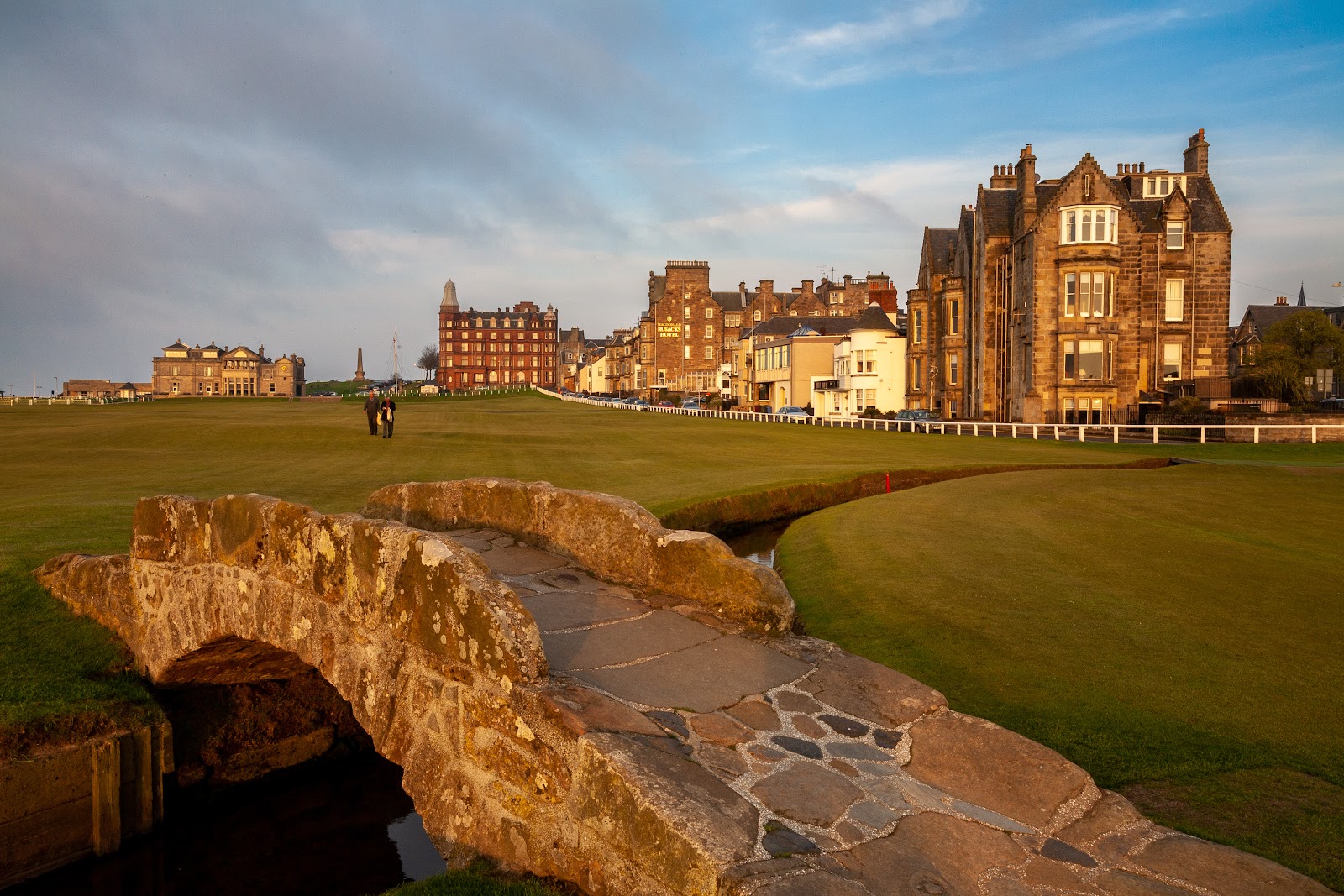
Photo: the Old Course, St Andrews via Google.
Handicap Requirements at the World's Top Courses
Some of the greatest courses on earth will not let you tee off without proof of your handicap. The Old Course asks 24 for men, Muirfield the same, Carnoustie 28 and Royal Troon a tight 20. Here is exactly what the famous courses require, and how to make sure your bucket list round is not turned away at the first tee.
The short answer
Most of the world's marquee courses fall into one of three groups. The historic links of Britain and Ireland that open to visitors, such as the Old Course at St Andrews, Muirfield, Carnoustie and Royal Troon, set a maximum handicap and ask to see a valid certificate, usually somewhere between 20 and 28 for men and 30 to 36 for women. Public resort courses, such as Pebble Beach, are pay and play with no handicap limit at all. And the most exclusive private clubs in the world, such as Augusta National, Pine Valley and Cypress Point, are effectively closed to the public: there is no handicap requirement to quote because the only way in is as the guest of a member.
If you are planning a trip around one of the great links, the practical takeaway is simple: hold a formal handicap, carry your certificate, and check the specific limit for each course before you travel. The numbers below are the published requirements at the time of writing, verified in June 2026, but clubs adjust their policies, so always confirm directly when you book. Get the paperwork right and the famous first tees are open to you; turn up without it and even a confirmed booking can be refused.
Handicap requirements at the famous courses
| Course | Handicap requirement | Notes |
|---|---|---|
| Old Course, St Andrews | 24 men, 36 women | Valid handicap certificate required; applies to the Old Course, other Links courses are more relaxed |
| Muirfield, Honourable Company | 24 or less | Checked at the time of booking; limited visitor days, typically Tuesdays and Thursdays |
| Royal Troon, Old Course | 20 men, 30 women | Handicap certificates may be requested from visitors |
| Carnoustie, Championship | 28 or below | Handicap certificate required to play the Championship course |
| Pebble Beach | No limit | Public resort course, pay and play; priority to lodge guests |
| Augusta National, Pine Valley, Cypress Point | Private, no public access | Play only as the guest of a member; no published visitor handicap policy |
Requirements verified June 2026 from club visitor information. Many other historic links, including Royal County Down, Royal Portrush and Royal Dornoch, also request a handicap certificate, with limits that vary by course and change from season to season. Where a club does not publish a numerical limit it may still ask to see evidence of a handicap, so always confirm the current policy directly before booking. Check tee time availability.
Why the great links ask for a handicap
The handicap limit at courses like the Old Course and Muirfield is not snobbery; it is course management. These are demanding championship links with firm turf, deep bunkers, gorse and wind, and a player well outside the limit will not only struggle to enjoy the round but will slow the entire tee sheet behind them. The limit keeps pace of play moving and protects the course, which on a heavily booked summer day matters enormously. It also reflects the fact that visitor access on these private clubs is a privilege extended on certain days, and the clubs reserve the right to keep the standard of play high while members are also on the course.
The practical effect for a travelling golfer is that the famous links sort into tiers of accessibility. Royal Troon, with its limits of 20 for men and 30 for women, is among the strictest of the courses that open to visitors at all, while Carnoustie's Championship course is more forgiving at 28. The Old Course at St Andrews sits in the middle at 24 for men and 36 for women, and crucially requires a handicap certificate to be presented, not merely claimed. Knowing where your handicap sits relative to these limits is the first step in shaping a realistic bucket list itinerary.
How to prepare before you travel
Establish a formal handicap
If you do not already hold an official handicap index through your home club or national federation under the World Handicap System, set one up well before your trip. Some courses will refuse play without evidence of a handicap, and a casual estimate of your standard will not satisfy them.
Download and print your certificate
Most national systems let you print or screenshot an official handicap certificate showing your current index. Carry both a printed copy and a digital version on your phone, alongside your tee time confirmation, so you can produce proof on arrival without fuss.
Check the limit for each course
Confirm the specific handicap requirement for every course on your itinerary at the time of booking, as policies and limits change. If your handicap sits above a course's limit, ask about alternative days, the resort or relief courses, or a different layout at the same club.
Build the trip around the limits
If one course on your wish list is out of reach, route the trip so the marquee round goes to the stronger players in the group while everyone enjoys the more accessible links. A planner can match the itinerary to the handicaps in your party and secure the tee times that fit.
Public, private and invitation only
It helps to understand that a handicap requirement only exists where a course chooses to admit visitors at all. The truly closed clubs of American golf, Augusta National, Pine Valley, Cypress Point and a handful of others, have no visitor handicap policy because they have no general visitor access: play is by the invitation of a member, full stop, and a low handicap will not buy you a tee time. At the other extreme, public resort courses such as Pebble Beach and the public rounds at St Andrews are open to any golfer who can secure a booking and pay the green fee, with no handicap test whatsoever, though for more on the booking side see our guide to booking a tee time at a private club.
The handicap requirement is therefore mainly a feature of the historic private members' links of Britain and Ireland that open their doors to visitors on set days while protecting the course and the membership's own play. For those clubs, the certificate is your passport. Establish a handicap, keep it current, carry the proof, and confirm each course's limit before you go, and the famous first tees of Scotland and Ireland are within reach.
Plan a bucket list golf trip
Tell us the courses on your wish list and the handicaps in your group, and we will build an itinerary that secures the tee times you can play and works around the limits you cannot. A costed plan, usually within one working day, no obligation.
Handicap requirement questions
Do you need a handicap to play the Old Course at St Andrews?
Yes. The Old Course at St Andrews requires a handicap limit of 24 for men and 36 for women, and visitors must present a valid handicap certificate or an official handicap record when they play. The limit applies to the Old Course specifically; the other St Andrews Links courses are more relaxed. Always confirm the current policy when you book, as requirements can change from season to season.
Which top courses have the strictest handicap requirements?
Among the championship links open to visitors, Royal Troon sets the lowest published limits at 20 for men and 30 for women, with Muirfield and the Old Course at St Andrews requiring 24 or below for men. Carnoustie's Championship course asks for 28 or below. The most exclusive private clubs in the United States, such as Augusta National, Pine Valley and Cypress Point, are effectively closed to the public altogether: there is no published handicap limit because access is by member invitation only.
What is a handicap certificate and do I need one to travel?
A handicap certificate is proof of your official handicap index, issued through your home club or national golf federation under the World Handicap System. Many of the great links in Britain and Ireland ask to see it before you play, either at booking or on arrival. If you do not hold a formal handicap, it is worth establishing one well before a bucket list trip, as some courses will refuse play without evidence. Print or download your certificate and carry it with your booking confirmation.
Do public courses like Pebble Beach require a handicap?
No. Public resort courses such as Pebble Beach and the public access at St Andrews are pay and play, with no handicap limit, so any golfer can book a tee time, subject to availability and the green fee. Handicap requirements are mainly a feature of the historic private members' links in Britain and Ireland that open their courses to visitors on certain days and want to keep pace of play and course conditioning under control.
Related
The Tee Sheet
Access rules, booking windows and the trips worth taking. Every other week.
Researched and written by the GolfForKings editorial desk. Handicap requirements taken from club visitor information and verified June 2026. Policies change; always confirm directly before booking. Last reviewed June 2026.