Pyle and Kenfig
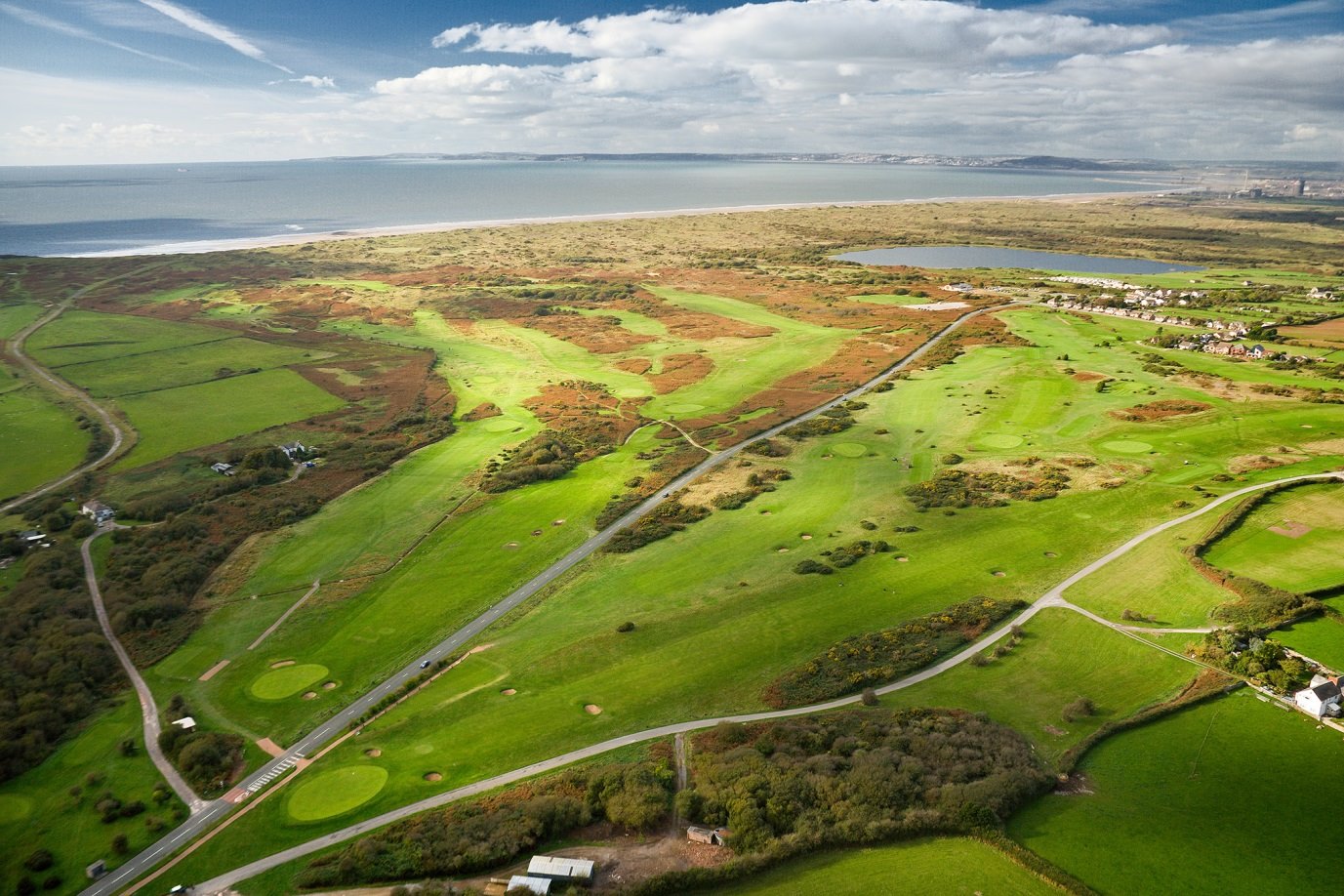
Pyle and Kenfig, known to everyone as P and K, runs out over some of the biggest dunes in Wales on the coast near Porthcawl. Harry Colt laid out the links in 1922, a par 71 of about 6,860 yards split into two contrasting loops, the gentler front nine and a wild, towering back nine through the Kenfig dunes that ranks among the toughest finishes in the principality.
Photo: Pyle & Kenfig Golf Club via Google.
The verdict
Pyle and Kenfig is a course of two distinct halves. Harry Colt routed the original links in 1922, and a road splits the property so that the front nine plays over flatter, more sheltered ground while the back nine plunges into the great dunes of Kenfig. The result is a par 71 of about 6,860 yards that builds toward one of the most dramatic and demanding inward stretches in British golf.
Mackenzie Ross rebuilt the duneland holes after the war and later architects have tended the links since, but the character is pure South Wales, firm turf, big sandhills and a wind that turns the back nine into a brawl. It sits just along the coast from Royal Porthcawl and makes a natural pairing with it, a second links of real quality that every visiting golfer to this corner of Wales should play.
Pyle and Kenfig at a glance
- Opened
- 1922
- Designer
- Harry Colt
- Type
- Links and dunes
- Par
- 71
- Yardage
- About 6,860 yds
- Green fee
- Visitor rate
Designer, founding year, par and yardage verified June 2026 from leading course databases and the club. Pyle and Kenfig was laid out by Harry Colt in 1922, a par 71 of about 6,860 yards, with the duneland holes restored by Mackenzie Ross after the Second World War. Visitor green fees vary by season and day; the club publishes current rates, so always confirm directly before booking.
The holes worth the trip
The front nine is the place to make a score. It plays over the more sheltered side of the road, the dunes lower and the wind less of a factor, and a steady start here is the foundation of any good round at P and K. Get greedy and the gorse and the firm, running fairways will still take their toll.
The back nine is what people remember. It climbs into the towering Kenfig dunes, the fairways winding through valleys of marram grass with blind shots, raised tees and greens tucked into the sandhills. When the wind comes off the Bristol Channel, as it usually does, the inward half becomes a genuine test of nerve and ball control, and a par finish feels earned.
This is links golf at its most natural and most exposed, a course shaped by the land rather than imposed on it. Walk it firm and fast on a breezy summer evening and you understand why Pyle and Kenfig sits among the best courses in Wales and rewards the player who can flight the ball and think their way home.
How to get on
| What to know | Detail |
|---|---|
| Access | Members club that welcomes visitors; tee times generally available on weekdays and at limited weekend times |
| Green fee | Seasonal visitor green fees published by the club, with summer the premium period and winter and twilight cheaper (indicative, 2026) |
| Booking | Book through the pro shop in advance, particularly for summer weekends and society days |
| On the day | Walking links, caddies and trolleys available, proper links weather gear advised |
| Getting there | Near Porthcawl off the M4, about 30 minutes from both Cardiff and Swansea |
| Best months | May to September for the firmest turf and longest evenings, though links golf runs year round |
Access and seasonality verified June 2026; visitor rates change by season and year, so always confirm current green fees and tee availability directly before booking.
Where to stay nearby
Porthcawl itself is the obvious base, a seaside town with a choice of hotels and guest houses minutes from both Pyle and Kenfig and Royal Porthcawl. It makes an easy walk to a links double header without much driving between rounds.
For more choice, Cardiff and Swansea are each about half an hour away along the M4, offering city hotels, dining and the wider draws of South Wales to build around a couple of days of coastal golf.
Looking for a base? See our recommended hotels and resorts near Pyle and Kenfig.
Build a South Wales links trip
We book Pyle and Kenfig alongside Royal Porthcawl and the best of the South Wales coast, and sort the lodging around your rounds. Tell us roughly when and who is travelling and one concierge costs it to the head, with no obligation.
Pyle and Kenfig questions
Who designed Pyle and Kenfig and when did it open?
The links was laid out by Harry Colt and opened in 1922. The dramatic duneland holes were rebuilt by Mackenzie Ross after the Second World War, with later care from leading links architects.
What is the par and length of Pyle and Kenfig?
Pyle and Kenfig is a par 71 of about 6,860 yards from the back tees, played as two contrasting loops, a gentler front nine and a demanding back nine through the dunes.
Why is the back nine so hard?
The inward half climbs into the great Kenfig sandhills with blind shots, raised greens and full exposure to the wind off the Bristol Channel, which makes it one of the toughest finishing nines in Wales.
Can visitors play Pyle and Kenfig?
Yes. Pyle and Kenfig is a members club that welcomes visitors, with tee times generally available on weekdays and limited weekend slots. Book through the pro shop ahead of summer dates.
Related
The Tee Sheet
Tee time windows, course access changes and the trips worth taking. Every other week.
Researched and written by the GolfForKings editorial desk. Designer, founding year, par and yardage verified June 2026; indicative visitor fees verified June 2026. Last reviewed June 2026.