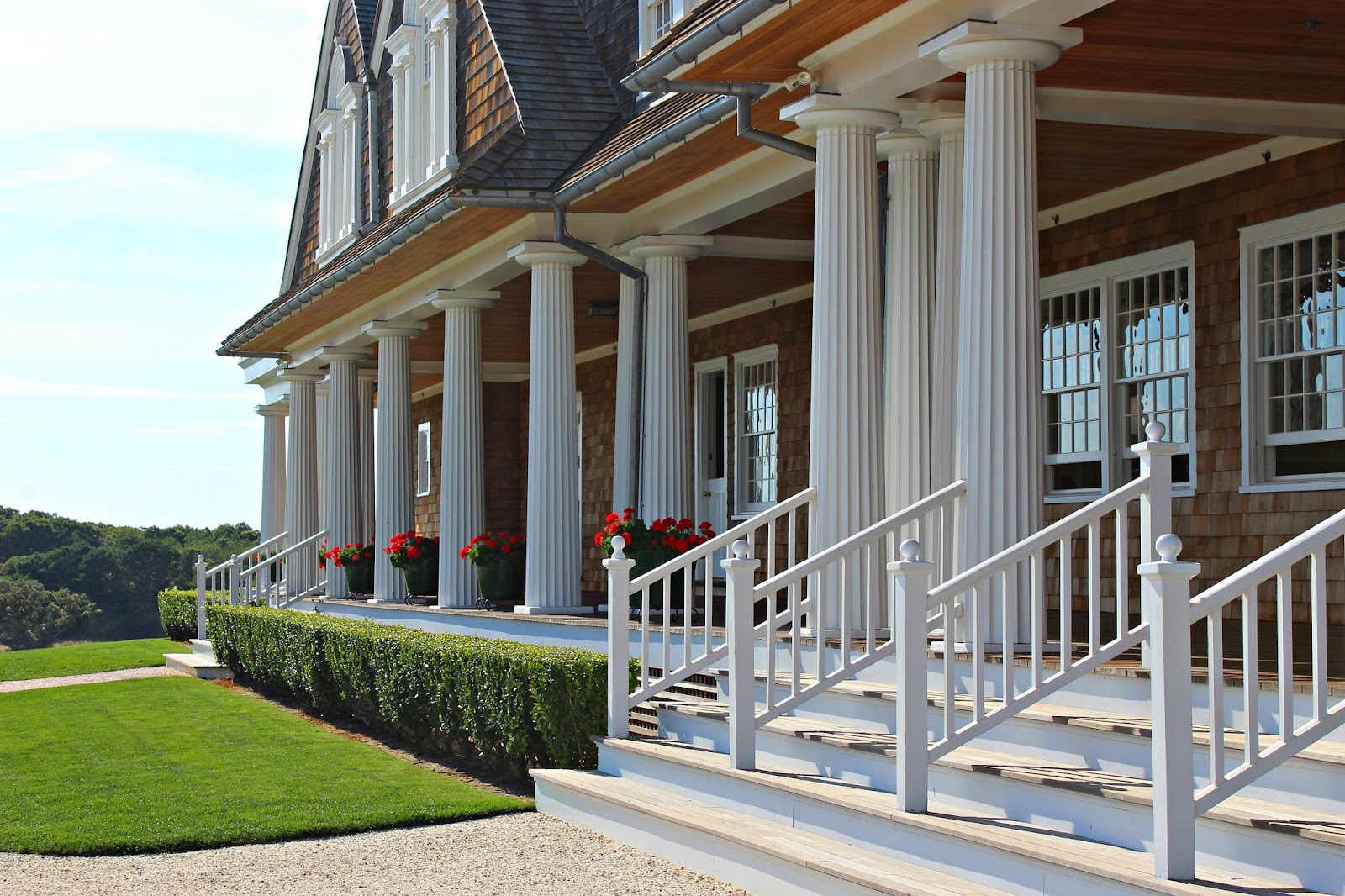
Shinnecock Hills
William Flynn rebuilt Shinnecock Hills in 1931 on the rolling, sandy moraine of eastern Long Island, and it has barely changed since. A par 70 of about 6,940 yards that stretches past 7,400 for a championship, it has hosted six U.S. Opens, the latest in 2026, and sits among the five best courses in America.
Photo: Shinnecock Hills Golf Club via Google.
The verdict
William Flynn completed the modern Shinnecock Hills in 1931, routing it across a treeless, tumbling stretch of sand and fescue near Southampton at the eastern end of Long Island. The club itself dates to 1891, one of the founding five of American golf, but it is Flynn's layout, gently refreshed by Bill Coore and Ben Crenshaw in the 2010s, that the world knows.
It is, by near consensus, one of the five greatest courses in the United States and a fixture in the world top 15. Wind is the defining hazard, sweeping in off the Atlantic and Peconic Bay across exposed, firm turf, and the angled, crowned greens punish anything less than a committed approach. Shinnecock has staged the U.S. Open in 1896, 1986, 1995, 2004, 2018 and 2026, with another already awarded for 2036. Access is the catch: this is among the most private clubs in the country, and a round comes only through a member.
Shinnecock Hills at a glance
- Opened
- 1931
- Designer
- William Flynn
- Type
- Links, sand moraine
- Par
- 70
- Yardage
- About 6,940 yds
- Green fee
- Members
Designer, opening year, par and yardage verified June 2026 from Shinnecock Hills Golf Club and leading course databases. William Flynn's eighteen opened in 1931 on a club founded in 1891; the course is a par 70 of about 6,940 yards that was set up beyond 7,400 yards for the 2026 U.S. Open. Shinnecock is a private members club with no public access or published green fee, so always confirm any visit directly before planning.
The holes worth the trip
Shinnecock is the rare championship test that looks and plays like a true links despite sitting an ocean away from Scotland. The fairways tumble over sandy ground, the rough is wispy fescue, and the wind rarely rests. Width is generous off many tees, but the angle into the green is everything, and the wrong side leaves a putt or pitch that the contours turn against you.
The closing stretch is among the most demanding in major golf. The long par 4 14th, the exposed 15th and the uphill 18th to the famous clubhouse on the hill have decided U.S. Opens, playing dead into the prevailing wind. The par 3s are a clinic in variety and exposure, and the green complexes, subtly restored rather than rebuilt, remain the truest defense on a course that asks for control over power.
What sets Shinnecock apart is restraint. There are no tricks and no water in play, only firm ground, clever angles and weather, the oldest defenses in the game. It is the kind of course that rewards the complete player and quietly exposes the rest.
How to get on
| What to know | Detail |
|---|---|
| Access | Private members club; play is by invitation of a member only, with no public or visitor tee times |
| Green fee | No published public fee; access does not come through a green fee (indicative, 2026) |
| Booking | Through a member only; there is no visitor booking line |
| On the day | Walking with caddies is the tradition on firm, exposed links turf |
| Getting there | Southampton, eastern Long Island, about two hours from New York City |
| Best months | May, June, September and October for firm turf and the truest links wind |
Access verified June 2026; Shinnecock Hills is strictly private and policies do not change in the visitor's favor, so confirm any arrangement directly before planning a trip around it.
Where to stay nearby
Shinnecock sits in the heart of the Hamptons, so the lodging is as rarefied as the golf. Southampton and East Hampton villages are full of polished inns and seasonal hotels, with the beaches, restaurants and vineyards of the South Fork a short drive in every direction. It is an easy place to build a refined few days around a single, hard won round.
For a golf focused stay, the eastern Long Island sand belt holds a remarkable density of great courses within a short drive, from the public Montauk Downs to the storied National Golf Links next door. Pair Shinnecock, if you are fortunate enough to gain access, with a wider Long Island itinerary and base yourself in Southampton for the week.
Looking for a base? See our recommended hotels and resorts near Shinnecock Hills.
Build a New York golf trip
We help you build a trip around the great courses of Long Island and the Northeast, securing access where it exists and arranging the lodging and logistics around it. Tell us roughly when and who is travelling and one concierge costs it to the head, with no obligation.
Shinnecock Hills questions
Who designed Shinnecock Hills and when did it open?
The modern Shinnecock Hills was designed by William Flynn and opened in 1931, on a club founded in 1891. Bill Coore and Ben Crenshaw led a sympathetic restoration in the 2010s.
What is the par and length of Shinnecock Hills?
Shinnecock Hills is a par 70 of about 6,940 yards for everyday play, set up beyond 7,400 yards for the U.S. Open, on firm, exposed links turf at the east end of Long Island.
How many U.S. Opens has Shinnecock Hills hosted?
Shinnecock has hosted the U.S. Open six times, in 1896, 1986, 1995, 2004, 2018 and 2026, and has been awarded the championship again for 2036.
Can visitors play Shinnecock Hills?
No. Shinnecock Hills is among the most private clubs in the United States. There are no public or visitor tee times; play is by invitation of a member only.
Related
The Tee Sheet
Tee time windows, course access changes and the trips worth taking. Every other week.
Researched and written by the GolfForKings editorial desk. Designer, opening year, par and yardage verified June 2026; indicative green fees verified June 2026. Last reviewed June 2026.