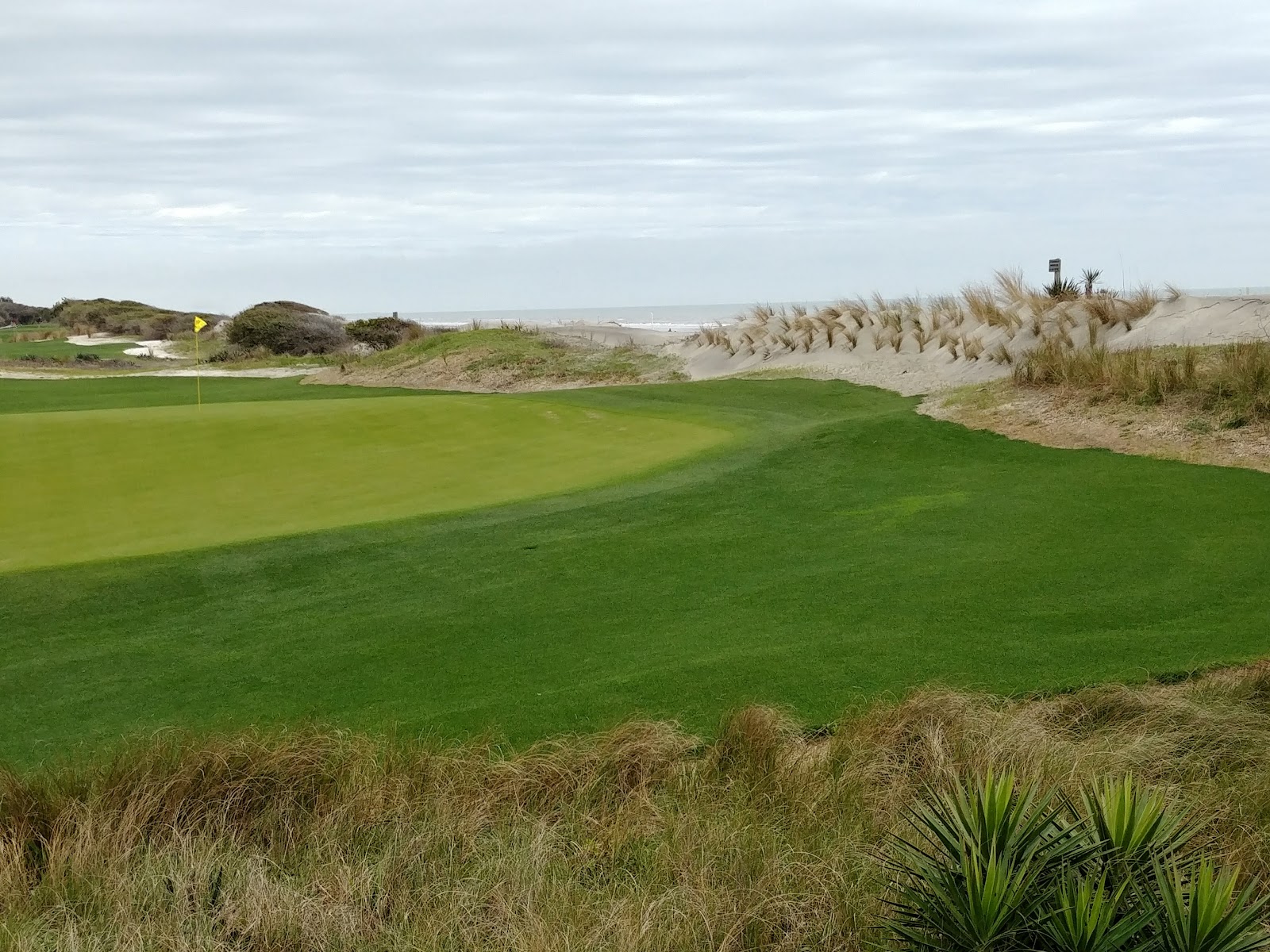
Kiawah Turtle Point
Jack Nicklaus designed Turtle Point in 1981, threading most of its holes through Kiawah Island's maritime forest and lagoons before bursting onto the Atlantic for a celebrated three hole oceanfront stretch. A par 72 reaching about 7,061 yards, it is the most playable of Kiawah's marquee resort courses and a favorite of returning guests.
Photo: Turtle Point Golf Course via Google.
The verdict
Turtle Point is the Kiawah course locals quietly love. Jack Nicklaus opened it in 1981, and for most of the round it is a handsome low country test through pine and oak, with lagoons and wetlands framing the corridors. Then, around the turn, the course steps out of the trees and onto the dunes for three holes hard against the Atlantic, the stretch everyone remembers.
It is a par 72 of about 7,061 yards from the tips, less brutal than the famous Ocean Course but with plenty of teeth when the sea breeze gets up. The greens are subtly contoured in the Nicklaus manner and the oceanfront holes can swing a card in minutes. As a resort course you can actually book, it is one of the best value rounds on an island full of marquee names.
Turtle Point at a glance
- Opened
- 1981
- Designer
- Jack Nicklaus
- Type
- Coastal parkland
- Par
- 72
- Yardage
- About 7,061 yds
- Green fee
- From about 234 USD (resort)
Designer, opening year, par and yardage verified June 2026 from Kiawah Island Golf Resort and Nicklaus Design. Turtle Point opened in 1981, a Jack Nicklaus par 72 of about 7,061 yards. Indicative 2026 green fees run from about 234 dollars for resort guests up to higher peak season rates, with non resort rates higher again. Fees change by season and year, so always confirm directly before booking.
The holes worth the trip
Turtle Point opens through Kiawah's coastal forest, the fairways lined with live oaks and palmetto and the lagoons gathering any loose shot. It is a fair, rhythmic test that lets you find your game before the island shows its hand, with the Nicklaus greens rewarding approaches played to the correct portion rather than simply at the flag.
The heart of the round is the ocean stretch, the par 3 14th and the holes around it running along the dunes with the Atlantic as a backdrop and a hazard. Into a fresh sea breeze they become a stern examination of nerve and club selection, and they are the reason Turtle Point lingers in the memory long after the trees have blurred together.
The closing holes turn back inland through the forest, where accuracy off the tee and a steady putter bring the round home. Turtle Point pairs beautifully with the rest of the island, a more forgiving counterpoint to the championship Ocean Course, and it is one of the most enjoyable resort rounds on the Carolina coast.
How to get on
| What to know | Detail |
|---|---|
| Access | Resort course; open to Kiawah Island resort guests and visitors by tee time |
| Green fee | From about 234 dollars for resort guests, rising to peak season highs; non resort rates are higher (indicative, 2026) |
| Booking | Book through the resort; guests staying on the island get priority and better rates |
| On the day | Carts standard; caddies and forecaddies can be arranged through the resort |
| Getting there | Kiawah Island, about 45 minutes southwest of Charleston and its airport |
| Best months | March to May and September to November for the mild low country golf season |
Access and fee guidance verified June 2026; Kiawah resort rates vary by season and guest status, so always confirm current pricing and tee time availability directly before booking.
Where to stay nearby
Most golfers stay on Kiawah Island itself, either at the resort's hotel and villas or in rental homes, which puts all five resort courses and the beach within a short shuttle ride. Staying on the island also secures the best tee times and green fee rates at Turtle Point and its neighbors.
Historic Charleston, less than an hour away, makes a tempting base for those who want to combine golf with one of the finest food and history cities in the South. A split stay, a few nights in the city and a few on the island, is a popular way to do a Kiawah trip.
Looking for a base? See our recommended hotels and resorts near Kiawah Island.
Build a Kiawah Island golf trip
We secure Turtle Point and the rest of the Kiawah courses, time them around the tides and the sea breeze and book the lodging on the island. Tell us roughly when and who is travelling and one concierge costs it to the head, with no obligation.
Turtle Point questions
Who designed Turtle Point at Kiawah Island and when did it open?
Turtle Point was designed by Jack Nicklaus and opened in 1981. It is one of five resort courses at Kiawah Island Golf Resort in South Carolina.
What is the par and length of Turtle Point?
Turtle Point is a par 72 of about 7,061 yards from the back tees, winding through coastal forest before reaching three oceanfront holes along the Atlantic.
How much does it cost to play Turtle Point?
Indicative 2026 green fees run from about 234 dollars for resort guests up to higher peak season rates, with non resort rates higher again. Always confirm current pricing directly before booking.
Is Turtle Point easier than the Ocean Course at Kiawah?
Yes. Turtle Point is more forgiving than the championship Ocean Course, though its three oceanfront holes can play very hard in a sea breeze. Many golfers find it the most enjoyable round on the island.
Related
The Tee Sheet
Tee time windows, course access changes and the trips worth taking. Every other week.
Researched and written by the GolfForKings editorial desk. Designer, opening year, par and yardage verified June 2026; indicative green fees verified June 2026. Last reviewed June 2026.