Camp John Hay Golf Club
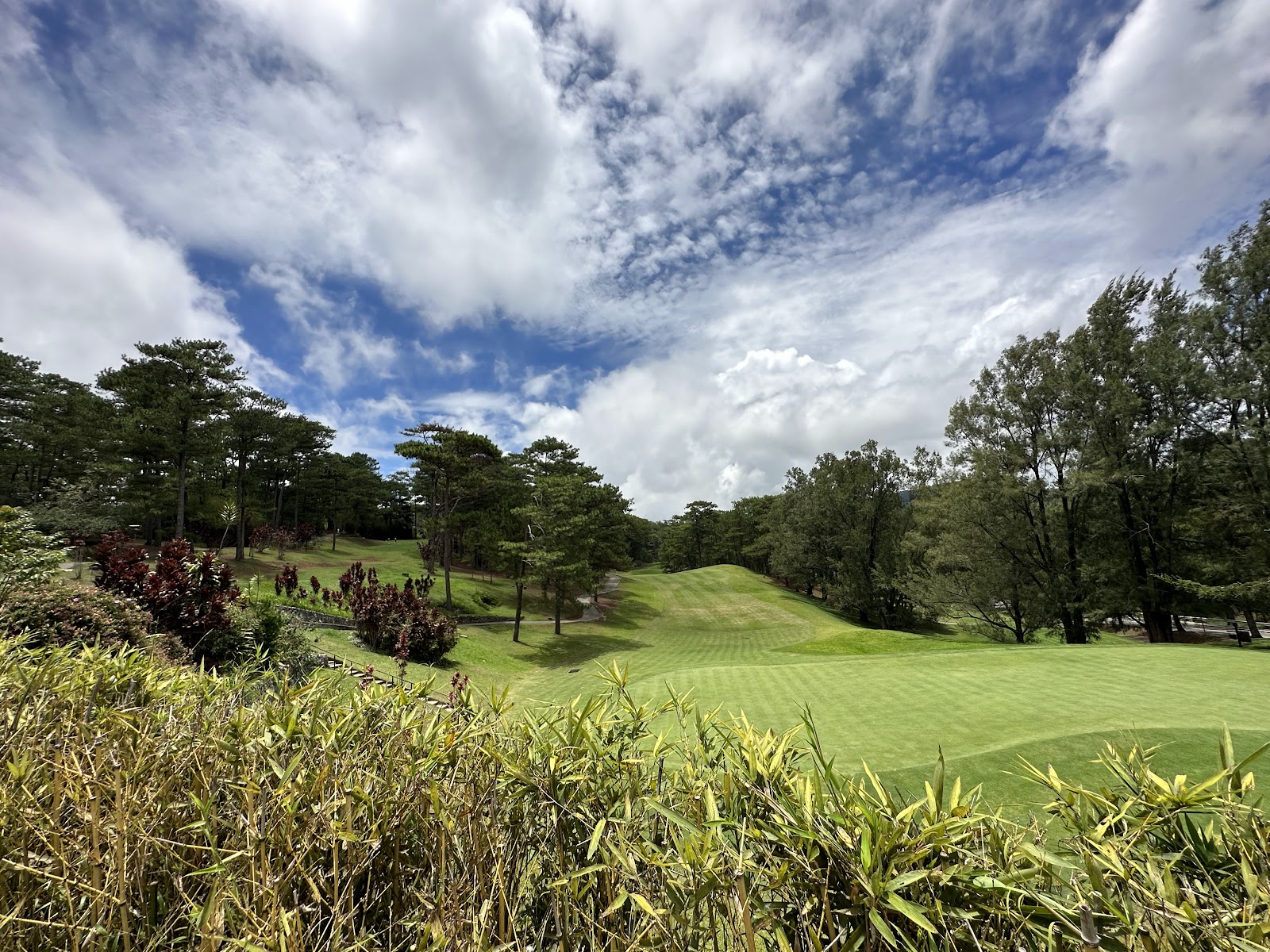
Golf has been played in the pines above Baguio since 1905, and Jack Nicklaus reshaped that mountain ground into the course you play today. A compact par 69 of about 5,517 yards at roughly 5,000 feet, it offers the coolest, most atmospheric round in the Philippines, threaded through Benguet pine and cloud.
Photo: Camp John Hay Golf Club via Google, by Neca galicia.
The verdict
Camp John Hay is the one Philippine round that feels nothing like the rest of the country. There is no heat haze and no coastal humidity here, only mountain air, the scent of pine and the cool of a hill station the Americans built as a retreat from the lowland summers. The site has held golf since 1905, and when Jack Nicklaus put his hand to it the brief was clear: keep the trees, keep the elevation changes, and make a short course that still asks real questions.
What you get is a par 69 of roughly 5,517 yards that plays its length and then some, because the fairways tip and turn over Benguet ridges and the pines crowd every line. The altitude flatters your carry, the greens are quick, and the whole thing is wrapped in a forest that turns the round into a walk as much as a test. It is not a championship monster, and it does not pretend to be. It is a beautiful, distinctive mountain course, and for a traveling golfer building a Luzon itinerary it is the obvious cool weather counterpoint to Manila and the coast.
Camp John Hay at a glance
- Golf since
- 1905
- Designer
- Jack Nicklaus redesign
- Type
- Mountain pine parkland
- Par
- 69
- Yardage
- About 5,517 yds
- Green fee
- Daily fee, indicative
Designer, history, par and yardage verified June 2026 from Camp John Hay Golf Club and leading course databases. Golf has been played on the site since the American era of 1905; Jack Nicklaus redesigned the layout into its modern par 69 of about 5,517 yards. Camp John Hay is a daily fee mountain course that welcomes visitors; published rates change by season and day, so always confirm the current green fee, caddie and cart charges directly before booking.
The holes worth the trip
This is a course defined by its setting and its movement. Few holes run flat for long, and the Nicklaus reshaping leans into the natural fall of the land rather than fighting it. Drives are framed and funneled by pine, and more than once the smart play is less club off the tee to hold the high side of a sloping fairway and keep the angle into a green that sits at the bottom of a tilt.
The par 3s are the heart of the round, several of them played downhill through gaps in the trees where club selection is half guesswork and half nerve, the altitude carrying the ball further than the number suggests. The short par 4s reward the player who lays back to a flat number rather than the one who blasts driver into the pines. Pace control on the greens matters as much as anything; they are quick and the mountain light can flatten the read.
The closing stretch brings you back toward the clubhouse and the cool of the pine canopy, a fitting end to a round that trades raw length for atmosphere, elevation and a kind of golf you simply cannot find anywhere else in the Philippines. Camp John Hay is a course to savor rather than overpower, and it is all the better for it.
How to get on
| What to know | Detail |
|---|---|
| Access | Daily fee mountain course; visiting and resort golfers welcome, with members holding priority at peak times |
| Green fee | Indicative daily fee that rises in the Baguio peak season; weekday rounds are the best value (2026). Confirm directly before booking |
| Booking | Reserve tee times in advance for weekends and the March to May high season; weekdays are far quieter |
| On the day | Caddies are part of the round; carts available; the routing is walkable but hilly, so factor the climbs and the altitude |
| Getting there | Within Camp John Hay in Baguio City, about four to five hours by road from Manila, or a short flight to nearby airports plus transfer |
| Best months | November to April for the driest, coolest conditions; June to September is the wet season with afternoon mist and rain |
Access and fee context verified June 2026; mountain weather and seasonal demand move rates and availability, so always confirm directly before planning a visit with the golf club or your trip planner.
Where to stay nearby
The most natural base is Camp John Hay itself, a forested estate of hotels, lodges and dining a short ride from the first tee, with the cool climate and the pines on the doorstep. Staying inside the development keeps early tee times easy and turns the round into part of a wider mountain escape.
Central Baguio adds more hotels, the market and the hill station character that has drawn Manila families for generations. For a traveling golfer, Camp John Hay pairs beautifully with a lowland leg around Manila and the coast, so you can swing from cool mountain golf to the warm Luzon resorts in a single trip.
Looking for a base? See our recommended hotels and resorts near Camp John Hay.
Build a Philippines golf trip
We secure the Camp John Hay tee times, pair the cool of Baguio with the best of Manila and the coast, and book the lodging around your golf. Tell us roughly when and who is traveling and one concierge costs it to the head, with no obligation.
Camp John Hay questions
Who designed Camp John Hay Golf Club and when did it open?
Golf has been played at Camp John Hay since the American military era of 1905. The modern course is a Jack Nicklaus redesign that reshaped the historic mountain layout into a par 69 of about 5,517 yards.
What is the par and length of Camp John Hay Golf Club?
Camp John Hay is a par 69 measuring roughly 5,517 yards, a compact mountain course where the elevation of about 5,000 feet adds carry to every shot.
Can visitors play Camp John Hay Golf Club?
Yes. Camp John Hay welcomes visiting and resort golfers on a daily fee basis. Tee times are easiest on weekdays and outside the peak Baguio summer season, and caddies are part of the round.
What is the best time of year to play Camp John Hay?
The dry, cooler months from November to April are the most reliable. Baguio sits in the mountains, so mornings are crisp and afternoon mist or rain can roll in quickly, especially in the June to September wet season.
Related
The Tee Sheet
Tee time windows, course access changes and the trips worth taking. Every other week.
Researched and written by the GolfForKings editorial desk. Designer, history, par and yardage verified June 2026; indicative green fees verified June 2026. Last reviewed June 2026.