Hamburger Golf-Club Falkenstein
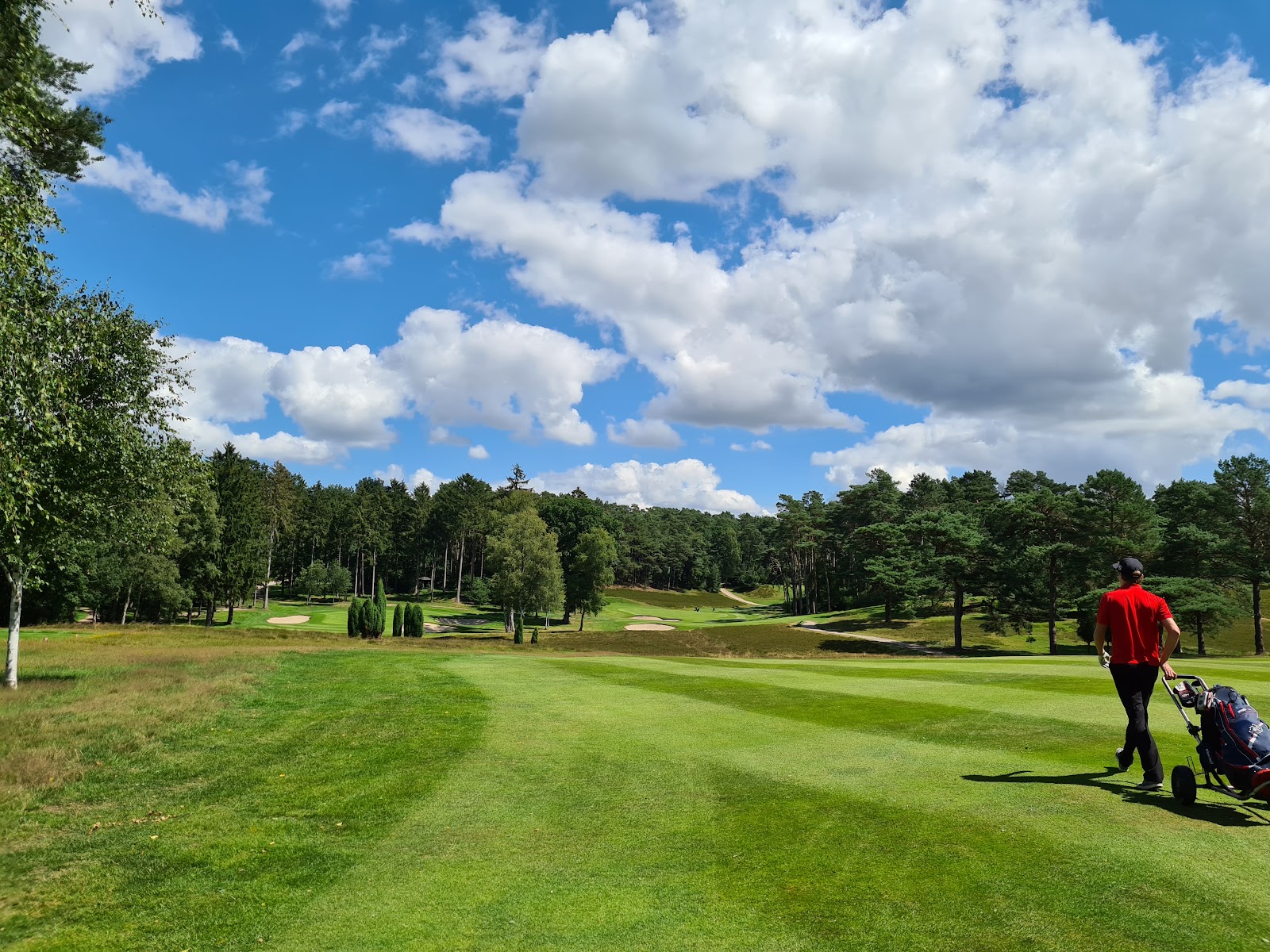
Widely regarded as the finest course in Germany, Falkenstein is a 1930 Colt, Alison and Morrison heathland threaded through pine and birch forest west of Hamburg. A par 71 of a little over 6,000 meters, it has no water in play and no need of it, relying instead on heather, classical bunkering and one of the purest sets of holes Harry Colt ever routed.
Photo: Hamburger Golf-Club Falkenstein via Google.
The verdict
Falkenstein is the course that golf architecture students travel to see. Laid out at the end of the 1920s by the great English partnership of Colt, Alison and Morrison, it took a tract of pine and birch forest near the Elbe and turned it into a heathland in the manner of the famous courses around London, full of heather, sandy lies and a routing that uses the gentle movement of the land to perfection. It opened in 1930 and has been considered Germany's best course for most of the time since.
What sets it apart is restraint. There is no water anywhere on the property, and the holes win their reputation through angles, the framing of the trees and heather, and greens defended by bunkers placed exactly where a good player would rather they were not. A later revision by Bernhard von Limburger respected the bones of the design, and the course today reads as a beautifully preserved classic. For the traveling golfer in northern Europe, it is an essential round and the cornerstone of any golf trip to Hamburg.
Falkenstein at a glance
- Opened
- 1930
- Designer
- Colt, Alison and Morrison
- Type
- Heathland
- Par
- 71
- Yardage
- Just over 6,000 m
- Green fee
- Premium
Designer, opening year and par verified June 2026 from Hamburger Golf-Club and leading course and architecture sources. The Falkenstein course opened in 1930 to a design by Colt, Alison and Morrison, with a 1960s revision by Bernhard von Limburger, a par 71 of a little over 6,000 meters with no water in play. Indicative 2026 visitor green fees are premium for Germany and change by season. Always confirm current rates and availability directly before booking.
The holes worth the trip
Falkenstein plays through corridors of pine and birch, the heather pressing close to fairways that are narrower than the yardage suggests. Length is rarely the issue, position is everything, and the player who drives into the correct part of the fairway is rewarded with an open look at greens that turn the screw on anyone approaching from the wrong angle. The greens are full of subtle movement, and reading the ground around them is as much a part of the test as striking the ball.
The par 3s are a showcase of Colt's craft, each different in length and demand, several played to greens perched above falling ground that punishes the timid and the over ambitious alike. The two shot holes wind through the trees, asking for a shaped tee shot and then a precise iron to a green ringed by sand, and the heather waiting off the fairway turns a wayward shot into a genuine penalty rather than a routine recovery.
There is no manufactured drama here, no island green or forced carry over a lake, just hole after hole of pure strategic golf in a beautiful forest setting. That purity is exactly why architects revere it and why a round at Falkenstein lingers. It is the round that defines golf in Germany and the reason a discerning golfer adds Hamburg to a European itinerary.
How to get on
| What to know | Detail |
|---|---|
| Access | Members club that welcomes visitors by advance arrangement, typically on weekdays and subject to member play, with a handicap certificate usually required |
| Green fee | Premium for Germany, reflecting the course's standing; rates vary by season (indicative, 2026) |
| Booking | Contact the club well ahead to confirm tee times; combine with other northern German courses for a short trip |
| On the day | A walkable heathland with a traditional clubhouse and dress code; caddies and buggies are not the norm here |
| Getting there | Falkenstein, in the western suburbs of Hamburg near the Elbe, a short drive from the city and its international airport |
| Best months | May to September for the firmest turf and the heather at its best in late summer |
Access and fee details verified June 2026; visitor policies and rates change, so always confirm directly before planning a visit with the club or your trip planner.
Where to stay nearby
Hamburg itself is the obvious base, one of Europe's great port cities, with hotels to suit every budget and a lively dining scene a short drive from the course. The leafy western suburbs around Falkenstein and the Elbe offer quieter, more characterful lodging close to the first tee.
A golf trip built around Falkenstein works well as a city break with golf, combining the round with Hamburg's harbor, restaurants and culture, and there are further good courses within reach across northern Germany for a group wanting more than one day on the links and heath. It is an easy, rewarding addition to a wider European golf itinerary.
Looking for a base? See our recommended hotels and resorts near Falkenstein.
Build a Hamburg golf trip
We secure the Falkenstein tee times, pair them with the best of northern Germany, and book the lodging around them, in the city or by the Elbe. Tell us roughly when and who is traveling and one concierge costs it to the head, with no obligation.
Falkenstein questions
Who designed the Falkenstein course?
Falkenstein was designed by the celebrated English firm of Colt, Alison and Morrison and opened in 1930. It was later revised in the 1960s by Germany's leading architect Bernhard von Limburger, and is considered one of Harry Colt's purest heathland courses.
What is the par and length of Falkenstein?
Falkenstein plays to a par of 71 and a little over 6,000 meters from the back tees. It is a heathland course with no water in play, its strength lying in the routing, the heather and the cleverly defended greens rather than length.
Can visitors play Falkenstein?
Yes. Hamburger Golf-Club welcomes visitors at Falkenstein by advance arrangement, typically on weekdays and with a handicap certificate, subject to member play. Contact the club to confirm available tee times before traveling.
Why is Falkenstein considered Germany's best course?
Falkenstein is consistently ranked at or near the top in Germany because of the quality of its Colt design, the heathland setting in pine and birch forest, and the timeless strategy of its holes, which remain a fine test almost a century after they were built.
Related
The Tee Sheet
Tee time windows, course access changes and the trips worth taking. Every other week.
Researched and written by the GolfForKings editorial desk. Designer, opening year and par verified June 2026; indicative green fees verified June 2026. Last reviewed June 2026.