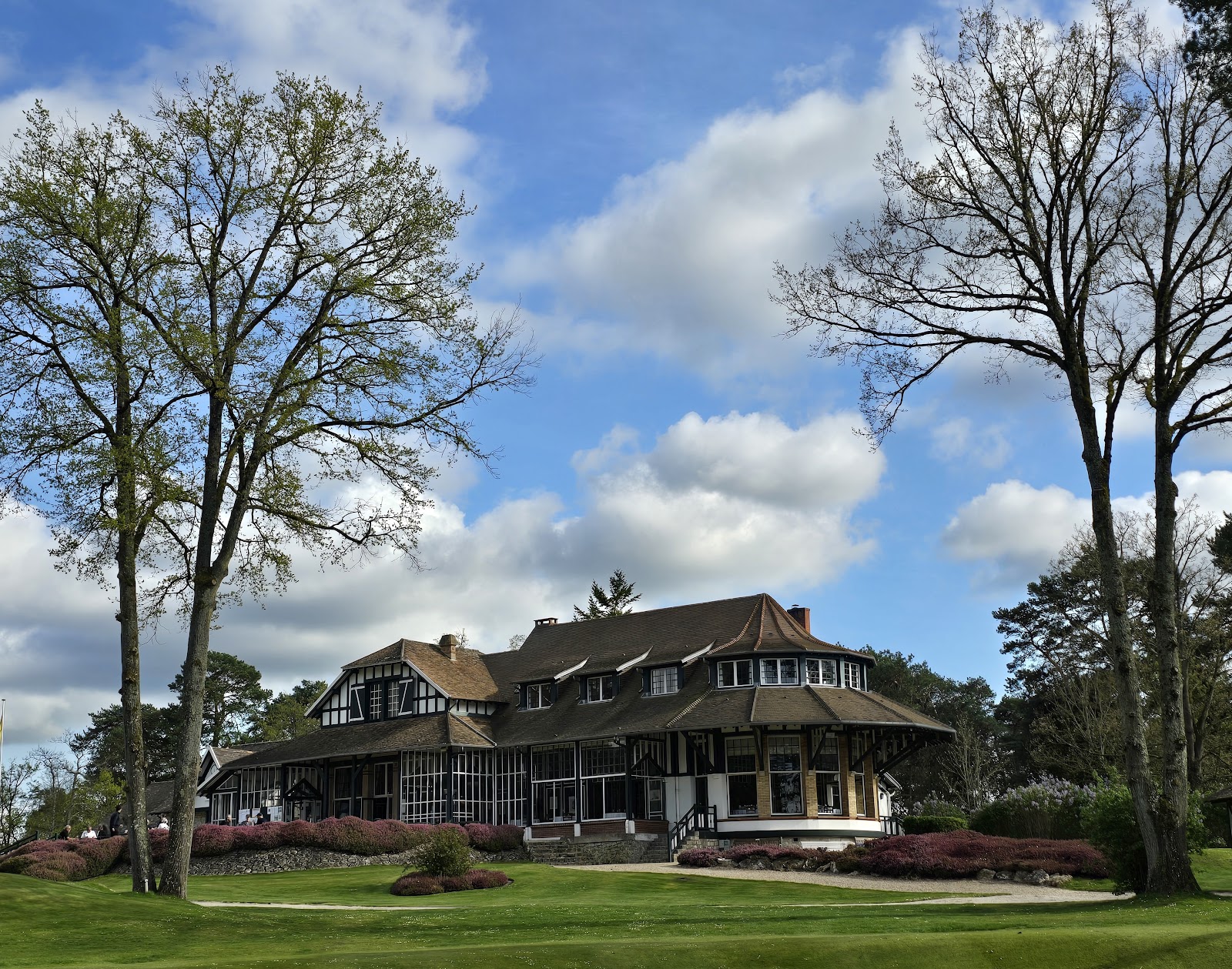
Golf de Fontainebleau
Tom Simpson's 1920 forest masterpiece sits inside the great Foret de Fontainebleau, an hour south of Paris, where fairways run between Corsican pines, oaks, heather and the sandstone boulders the region is famous for. A par 72 that prizes angle and imagination over length, it is one of the oldest and most admired courses in France, and a pure expression of golden age design.
Photo: Golf de Fontainebleau via Google.
The verdict
Fontainebleau is the course architecture enthusiasts cross France to play. Julien Chantepie laid out the original eighteen in 1909, but it was Tom Simpson, the most cerebral of the golden age architects, who in 1920 gave the course the character it still wears today. Fred Hawtree lengthened it in the 1960s, yet the soul is pure Simpson: subtle, strategic, and built to make the thinking golfer the happiest golfer on the property.
The setting is half the magic. The Foret de Fontainebleau is one of the loveliest woodlands in Europe, and the course uses its pines, sand and sandstone outcrops as a natural framework rather than a backdrop. It is not long by modern standards and it does not need to be. The challenge is placement, the reward is one of the most atmospheric rounds on the continent, and a day here pairs beautifully with the château and the town. Come for the history, leave loving the holes.
Golf de Fontainebleau at a glance
- Opened
- 1909
- Designer
- Tom Simpson, 1920
- Type
- Forest, heathland
- Par
- 72
- Length
- Around 6,016 m
- Access
- Members club, visitors welcome
Designer, opening year, par and length verified June 2026 from the club and leading course databases; the course opened in 1909 to a Julien Chantepie design, was redesigned by Tom Simpson in 1920 and later modified by Fred Hawtree, and plays as a par 72 of around 6,016 metres. Green fees vary by season. Fees are indicative and we do not quote our own pricing, so always confirm directly before booking.
The holes worth the trip
What makes Fontainebleau special is how often a hole offers a choice. Simpson rarely dictated a single line; instead he tempted you to take on a corner, flirt with the trees or play safe and accept a harder approach. The fairways tilt and the greens are set at angles that reward the player who plotted the hole from the tee, which is exactly why golfers who think their way around score so much better than those who simply hit it hard.
The forest itself is the dominant hazard. Stray off line and you are among pines, heather and the occasional sandstone boulder, with no easy recovery. The bunkering is classic Simpson, natural edged and intelligently placed to question your nerve rather than simply punish a miss. The par 3s are a particular highlight, varied in length and demanding precise, committed iron play.
It is not a course that overpowers you, and that is the point. Play it twice and you find new lines and fresh temptations each time, the mark of design that has aged into something close to timeless. On a still autumn morning, with the forest turning, there are few more beautiful walks in golf.
How to get on
| What to know | Detail |
|---|---|
| Access | A members club that welcomes visitors; weekdays are easiest, and a handicap certificate is usually required |
| Green fee | Indicative around EUR 110 and up on weekdays in the 2026 season, higher at weekends; confirm directly |
| Booking | Reserve through the club or a France golf specialist, ahead for weekends and the warmer months |
| On the day | Walking course by nature; carts may be limited, and the clubhouse and practice ground are excellent. Smart golf dress |
| Getting there | In the Foret de Fontainebleau in Seine-et-Marne, about an hour south of central Paris by road |
| Best months | April to October, with autumn especially beautiful as the forest turns; summer offers the firmest turf |
Access and fee guidance verified June 2026; green fees move with season and demand, so always confirm directly before booking. Check tee time availability.
Where to stay nearby
The town of Fontainebleau, built around its magnificent royal château, is the natural base, with characterful hotels, good restaurants and the forest on the doorstep. Stay there and you can combine the golf with the palace, the village of Barbizon and the famous bouldering trails of the forest for a refined long weekend.
Paris is close enough to fold into the trip, whether as a city night before or after, or as the hub for a wider French golf tour that adds Le Golf National and the heathland courses west of the capital. Fontainebleau is the cultured, golden age centerpiece of that itinerary.
Looking for a base? See our recommended hotels and resorts around Fontainebleau and south of Paris.
Build a Paris golf trip
We pair Fontainebleau with Le Golf National and the best heathland west of Paris, fold in the châteaux, the food and a city night, and cost it to the head with transfers and tee times arranged. Tell us roughly when and who is travelling and one concierge handles the rest, with no obligation.
Golf de Fontainebleau questions
Who designed Golf de Fontainebleau and when did it open?
The course was originally laid out by Julien Chantepie and inaugurated in 1909, then redesigned by the great British architect Tom Simpson in 1920. Fred Hawtree later lengthened and modified the layout in the 1960s. It is widely regarded as one of Simpson's finest forest courses.
What is the par and length of Golf de Fontainebleau?
Fontainebleau plays as a par 72 of around 6,016 metres, roughly 6,580 yards. It is a course where placement and angle matter far more than raw length, threading between trees, heather and sandstone.
Can visitors play Golf de Fontainebleau?
Yes. Golf de Fontainebleau is a members club that welcomes visitors, typically with a handicap certificate and easiest tee times on weekdays. Always confirm directly before booking.
How far is Fontainebleau from Paris?
The course sits in the Foret de Fontainebleau in Seine-et-Marne, about an hour south of central Paris by road and easily reached as a day trip or a stop on a wider French golf tour.
Related
The Tee Sheet
Tee time windows, course access changes and the trips worth taking. Every other week.
Researched and written by the GolfForKings editorial desk. Designer, opening year, par and length verified June 2026; access and fee guidance verified June 2026. Last reviewed June 2026.