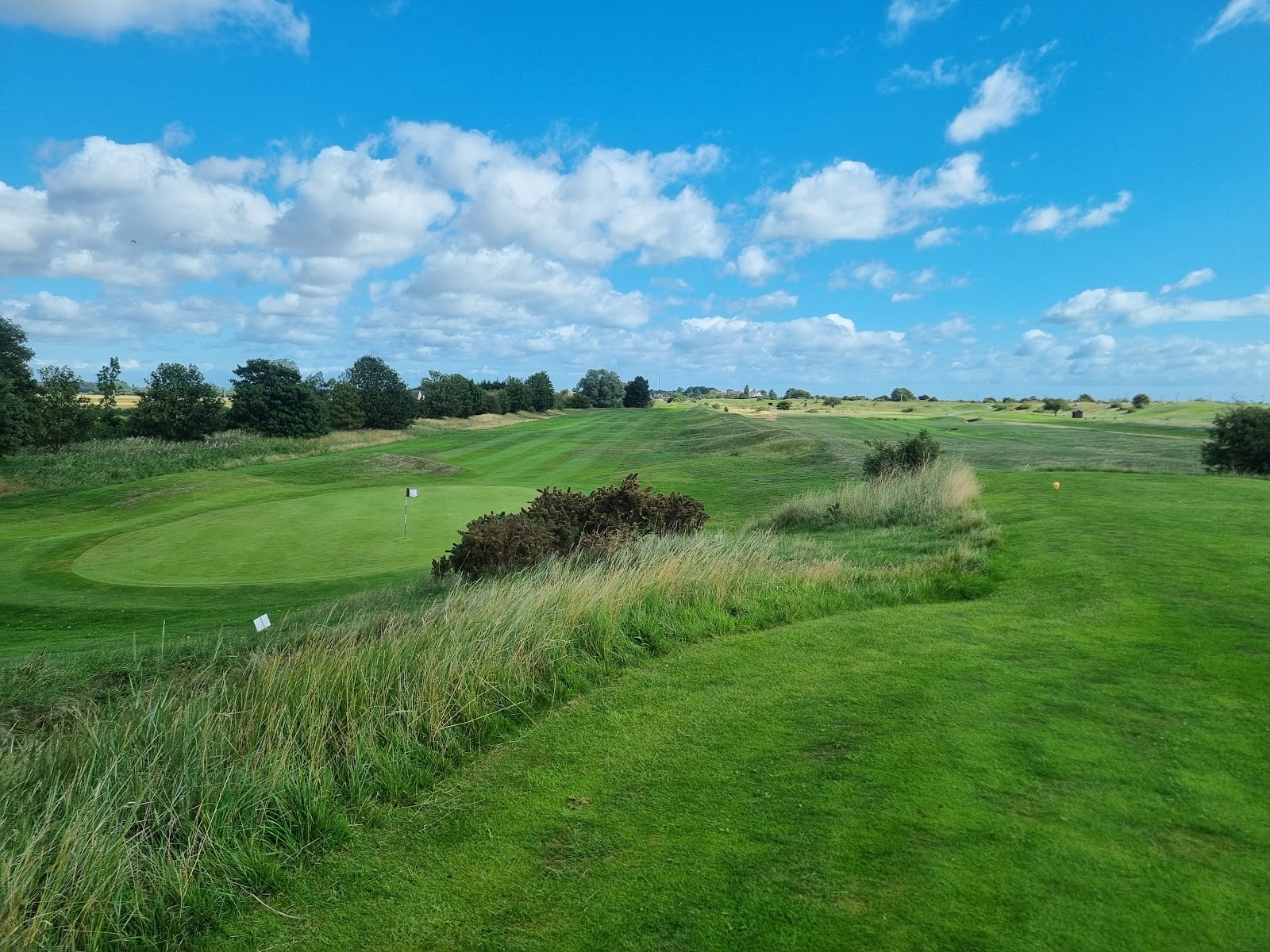
Seacroft
Tom Dunn laid out Seacroft in 1895 on the Lincolnshire coast at the south end of Skegness, with Willie Fernie completing eighteen holes by 1900. A traditional out and back links of par 71 and about 6,500 yards, it is one of England's most underrated seaside tests and warmly welcomes visitors.
Photo: Paul Kirkup via Google.
The verdict
Seacroft is a classic out and back links tucked along the dunes at the southern edge of Skegness, hard against the Gibraltar Point nature reserve. Tom Dunn set out the original course in 1895, and Willie Fernie had it playing over eighteen holes by 1900. Little of its essential character has changed: this is honest, old fashioned links golf on genuine seaside turf.
It rarely makes the headlines, overshadowed by the grander names of the English coast, yet it is consistently rated among the top hundred courses in Great Britain and Ireland. Firm fairways, subtle humps and hollows, and an ever present wind off the North Sea make it a far stiffer test than the modest yardage suggests. Best of all for the travelling golfer, Seacroft is a friendly members club that welcomes visitors, a rare combination of quality and access.
Seacroft at a glance
- Opened
- 1895
- Designer
- Tom Dunn, Willie Fernie
- Type
- Links
- Par
- 71
- Yardage
- About 6,500 yds
- Green fee
- Visitors welcome
Designer, opening year, par and yardage verified June 2026 from Seacroft Golf Club and leading course databases. Tom Dunn laid out the links in 1895, with Willie Fernie completing eighteen holes by 1900; it is a par 71 of about 6,492 yards from the white tees, stretching to about 6,835 from the championship markers. Seacroft welcomes visitors with seasonal green fees, so always confirm current rates and tee availability directly before booking.
The holes worth the trip
Seacroft runs in the classic links fashion, nine holes out along the dunes toward Gibraltar Point and nine back, so the wind is a different opponent on every hole. The fairways are firm and fast, the rough is true seaside marram, and the greens are small, subtly contoured and stoutly defended by pot bunkers and falling ground.
There is no water and little artifice, only the ground game, the wind and a set of greens that demand the right line and the right pace. The closing holes back toward the clubhouse can play very differently from one day to the next, and a score made in a stiff breeze here is well earned. It is a course that rewards the player who can flight the ball and run it onto firm greens.
What makes Seacroft special is its purity. It is a proper links of real pedigree, quiet and uncommercial, with views over the dunes to the sea and the nature reserve beyond. For golfers who value the old game over the manicured modern resort, it is a genuine find.
How to get on
| What to know | Detail |
|---|---|
| Access | Members club that warmly welcomes visitors and societies, most days subject to member competitions |
| Green fee | Seasonal visitor green fees, lower in winter and on weekdays, higher in the summer season (indicative, 2026) |
| Booking | Contact the professional shop or office in advance, especially for weekend and summer tee times |
| On the day | A walking links with a friendly clubhouse; caddies are not a feature, so carry or take a trolley |
| Getting there | The south end of Skegness on the Lincolnshire coast, beside Gibraltar Point |
| Best months | May to September for the warmest, driest links conditions; spring and autumn for value and quiet |
Green fees and access verified June 2026; Seacroft sets seasonal visitor rates and member competitions affect availability, so always confirm directly before booking.
Where to stay nearby
Skegness is the natural base, a traditional Lincolnshire seaside town with a range of hotels, guest houses and holiday lodging within a few minutes of the first tee. It is unpretentious and convenient, ideal for a straightforward golf trip focused on the links.
For a wider golf itinerary, the Lincolnshire and north Norfolk coast holds a string of fine links and a clutch of quality courses within an easy drive, from the heathland inland to Hunstanton across the Wash. Base yourself in Skegness and pair Seacroft with the best of the east coast.
Looking for a base? See our recommended hotels and resorts near Seacroft.
Build a Lincolnshire golf trip
We help you build a trip around the links and heaths of the English east coast, securing tee times and arranging the lodging and logistics around them. Tell us roughly when and who is travelling and one concierge costs it to the head, with no obligation.
Seacroft questions
Who designed Seacroft and when did it open?
Seacroft was laid out by Tom Dunn in 1895, with Willie Fernie completing the eighteen hole links by 1900. Its essential character has changed little since.
What is the par and length of Seacroft?
Seacroft is a par 71 of about 6,492 yards from the white tees, stretching to roughly 6,835 yards from the championship markers, a classic out and back links.
Can visitors play Seacroft?
Yes. Seacroft is a members club that warmly welcomes visitors and societies with seasonal green fees. Contact the club in advance, especially for weekend and summer tee times.
Where does Seacroft rank?
Seacroft is consistently rated among the top hundred courses in Great Britain and Ireland, widely regarded as one of England's most underrated traditional links.
Related
The Tee Sheet
Tee time windows, course access changes and the trips worth taking. Every other week.
Researched and written by the GolfForKings editorial desk. Designer, opening year, par and yardage verified June 2026; indicative green fees verified June 2026. Last reviewed June 2026.