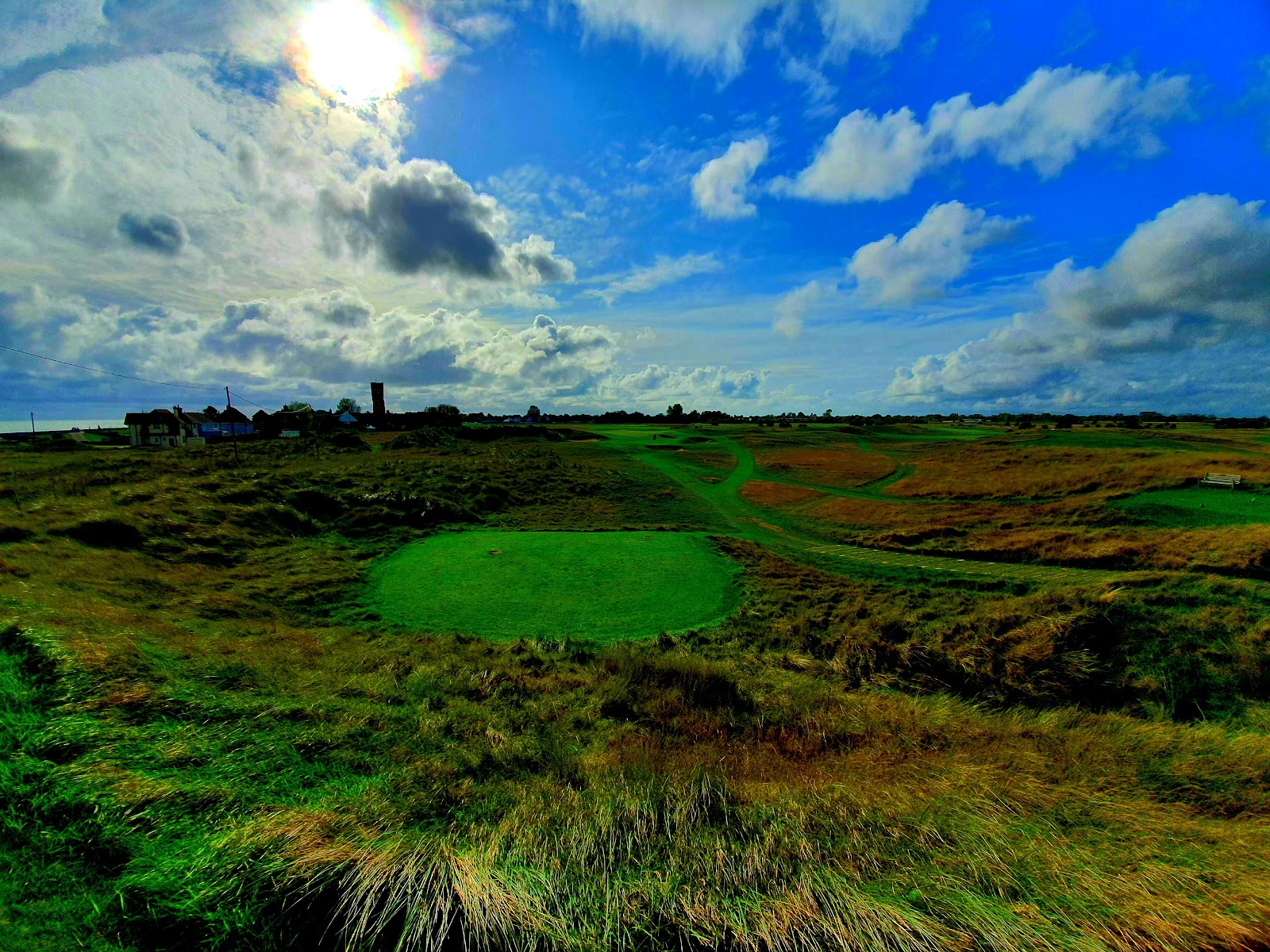
Littlestone
Littlestone is one of the great traditional links of Kent, founded in 1888 and designed by Laidlaw Purves, with later work by James Braid and Alister MacKenzie. A par 71 of about 6,676 yards, it serves as a final qualifying venue when The Open visits the nearby coast, and it deserves to be far better known.
Photo: Littlestone Golf Club via Google.
The verdict
Littlestone was founded in 1888 and laid out by William Laidlaw Purves, the same man behind Royal St George's, with the course later tweaked by James Braid and revised in the 1920s by Alister MacKenzie. It is a par 71 of about 6,676 yards, a classic Kentish links that sits a little in the shadow of its famous neighbours but stands comfortably in their company.
Firm, breezy and full of subtle movement, Littlestone is the kind of links that rewards a controlled ball flight and clever use of the ground. Its pedigree as an Open final qualifying venue speaks to the quality of the test, and for visitors touring the great links of the south east, it is one of the finest and best value rounds in the region.
Littlestone at a glance
- Opened
- 1888
- Designer
- Laidlaw Purves, Braid and MacKenzie
- Type
- Links
- Par
- 71
- Yardage
- About 6,676 yds
- Green fee
- Indicative
Designer, opening year, par and yardage verified June 2026 from Littlestone Golf Club and leading course databases. The Championship links was founded in 1888 and designed by William Laidlaw Purves, with later work by James Braid and Alister MacKenzie, a par 71 of about 6,676 yards from the back tees. Littlestone is a welcoming club with visitor green fees that vary by season (indicative, 2026), so always confirm current rates and tee availability directly before booking.
The holes worth the trip
Littlestone is classic English links golf, the early holes easing out from the clubhouse before the course finds its rhythm among the dunes. The fairways are firm and the greens true, and the ever present coastal wind is the chief defence, asking for a flighted ball and a willingness to run shots in.
The closing stretch is the heart of the test, where the links tightens and the wind bites, and where Open qualifiers have been won and lost. The greens are subtle rather than severe, but they demand precise pace, and a steady card here is a real achievement when the breeze gets up.
With the heritage of Laidlaw Purves, Braid and MacKenzie in its bones, Littlestone gives back honest, traditional links golf without the queues or the price of its more famous neighbours. It is an essential and rewarding stop on any tour of the Kent coast.
How to get on
| What to know | Detail |
|---|---|
| Access | Welcoming members club; visitors are encouraged, with tee times booked ahead |
| Green fee | Visitor green fees vary by season (indicative, 2026); confirm with the club |
| Booking | Book ahead in summer and when The Open qualifying brings extra demand to the region |
| On the day | Walking on firm links turf; the wind rewards a controlled, lower ball flight |
| Getting there | At Littlestone-on-Sea near New Romney on the Kent coast, about an hour from the Channel ports |
| Best months | May to September for the warmest, driest links conditions and the longest daylight |
Access and fee arrangements verified June 2026; Littlestone publishes visitor green fees that change by season, so always confirm current rates and tee availability directly before booking.
Where to stay nearby
Most visiting golfers base themselves along the Kent coast near New Romney and Rye, within easy reach of Littlestone and the other great links of the south east. A coastal base puts Littlestone, Royal St George's and the Sandwich courses within a short drive.
For a golf focused stay, the towns around Sandwich and Rye put a remarkable cluster of championship links on the doorstep. It is an ideal region to build an English links tour around, pairing Littlestone with the best of Kent and the wider south east coast.
Looking for a base? See our recommended hotels and resorts near Littlestone.
Build a Kent golf trip
We pair Littlestone with the great links of Kent and book the lodging around them. Tell us roughly when and who is travelling and one concierge costs it to the head, with no obligation.
Littlestone questions
Who designed Littlestone and when did it open?
Littlestone was founded in 1888 and designed by William Laidlaw Purves, with later work by James Braid and Alister MacKenzie, a classic links on the Kent coast.
What is the par and length of Littlestone?
The Championship links at Littlestone is a par 71 of about 6,676 yards from the back tees, a firm, traditional links defended chiefly by the coastal wind.
Is Littlestone an Open qualifying venue?
Littlestone serves as a final qualifying venue for The Open Championship when the event visits the nearby Kent coast, a mark of the quality of its links test.
Can visitors play Littlestone?
Littlestone welcomes visitors, with tee times booked ahead, especially in summer. Green fees vary by season, so confirm current rates with the club before travelling.
Related
The Tee Sheet
Tee time windows, course access changes and the trips worth taking. Every other week.
Researched and written by the GolfForKings editorial desk. Designer, opening year, par and yardage verified June 2026; indicative green fees verified June 2026. Last reviewed June 2026.