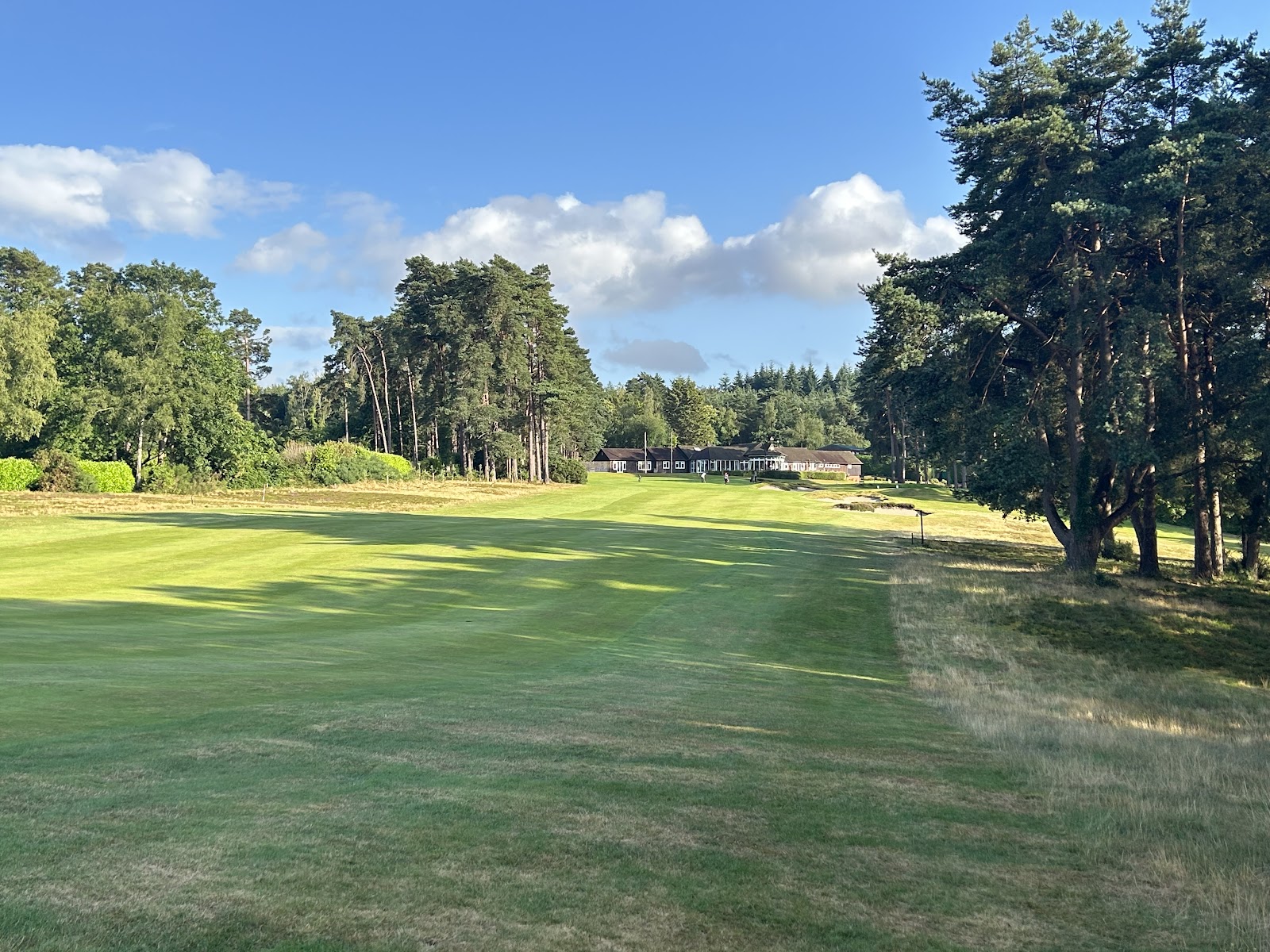
Liphook
A purist's heathland course on the Hampshire and Sussex border, and the only course Arthur Croome ever built. Opened in 1923 and quickly hailed as an early model of strategic design, Liphook is a par 70 of about 6,200 yards where heather, gorse and fast, subtly contoured greens reward the thinker over the basher. It is one of the great quieter names of the English heathland.
Photo: T Miles via Google.
The verdict
Liphook is the heathland course connoisseurs name when they want to sound like they have done their homework, and it earns the reputation. Arthur Croome, a schoolmaster, cricketer and golf writer, designed it as his one and only course, opened it in 1923, and it was almost immediately recognized by the R&A as an exemplary inland heathland layout and an early example of strategic design. A century on it remains beautifully intact, a par 70 of about 6,200 yards that asks for placement and patience rather than power.
It sits on the wooded border of Hampshire and Sussex, just off the road south toward Portsmouth, and plays through classic heather and gorse country with stands of pine and silver birch. The course is not long, but it is precise: tight, tilting fairways punish the loose drive, and the true, fast greens with their subtle borrows are the real defense. For a golfer touring the English heathland, Liphook pairs naturally with the bigger Surrey names and rewards anyone who values strategy and character over raw yardage.
Liphook at a glance
- Opened
- 1923
- Designer
- Arthur Croome
- Type
- Heathland
- Par
- 70
- Yardage
- About 6,200 yds
- Green fee
- From about 135 pounds
Designer, opening year, par and yardage verified June 2026 from Liphook Golf Club and leading course databases. The course was designed by Arthur Croome and opened in 1923, his only design, a par 70 of about 6,200 yards made up of five par 3s, ten par 4s and three par 5s. A weekday high season visitor round was indicatively around 135 pounds; green fees and visitor days change by season and year, so always confirm current rates directly before booking.
The holes worth the trip
Liphook is a study in how little land a great course needs when the design is clever. The fairways tumble and tilt through the heather, and Croome routed the holes so the ideal line is rarely the obvious one; the bold line flirts with gorse and sand, the safe line leaves an awkward angle in. There is variety in every direction, with the short holes a particular strength of the set.
The greens are what stay with you. Firm, quick and full of gentle movement, they turn a course that looks gentle on the card into a genuine test of touch. An approach that finishes on the wrong tier or the wrong side of a subtle ridge leaves a putt that is hard to two, and the heathland turf around the greens invites the running shot as readily as the high pitch.
It is the strategic thinking, not the length, that has kept Liphook on the lists of the discerning for a hundred years. Play it twice and you start to see the lines you missed the first time, which is the truest mark of a course built to last. Bring your driving discipline and your putter, and leave the ego at the first tee.
How to get on
| What to know | Detail |
|---|---|
| Access | Private members club that welcomes visitors in the main season, broadly Sunday to Thursday, often in the afternoon; reduced access in August for course work and over the winter |
| Green fee | Weekday high season round indicatively around 135 pounds (indicative, 2026); twilight and group rates are usually lower |
| Booking | Book through the pro shop in advance; confirm the day's visitor windows before you travel |
| On the day | Traditional members club; smart golf dress expected on and off the course; walking heathland terrain |
| Getting there | Just outside Liphook on the Hampshire and Sussex border, close to the A3 south of Guildford, roughly an hour from London and Portsmouth |
| Best months | Late spring through autumn for the firmest heathland turf and the heather in color; note the August course work window |
Access and fees verified June 2026 from Liphook Golf Club and recent visitor information; policies and prices change, so always confirm directly before planning a visit.
Where to stay nearby
Most visiting golfers treat Liphook as part of a wider heathland tour and base themselves where the courses cluster, either locally near the Hampshire and Sussex border or up toward the Surrey belt around Guildford and Sunningdale. The area is well served by country house hotels and inns within easy reach of several great courses.
From a base in the region you can build a heathland run that pairs Liphook with the heavyweight names to the north, among them Sunningdale Old, Swinley Forest and the quieter charms of Hankley Common. It is some of the finest inland golf in the world within a short drive.
Looking for a base? See our recommended hotels and resorts near Liphook.
Build an English heathland trip
We arrange the Liphook tee times where visitor access allows, pair them with the best of the Surrey and Hampshire heathland and book the lodging around them. Tell us roughly when and who is travelling and one concierge costs it to the head, with no obligation.
Liphook questions
Who designed Liphook Golf Club and when did it open?
Liphook was designed by Arthur Croome and opened in 1923. It was the only golf course Croome laid out, and it was quickly recognized as an exemplary inland heathland course and an early example of strategic design.
What is the par and length of Liphook?
Liphook is a par 70 of about 6,200 yards from the back tees, made up of five par 3s, ten par 4s and three par 5s, playing across classic Hampshire heathland.
Can visitors play Liphook?
Yes. Liphook welcomes visitors in the main season, broadly March to October, typically Sunday to Thursday and often in the afternoon, with restrictions in August for course work and over the winter. A weekday high season round was indicatively around 135 pounds; always confirm current rates, tee availability and visitor days directly before booking.
What kind of course is Liphook?
Liphook is a heathland course: firm, springy turf, fairways lined with heather, gorse and pine, strategic bunkering rather than brute length, and fast, subtly borrowed greens that reward accurate approach play and a sure putting stroke.
Related
The Tee Sheet
Tee time windows, course access changes and the trips worth taking. Every other week.
Researched and written by the GolfForKings editorial desk. Designer, opening year, par and yardage verified June 2026; indicative green fees verified June 2026. Last reviewed June 2026.