Devil's Pulpit
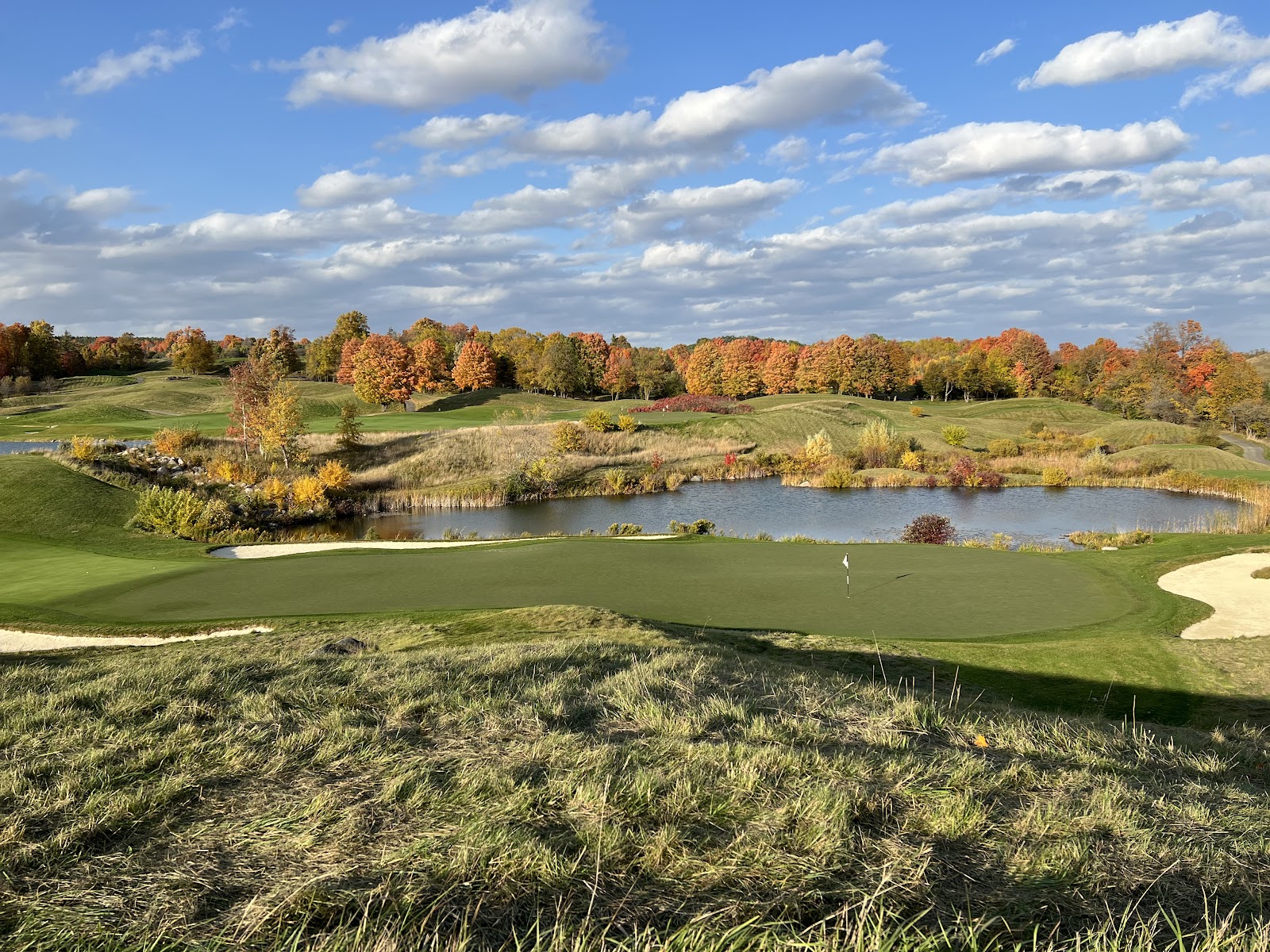
The polished half of one of Canada's great golf properties, Devil's Pulpit is a Hurdzan and Fry parkland opened in 1990 high in the Caledon Hills. Par 71 over about 7,162 yards, with sculpted bunkers, bentgrass fairways and a sweeping view back toward Toronto, it is the lush counterpart to Devil's Paintbrush.
Photo: J S via Google.
The verdict
Devil's Pulpit was the course that started it all, the first of the two great layouts the inventors of Trivial Pursuit built in the Caledon Hills. Michael Hurdzan and Dana Fry opened it in 1990 on a dramatic, tumbling site named for the rock pinnacle that overlooks it, and they gave it everything a flagship parkland course should have, bentgrass fairways, boldly sculpted white sand bunkers and an opening drive from a clifftop tee with the towers of Toronto shimmering on the horizon.
It is the manicured, photogenic sibling to the wild links of Devil's Paintbrush, and the contrast is the whole point of a visit. At par 71 over about 7,162 yards the Pulpit is a substantial, modern championship test, with severe elevation changes that demand careful club selection and greens that punish a careless approach. Playing both courses in a single day is one of the finest golf experiences in the country, and the Pulpit is the glamorous opening act.
Devil's Pulpit at a glance
- Opened
- 1990
- Designers
- Hurdzan and Fry
- Type
- Parkland
- Par
- 71
- Yardage
- About 7,162 yds
- Access
- Private members club
Designers, opening year, par and yardage verified June 2026 from leading course databases. Devil's Pulpit opened in 1990 to a Michael Hurdzan and Dana Fry design and plays to par 71 over about 7,162 yards. It forms part of the private Pulpit Club with Devil's Paintbrush and does not publish public green fees; access is normally by invitation, so always confirm any arrangement directly before traveling.
The holes worth the trip
The opening tee shot sets the tone, struck from a high promontory with the fairway falling away and the distant city skyline as your aiming point, one of the most exhilarating starts in Canadian golf. From there Hurdzan and Fry use the rolling, dramatic terrain to full effect, with downhill drives, uphill approaches and holes that swing across valleys and ridgelines.
The bunkering is the signature, large flashed white sand hazards shaped for both beauty and strategy, framing the holes and gathering the loose shot. The bentgrass fairways and quick greens are kept in immaculate condition, and the elevation changes mean your eyes and your yardage book often disagree, so trusting the number is half the battle.
It is a course built to impress and it does, a polished, photogenic test that asks for power and precision in equal measure. Pair it with the Paintbrush for the full Caledon experience, and you have a thirty six hole day that few courses anywhere can match for variety and drama.
How to get on
| What to know | Detail |
|---|---|
| Access | Private; part of the Pulpit Club, play normally limited to members and their accompanied guests |
| Green fee | Not publicly published; guest play arranged through a member host (indicative, confirm directly) |
| Best route in | An invitation from a member, or a reciprocal arrangement if your home club has one |
| Walking | Severe elevation changes; carts are common, caddies enhance the experience |
| On the day | Traditional golf attire expected; combine with Devil's Paintbrush for a full day if you can |
| Getting there | The Caledon Hills, about an hour northwest of downtown Toronto and Pearson Airport |
Access details verified June 2026 from public sources. The Pulpit Club is private and arrangements change, so always confirm access and any guest policy directly before traveling.
Where to stay nearby
The Caledon Hills offer a handful of country inns and retreats, but most visiting golfers base themselves in Toronto, an hour to the southeast, with its full range of luxury hotels and dining. The drive out to the Pulpit Club climbs into rolling countryside that already feels a world away from the city.
The obvious pairing is a thirty six hole day across both Caledon courses, the polished parkland of Devil's Pulpit and the wild links of Devil's Paintbrush. Add the modern links of Eagles Nest Golf Club nearer the city to round out a memorable Toronto golf trip.
Looking for a base? See our recommended hotels and resorts near Devil's Pulpit.
Build a Caledon Hills golf trip
Devil's Pulpit is private, but we plan a full Toronto and Caledon golf trip around the courses you can play, and arrange tee times, stays and transfers from Pearson. Tell us roughly when and who is traveling and one concierge costs it to the head, with no obligation.
Devil's Pulpit questions
Who designed Devil's Pulpit and when did it open?
Devil's Pulpit was designed by Michael Hurdzan and Dana Fry and opened in 1990 in the Caledon Hills of Ontario. It was the first of the two Pulpit Club courses, conceived by the inventors of Trivial Pursuit.
What is the par and length of Devil's Pulpit?
Devil's Pulpit plays to par 71 over about 7,162 yards from the back tees. It is a polished parkland course with bentgrass fairways, sculpted sand bunkers and dramatic elevation changes.
Can visitors play Devil's Pulpit?
No. Devil's Pulpit is part of the private Pulpit Club and play is normally limited to members and their accompanied guests. Always confirm any access arrangement directly before traveling.
How is Devil's Pulpit different from Devil's Paintbrush?
Devil's Pulpit is the lush, manicured parkland course with sweeping views toward Toronto, while its sibling Devil's Paintbrush a few kilometers away is a rugged, windswept links. Together they make one of the best thirty six hole days in Canada.
Related
The Tee Sheet
Tee time windows, course access changes and the trips worth taking. Every other week.
Researched and written by the GolfForKings editorial desk. Designers, opening year, par and yardage verified June 2026; access details verified June 2026. Last reviewed June 2026.